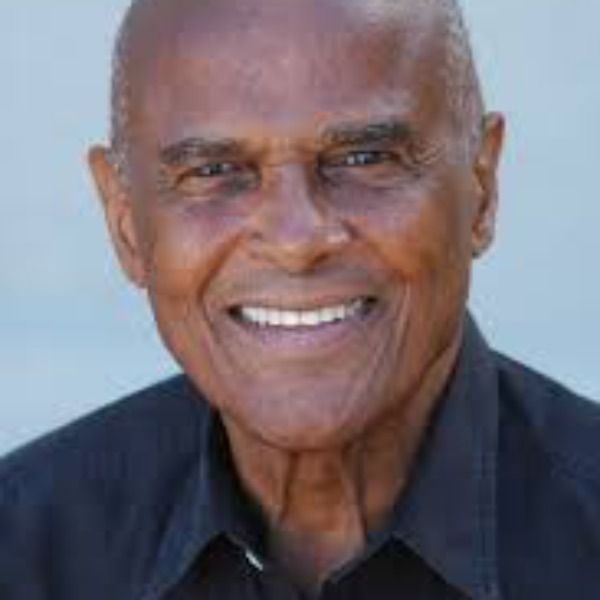
Harry Belafonte
HARRY BELAFONTE
Biography
Harry Belafonte has been called "the consummate entertainer"- an artist in every field in which, he has
participated - a concert singer, a recording artist, a movie, Broadway and television star and producer.
Belafonte's activity in the human rights struggle is globally respected.
His awards and recognitions include both worlds, as artist and humanitarian. He believes that his work for
human rights and his artistic pursuits give him the basis for a most productive and balanced life. Neither
overshadows the other, and both are extremely important to him.
"My social and political interests are part of my career. I can't separate them," said Belafonte. "My songs
reflect the human condition. The role of art isn't just to show life as it is, but to show life as it should be."
Belafonte was born in Harlem in New York City. His immigrant mother sent him back to the island of her
birth, Jamaica, to spend his formative years and early adolescence. His exposure to life on the island and all
its variety became a cultural reservoir which he drew upon for his artistic expression.
At the otbreak of World War II, his mother retrieved him from the island and brought him back to Harlem.
He tried to adapt to his new environment, a process which came with great difficulty and finally, unable to
finish high school, he enlisted in the united States Navy.
After his tour of duty was over and he was honorably discharged, he returned to New York where he
worked both in the garment center and as a janitor's assistant.
It wasn't until Belafonte was given two free tickets to a production of "Home is the Hunter" at the
American Negro Theatre (A.N.T.) that the world of theater opened up to him. As Belafonte describes it, "It
was like walking into a sanctuary, it was a deeply moving spiritual experience."
Inspired by what he saw on stage and deeply touched by the sense of community displayed by the actors,
Belafonte, for the first time, came face to face with what would be his destiny - a life in the performing arts.
Although he found the environment most seductive, his appreciation of all facets of the theater did not, at
first, help him settle on what he specifically wanted to do. It wasn't until he was called upon to play the role
of young Johnny Boyle in the A.N.T. production of Irish playwright Sean O'Casey's "Juno and the
Paycheck," that Belafonte found focus.
Inspired by the power of O'Casey's writing, Belafonte knew unequivocally that acting would be his first
choice. He then joined the Dramatic Workshop of the School of Social Research under the tutelage of the
great German director, Erwin Piscator, and with classmates like Marlon Brando, Walter Matthau, Bea
Arthur, Rod Steiger and Tony Curtis - just to name a few - Belafonte became thoroughly grounded in the
world of the performing arts.
Paralleling these years, at the end of each school day, just a few short blocks from the Workshop, Belafonte
could be found in the late hours of the night at the Royal Roost, immersed in the world of the jazz
musician. Night after night, for the price of admission, he would sit tirelessly listening to and watching the
birth of a new music being created by his soon-to-be friends, Dizzy Gillespie, Lester Young, Max Roach,
Miles Davis, Theloneous monk, never realizing that one day their world would be his.
As part of his curriculum at the workshop, Belafonte and his classmates produced an original musical
production called "Middleman, What NCB?" for which he wrote a song called "Recognition," which he
performed. Although the response of his classmates and audience was most enthusiastic, Belafonte had not
see singing as an important aspect of his interests.
In his pursuit of study at the school, Belafonte was subsidized by the U.S. government (The G.I. Bill of
Rights). As many ex-servicemen were to experience, the subsidy ran out all too soon. In his quest to
continue his student work in theater, his newfound friend, Monty Kaye, the revered and highly respected
promoter for the Royal Roost, came to his rescue.
Having heard Belafonte sing at the Workshop in the student production, Kayo suggested that if Belafonte
could learn three or four songs, he would hire him as the intermission singer at the famed jazz club. To help
him learn the songs, Kaye made available a young jazz pianist named Al Hage who was joined on
Belafonte's opening night at the Royal Roost by a host of friends who volunteered to be his back-up band.
Although the audience may have had some curiosity as to who Belafonte was, they were familiar with his
"back-up band" - Charlie Parker, Miles Davis, Max Roach and Tommy Potter.
The warmth and camaraderie emanating from the "back-up band" helped a frightened and unsure Belafonte
launch what was to be the first steps to a career that has since been globally embraced.
The recognition of his gift was instant, but Belafonte soon found himself overwhelmed by this newfound
popularity, which was pulling him surely but slowly away from the world of theater he had came to love.
Feeling the intervention of this new career most distracting from his acting interests, Belafonte soon retired
to devote himself full-time to the theater.
He soon found that America was as yet unwilling to embrace its black citizens fully in his chosen
profession, and with not enough parts to go around for the many talented actors, including his close friend,
Sidney Poitier, Belafonte, in frustration, opened a small eatery in Greewich village as a means of
livelihood.
He would have languished there had he not discovered a small nightclub called The Village Vanguard and
the world of folk music. Watching artists Like Dead Be11y, Woody Gurthrie, Josh White, Pete Seeger and
others, Belafonte found an art form that would become his ultimate expression.
He diligently prepared himself by studying, writing and molding songs and with a young accompanist
named Craig Work, opened at The Village Vanguard. Since that day, he has never looked back.
A succession of nightclubs including The Blue Angel, The Copacabana, and Cafe Society led to Broadway
and his first musical, "John Murray Anderson's Almanac." His reviews were astounding and the young
singer, on his first go round on Broadway, won the coveted Tony Award for his performance.
A few months later, Belafonte entered into a long and fruitful recording contract with RCA Victor. The
head of the company, George Marek, became one of Belafonte's dearest friends and their business
relationship proved to be quite fruitful. In 1955, with Marek's backing but against all norms, Belafonte
recorded his third album, "Calypso," which became the first album to ever sell over one million copies. Its
success set industry standards that laid the groundwork for the Grammys.
Night clubs, recordings, Broadway and concert halls soon gave way to an overture from Hollywood.
Belafonte's first film, BRIGHT ROAD, teamed him with the exquisitely beautiful Dorothy Dandridge as
his leading lady. Their romantic and compelling screen chemistry led producer/director Otto Premainger to
cast the two as the stars of Oscar Hammerstein's adaptation of Bizet's opera, "Carmen," titled CARMEN
JONES.
The overwhelming success of this film placed Belafonte alongside his lifelong friend, Sidney Poitier, as the
most sought after African-American actors in the history of the film industry. It would not be until some 20
years later, however, before the two would come together in the same film - their own production of BUCK
AND THE PREACHER.
Among Belafonte's films were such notables as THE WORLD, THE FLESH AND THE DEVIL, ODDS
AGAINST TOWORROW, THE ANGEL LEVINE, UPTOWN SATURDAY NIGHT and ISLAND IN
THE SUN, for which he co-authored the title song.
Seizing his moment in history, there was only one medium left for Belafonte to conquer - television.
Teaming up with a young and, at the time, little known, director from Canada named Norman Jewison,
Belafonte's new company, "HarBel," produced a stunning musical epic called "Tonight with Belafonte."
The critics gave the show astounding reviews and Belafonte won the coveted Emmy Award for his
performance.
Being the first African-American producer in television, Belafonte's company went on to produce one
Emmy-nominated success after another for the three major networks - "The Strollin' Twenties," written by
the famed author Langston Hughes for CBS, starring such great performers as Sidney Poitier, Diahann
Carroll, Sammy Davis, Jr. and Duke Ellington; "A Time for Laughter," for ABC, starring such then
nationally, little-known humorists as Richard Pryor and Redd Foxx. The format of this special set the
groundwork for the popular TV comedy series, "Laugh-In."
His worldwide concert tours have repeatedly sold out since the first one in 1956. He has broken attendance
records in most major cities where he has performed, and has established a global relationship with
audiences, lasting over 40 years.
Belafonte has dedicated his life to uniting people and doing battle for causes often considered
"controversial." In 1960, he was named by President John F. Kennedy as cultural advisor to the Peace
Corps. The first member of the entertainment industry to be so named, he served in that capacity for five
years. This new responsibility took him to many of the world's developing countries, which soon led to a
long and passionate bond to the continent of Africa.
But it was the civil rights struggle in the United States that commanded his greatest involvement. His
fervent pursuit for justice led him to a long and deep commitment to the movement.
He was the driving force that united the cultural elements behind the needs of the Civil Rights movement.
The success of that mobilization could be seen in the overwhelming presence of the arts community in
places like the marches from Selma to Montgomery and the protests in Birmingham, Alabama, as well as
the Freedom March in Washington, DC in 1963.
In the early 50s, Belafonte met young Dr. Martin Luther Ring, Jr. on his historic visit to New York. From
that day until the leader's assassination, Belafonte and King developed a deep and abiding friendship that
for Belafonte, still stands as one of the most precious of his experiences.
Dr. King, fearing that American resistance to the goals of the civil rights movement would become
economically stressful, conferred with Belafonte, who concluded that the movement should spread its
wings into the heart of other cities outside the U.S. King agreed and in the early 60s, Belafonte began
uniting the cultural forces of Europe when with the assistance of Yves Montand, Simone Signoret, Peter
O'Toole and others, he gave major concerts in Paris. With the King of Sweden as patron, the Prime
Minister of Sweden as chairperson and with a remarkable cast of artists from the world of pop music and
classical culture, Belafonte produced and performed in a telecast throughout all of Scandinavia, opening up
the opportunity for supporters in the region to give vitally needed funds.
But perhaps more importantly, European audiences saw and heard Dr. Martin Luther King, Jr. speak for the
first time. Dr. King was later to say that "Belafonte's global popularity and his commitment to our cause is
a key ingredient to the global struggle for freedom and a powerful tactical weapon in the civil rights
movement here in America." Belafonte was named to the Board of Directors of the Southern Christian
Leadership Conference and at Dr. King's death, he became one of three executors of the great leader's
estate.
Later, Belafonte was appointed by Mario Cuomo, Governor of his home state, as chairperson for the unique
and distinguished New York State Martin Luther King, Jr. Commission. He faithfully served the
commission for seven years, during which time he and his staff created the New York State Martin Luther
King, Jr. Institute for Nonviolence.
Harry Belafonte has been honored many times by such diversified groups as the American Jewish
Congress, the NAACP, the City of Hope, Fight for Sight, The Urban League, The National Conference of
Black Mayors, the Anti-Defamation League of B'nai B'rith, the ACLU, the State Department, the Boy
Scouts of America and the Peace Corps.
Belafonte has received awards such as The Albert Einstein Award from Yeshiva University, in 1981, the
Martin Luther King, Jr. Peace Prize and in 1989, he received the prestigious Kennedy Center Honors for
excellence in the performing arts and the Acorn Award from the Bronx Community College for his work
with children.
He was the first recipient of the Nelson Mandela Courage Award and was honored with the 1994 National
Medal of Arts from President Clinton for his contributions to our nation's cultural life.
Among the honorary degrees bestowed upon Belafonte are an Honorary Doctorate of Humane Letters from
Park College in Missouri, a Doctorate in the Arts from The New School for Social Research (where he was
once a student), in 1987, an Honorary Doctor of Music Degree from Morehouse College in Atlanta, an
Honorary Doctor of Fine Arts Degree from SUNY Purchase.
He has received honorary degrees from City University of New York, Spellman College in Atlanta, Tufts
University, Brandeis University, Long Island University, Bard College and most recently Doctor of
Humane Letters from Columbia University.
His introduction to the Wiltwyck School for Boys in Yorktown, NY by his revered friend, Eleanor
Roosevelt, led to a long association with the school. Proceeds from his album made at Carnegie Hall went
to Wiltwyck, helping to enhance the school's vital work among disturbed youth. It held the record as the
longest best selling album in the top 10 on the music charts until Michael Jackson's "Thriller" edged it out.
Several years ago, the school honored him by naming its new arts building "The Belafonte Theatre."
Belafonte has done much to open cultural exchanges with many emerging African nations and through the
Belafonte Foundation has aided African students seeking an education in the United States.
Disturbed by cruel events unfolding in Africa because of war, famine and drought, and influenced by the
work done by Mohamed Amin and Bob Geldorf, Belafonte, on January 28, 1985, set in motion the wheels
that led to "We Are the World." He contacted his friend, Ken Kragen, who responded favorably and
together, along with others, undertook to guide and direct the project.
An outgrowth of this effort for the people of Africa was "Hands Across America," a benefit for hungry
Americans, a cause with which Belafonte was also deeply involved.
In 1987, Belafonte accepted the appointment as UNICEF Goodwill Ambassador. Only the second
Americcan to hold this title, the first being Danny Kaye. He currently shares the task of tending to the
needs of the children of the world not only with the dedicated men and women of UNICEF, but also With
his colleagues, Liv Ullmann of Norway, Sir Peter Ustinov, Lord Richard Attenborough and Roger Moore
of the United Kingdom, and until her untimely death, his close friend Audrey Hepburn.
In this service of UNICEF, Belafonte in 1987, created an historic symposium in Dakar, Senegal for the
immunization of African children. The positive response to this symposium led to a successful campaign
for the eradication of curable diseases among African children. This resulted in a subsequent symposium
called "Children of the Front Line."
Taking place in Harare, Zimbabwe in 1988, the ultimate goal was to focus global attention on child survival
and development in Southern African countries, especially those victimized by the apartheid war. As part
of this effort, with the largest concentration of African artists ever assembled, he performed a concert
benefiting UNICEF.
The result was a 60-minute video, filmed by Eastman Kodak, entitled "Paradise in Gazankulu."
In May 1989, the U.S. Committee for UNICEF presented Belafonte with the Danny Kaye Award, for his
important contribution in the service of the children of the world.
In September 1990, along with his fellow Goodwill Ambassadors, Belafonte served as host for the World
Summit for Children held at the Unified Nations. At that time, 71 heads of state hailing from all over the
world assembled to discuss and sign a world declaration and plan of action on the survival, protection and
development of children. "The World Declaration of the Survival, Protection and Development of
Children" is considered to be one of the most significant documents of the 20th century.
For the past several years, Belafonte has continued to devote himself globally to civil and human rights
issues, focusing in particular on the United States and South Africa. His close personal relationship with
Nelson Mandela afforded him the opportunity to host the great leader throughout his triumphant visit to the
United States.
Belafonte gives audiences on his current tour a mix of new and old. His musicians and singers came from
diverse backgrounds and the resulting music has a heavy emphasis on African rhythms and Third World
themes.
"We have traditional material such as 'Banana Boat,' and 'Island in the Sun,"' said Belafonte, "but even
the traditional material has been redefined. 'Banana Boat' will be recognized instantly, but it is presented
differently. With audience participation it's no longer just a song, it's a celebration."
Belafonte's current projects include co-producing Taylor Branch's Pulitzer Prize winning novel, "Parting
the Waters," with director Jonathan Demure and producer Ed Saxon and serving as executive producer of
the recent HBO Showcase film "The Affair."
In Robert Altman's film KANSAS CITY, which was released in August, 1996, Belafonte portrays one of
his favorite roles, Seldom Seen, for which he has been voted best supporting actor by the New York Film
Critics' Circle. He is also collaborating with Altman on another film which is as of yet untitled. A
television special entitled "An Evening With Harry Belafonte and Friends," is currently being broadcast
throughout the United States on the Public Broadcasting Service (PBS).
With all of the above creating a very full life for Belafonte, he says, "No matter what goes on, there will
always be time for another song to be sung somewhere in this precious world."
Harry Belafonte lives in New York with his wife, Julie, a former dancer with the Katherine Durham
Company, who is very much involved in his life and work. A talented artist in her own right, she uses her
influence and creative skills designing the costumes for Harry's shows. Her remarkably unique work is
executed in its design by the famous Werner Kulovits of Euro Co.
When not artistically involved, she has committed herself to work for the peoples of the developing world.
She has raised significant sums of money and currently, with the assistance of UNICEF, she is applying
these funds to build schools in war torn Mozambique. Julie and Hairy have two children, Gina and David.
Gina is an actress working in television and film, and the mother of his most recent grandchild, Maria.
David is Executive Director of Belafonte Enterprises, Inc., the family-held company.
Belafonte also has two children from a previous marriage - Shari and Adrienne. Shari is a television and
film actress, and has recently embarked in her first business venture - the development of a unique cosmetic
line. Adrienne is a private practitioner in Lewisburg, West Virginia specializing in early childhood and
adolescent issues. However, for Harry her greatest achievement will always be the two grandchildren she
gave him - Rachel and Brian.
HARRY BELAFONTE
Biography
Harry Belafonte has been called "the consummate entertainer"- an artist in every field in which, he has
participated - a concert singer, a recording artist, a movie, Broadway and television star and producer.
Belafonte's activity in the human rights struggle is globally respected.
His awards and recognitions include both worlds, as artist and humanitarian. He believes that his work for
human rights and his artistic pursuits give him the basis for a most productive and balanced life. Neither
overshadows the other, and both are extremely important to him.
"My social and political interests are part of my career. I can't separate them," said Belafonte. "My songs
reflect the human condition. The role of art isn't just to show life as it is, but to show life as it should be."
Belafonte was born in Harlem in New York City. His immigrant mother sent him back to the island of her
birth, Jamaica, to spend his formative years and early adolescence. His exposure to life on the island and all
its variety became a cultural reservoir which he drew upon for his artistic expression.
At the otbreak of World War II, his mother retrieved him from the island and brought him back to Harlem.
He tried to adapt to his new environment, a process which came with great difficulty and finally, unable to
finish high school, he enlisted in the united States Navy.
After his tour of duty was over and he was honorably discharged, he returned to New York where he
worked both in the garment center and as a janitor's assistant.
It wasn't until Belafonte was given two free tickets to a production of "Home is the Hunter" at the
American Negro Theatre (A.N.T.) that the world of theater opened up to him. As Belafonte describes it, "It
was like walking into a sanctuary, it was a deeply moving spiritual experience."
Inspired by what he saw on stage and deeply touched by the sense of community displayed by the actors,
Belafonte, for the first time, came face to face with what would be his destiny - a life in the performing arts.
Although he found the environment most seductive, his appreciation of all facets of the theater did not, at
first, help him settle on what he specifically wanted to do. It wasn't until he was called upon to play the role
of young Johnny Boyle in the A.N.T. production of Irish playwright Sean O'Casey's "Juno and the
Paycheck," that Belafonte found focus.
Inspired by the power of O'Casey's writing, Belafonte knew unequivocally that acting would be his first
choice. He then joined the Dramatic Workshop of the School of Social Research under the tutelage of the
great German director, Erwin Piscator, and with classmates like Marlon Brando, Walter Matthau, Bea
Arthur, Rod Steiger and Tony Curtis - just to name a few - Belafonte became thoroughly grounded in the
world of the performing arts.
Paralleling these years, at the end of each school day, just a few short blocks from the Workshop, Belafonte
could be found in the late hours of the night at the Royal Roost, immersed in the world of the jazz
musician. Night after night, for the price of admission, he would sit tirelessly listening to and watching the
birth of a new music being created by his soon-to-be friends, Dizzy Gillespie, Lester Young, Max Roach,
Miles Davis, Theloneous monk, never realizing that one day their world would be his.
As part of his curriculum at the workshop, Belafonte and his classmates produced an original musical
production called "Middleman, What NCB?" for which he wrote a song called "Recognition," which he
performed. Although the response of his classmates and audience was most enthusiastic, Belafonte had not
see singing as an important aspect of his interests.
In his pursuit of study at the school, Belafonte was subsidized by the U.S. government (The G.I. Bill of
Rights). As many ex-servicemen were to experience, the subsidy ran out all too soon. In his quest to
continue his student work in theater, his newfound friend, Monty Kaye, the revered and highly respected
promoter for the Royal Roost, came to his rescue.
Having heard Belafonte sing at the Workshop in the student production, Kayo suggested that if Belafonte
could learn three or four songs, he would hire him as the intermission singer at the famed jazz club. To help
him learn the songs, Kaye made available a young jazz pianist named Al Hage who was joined on
Belafonte's opening night at the Royal Roost by a host of friends who volunteered to be his back-up band.
Although the audience may have had some curiosity as to who Belafonte was, they were familiar with his
"back-up band" - Charlie Parker, Miles Davis, Max Roach and Tommy Potter.
The warmth and camaraderie emanating from the "back-up band" helped a frightened and unsure Belafonte
launch what was to be the first steps to a career that has since been globally embraced.
The recognition of his gift was instant, but Belafonte soon found himself overwhelmed by this newfound
popularity, which was pulling him surely but slowly away from the world of theater he had came to love.
Feeling the intervention of this new career most distracting from his acting interests, Belafonte soon retired
to devote himself full-time to the theater.
He soon found that America was as yet unwilling to embrace its black citizens fully in his chosen
profession, and with not enough parts to go around for the many talented actors, including his close friend,
Sidney Poitier, Belafonte, in frustration, opened a small eatery in Greewich village as a means of
livelihood.
He would have languished there had he not discovered a small nightclub called The Village Vanguard and
the world of folk music. Watching artists Like Dead Be11y, Woody Gurthrie, Josh White, Pete Seeger and
others, Belafonte found an art form that would become his ultimate expression.
He diligently prepared himself by studying, writing and molding songs and with a young accompanist
named Craig Work, opened at The Village Vanguard. Since that day, he has never looked back.
A succession of nightclubs including The Blue Angel, The Copacabana, and Cafe Society led to Broadway
and his first musical, "John Murray Anderson's Almanac." His reviews were astounding and the young
singer, on his first go round on Broadway, won the coveted Tony Award for his performance.
A few months later, Belafonte entered into a long and fruitful recording contract with RCA Victor. The
head of the company, George Marek, became one of Belafonte's dearest friends and their business
relationship proved to be quite fruitful. In 1955, with Marek's backing but against all norms, Belafonte
recorded his third album, "Calypso," which became the first album to ever sell over one million copies. Its
success set industry standards that laid the groundwork for the Grammys.
Night clubs, recordings, Broadway and concert halls soon gave way to an overture from Hollywood.
Belafonte's first film, BRIGHT ROAD, teamed him with the exquisitely beautiful Dorothy Dandridge as
his leading lady. Their romantic and compelling screen chemistry led producer/director Otto Premainger to
cast the two as the stars of Oscar Hammerstein's adaptation of Bizet's opera, "Carmen," titled CARMEN
JONES.
The overwhelming success of this film placed Belafonte alongside his lifelong friend, Sidney Poitier, as the
most sought after African-American actors in the history of the film industry. It would not be until some 20
years later, however, before the two would come together in the same film - their own production of BUCK
AND THE PREACHER.
Among Belafonte's films were such notables as THE WORLD, THE FLESH AND THE DEVIL, ODDS
AGAINST TOWORROW, THE ANGEL LEVINE, UPTOWN SATURDAY NIGHT and ISLAND IN
THE SUN, for which he co-authored the title song.
Seizing his moment in history, there was only one medium left for Belafonte to conquer - television.
Teaming up with a young and, at the time, little known, director from Canada named Norman Jewison,
Belafonte's new company, "HarBel," produced a stunning musical epic called "Tonight with Belafonte."
The critics gave the show astounding reviews and Belafonte won the coveted Emmy Award for his
performance.
Being the first African-American producer in television, Belafonte's company went on to produce one
Emmy-nominated success after another for the three major networks - "The Strollin' Twenties," written by
the famed author Langston Hughes for CBS, starring such great performers as Sidney Poitier, Diahann
Carroll, Sammy Davis, Jr. and Duke Ellington; "A Time for Laughter," for ABC, starring such then
nationally, little-known humorists as Richard Pryor and Redd Foxx. The format of this special set the
groundwork for the popular TV comedy series, "Laugh-In."
His worldwide concert tours have repeatedly sold out since the first one in 1956. He has broken attendance
records in most major cities where he has performed, and has established a global relationship with
audiences, lasting over 40 years.
Belafonte has dedicated his life to uniting people and doing battle for causes often considered
"controversial." In 1960, he was named by President John F. Kennedy as cultural advisor to the Peace
Corps. The first member of the entertainment industry to be so named, he served in that capacity for five
years. This new responsibility took him to many of the world's developing countries, which soon led to a
long and passionate bond to the continent of Africa.
But it was the civil rights struggle in the United States that commanded his greatest involvement. His
fervent pursuit for justice led him to a long and deep commitment to the movement.
He was the driving force that united the cultural elements behind the needs of the Civil Rights movement.
The success of that mobilization could be seen in the overwhelming presence of the arts community in
places like the marches from Selma to Montgomery and the protests in Birmingham, Alabama, as well as
the Freedom March in Washington, DC in 1963.
In the early 50s, Belafonte met young Dr. Martin Luther Ring, Jr. on his historic visit to New York. From
that day until the leader's assassination, Belafonte and King developed a deep and abiding friendship that
for Belafonte, still stands as one of the most precious of his experiences.
Dr. King, fearing that American resistance to the goals of the civil rights movement would become
economically stressful, conferred with Belafonte, who concluded that the movement should spread its
wings into the heart of other cities outside the U.S. King agreed and in the early 60s, Belafonte began
uniting the cultural forces of Europe when with the assistance of Yves Montand, Simone Signoret, Peter
O'Toole and others, he gave major concerts in Paris. With the King of Sweden as patron, the Prime
Minister of Sweden as chairperson and with a remarkable cast of artists from the world of pop music and
classical culture, Belafonte produced and performed in a telecast throughout all of Scandinavia, opening up
the opportunity for supporters in the region to give vitally needed funds.
But perhaps more importantly, European audiences saw and heard Dr. Martin Luther King, Jr. speak for the
first time. Dr. King was later to say that "Belafonte's global popularity and his commitment to our cause is
a key ingredient to the global struggle for freedom and a powerful tactical weapon in the civil rights
movement here in America." Belafonte was named to the Board of Directors of the Southern Christian
Leadership Conference and at Dr. King's death, he became one of three executors of the great leader's
estate.
Later, Belafonte was appointed by Mario Cuomo, Governor of his home state, as chairperson for the unique
and distinguished New York State Martin Luther King, Jr. Commission. He faithfully served the
commission for seven years, during which time he and his staff created the New York State Martin Luther
King, Jr. Institute for Nonviolence.
Harry Belafonte has been honored many times by such diversified groups as the American Jewish
Congress, the NAACP, the City of Hope, Fight for Sight, The Urban League, The National Conference of
Black Mayors, the Anti-Defamation League of B'nai B'rith, the ACLU, the State Department, the Boy
Scouts of America and the Peace Corps.
Belafonte has received awards such as The Albert Einstein Award from Yeshiva University, in 1981, the
Martin Luther King, Jr. Peace Prize and in 1989, he received the prestigious Kennedy Center Honors for
excellence in the performing arts and the Acorn Award from the Bronx Community College for his work
with children.
He was the first recipient of the Nelson Mandela Courage Award and was honored with the 1994 National
Medal of Arts from President Clinton for his contributions to our nation's cultural life.
Among the honorary degrees bestowed upon Belafonte are an Honorary Doctorate of Humane Letters from
Park College in Missouri, a Doctorate in the Arts from The New School for Social Research (where he was
once a student), in 1987, an Honorary Doctor of Music Degree from Morehouse College in Atlanta, an
Honorary Doctor of Fine Arts Degree from SUNY Purchase.
He has received honorary degrees from City University of New York, Spellman College in Atlanta, Tufts
University, Brandeis University, Long Island University, Bard College and most recently Doctor of
Humane Letters from Columbia University.
His introduction to the Wiltwyck School for Boys in Yorktown, NY by his revered friend, Eleanor
Roosevelt, led to a long association with the school. Proceeds from his album made at Carnegie Hall went
to Wiltwyck, helping to enhance the school's vital work among disturbed youth. It held the record as the
longest best selling album in the top 10 on the music charts until Michael Jackson's "Thriller" edged it out.
Several years ago, the school honored him by naming its new arts building "The Belafonte Theatre."
Belafonte has done much to open cultural exchanges with many emerging African nations and through the
Belafonte Foundation has aided African students seeking an education in the United States.
Disturbed by cruel events unfolding in Africa because of war, famine and drought, and influenced by the
work done by Mohamed Amin and Bob Geldorf, Belafonte, on January 28, 1985, set in motion the wheels
that led to "We Are the World." He contacted his friend, Ken Kragen, who responded favorably and
together, along with others, undertook to guide and direct the project.
An outgrowth of this effort for the people of Africa was "Hands Across America," a benefit for hungry
Americans, a cause with which Belafonte was also deeply involved.
In 1987, Belafonte accepted the appointment as UNICEF Goodwill Ambassador. Only the second
Americcan to hold this title, the first being Danny Kaye. He currently shares the task of tending to the
needs of the children of the world not only with the dedicated men and women of UNICEF, but also With
his colleagues, Liv Ullmann of Norway, Sir Peter Ustinov, Lord Richard Attenborough and Roger Moore
of the United Kingdom, and until her untimely death, his close friend Audrey Hepburn.
In this service of UNICEF, Belafonte in 1987, created an historic symposium in Dakar, Senegal for the
immunization of African children. The positive response to this symposium led to a successful campaign
for the eradication of curable diseases among African children. This resulted in a subsequent symposium
called "Children of the Front Line."
Taking place in Harare, Zimbabwe in 1988, the ultimate goal was to focus global attention on child survival
and development in Southern African countries, especially those victimized by the apartheid war. As part
of this effort, with the largest concentration of African artists ever assembled, he performed a concert
benefiting UNICEF.
The result was a 60-minute video, filmed by Eastman Kodak, entitled "Paradise in Gazankulu."
In May 1989, the U.S. Committee for UNICEF presented Belafonte with the Danny Kaye Award, for his
important contribution in the service of the children of the world.
In September 1990, along with his fellow Goodwill Ambassadors, Belafonte served as host for the World
Summit for Children held at the Unified Nations. At that time, 71 heads of state hailing from all over the
world assembled to discuss and sign a world declaration and plan of action on the survival, protection and
development of children. "The World Declaration of the Survival, Protection and Development of
Children" is considered to be one of the most significant documents of the 20th century.
For the past several years, Belafonte has continued to devote himself globally to civil and human rights
issues, focusing in particular on the United States and South Africa. His close personal relationship with
Nelson Mandela afforded him the opportunity to host the great leader throughout his triumphant visit to the
United States.
Belafonte gives audiences on his current tour a mix of new and old. His musicians and singers came from
diverse backgrounds and the resulting music has a heavy emphasis on African rhythms and Third World
themes.
"We have traditional material such as 'Banana Boat,' and 'Island in the Sun,"' said Belafonte, "but even
the traditional material has been redefined. 'Banana Boat' will be recognized instantly, but it is presented
differently. With audience participation it's no longer just a song, it's a celebration."
Belafonte's current projects include co-producing Taylor Branch's Pulitzer Prize winning novel, "Parting
the Waters," with director Jonathan Demure and producer Ed Saxon and serving as executive producer of
the recent HBO Showcase film "The Affair."
In Robert Altman's film KANSAS CITY, which was released in August, 1996, Belafonte portrays one of
his favorite roles, Seldom Seen, for which he has been voted best supporting actor by the New York Film
Critics' Circle. He is also collaborating with Altman on another film which is as of yet untitled. A
television special entitled "An Evening With Harry Belafonte and Friends," is currently being broadcast
throughout the United States on the Public Broadcasting Service (PBS).
With all of the above creating a very full life for Belafonte, he says, "No matter what goes on, there will
always be time for another song to be sung somewhere in this precious world."
Harry Belafonte lives in New York with his wife, Julie, a former dancer with the Katherine Durham
Company, who is very much involved in his life and work. A talented artist in her own right, she uses her
influence and creative skills designing the costumes for Harry's shows. Her remarkably unique work is
executed in its design by the famous Werner Kulovits of Euro Co.
When not artistically involved, she has committed herself to work for the peoples of the developing world.
She has raised significant sums of money and currently, with the assistance of UNICEF, she is applying
these funds to build schools in war torn Mozambique. Julie and Hairy have two children, Gina and David.
Gina is an actress working in television and film, and the mother of his most recent grandchild, Maria.
David is Executive Director of Belafonte Enterprises, Inc., the family-held company.
Belafonte also has two children from a previous marriage - Shari and Adrienne. Shari is a television and
film actress, and has recently embarked in her first business venture - the development of a unique cosmetic
line. Adrienne is a private practitioner in Lewisburg, West Virginia specializing in early childhood and
adolescent issues. However, for Harry her greatest achievement will always be the two grandchildren she
gave him - Rachel and Brian.