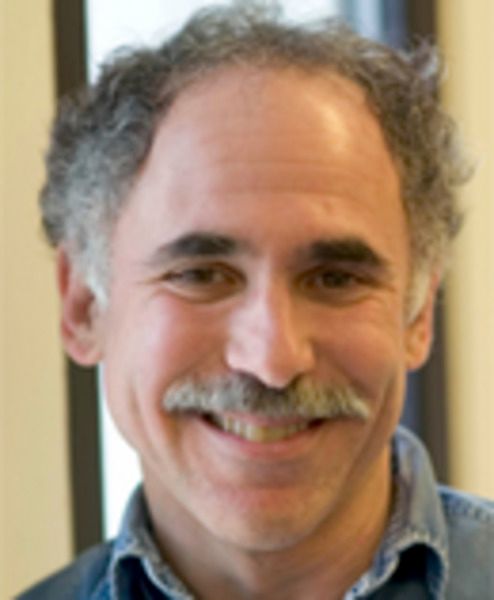
Lee Silver
Dr.
NJ, USDr. Lee M. Silver is a professor at Princeton University in the Department of Molecular Biology and the Woodrow Wilson School of Public and International Affairs. He also has joint appointments in the Program in Science, Technology, and Environmental Policy, the Center for Health and Wellbeing, the Office of Population Research, and the Princeton Environmental Institute, all at Princeton University. In 1973, he received a Bachelor's degree and a Master's degree in physics from the University of Pennsylvania, and in 1978, he received a doctorate in biophysics from Harvard University. Before arriving at Princeton in 1984, he trained at New York's Memorial Sloan-Kettering Cancer Center and the Cold Spring Harbor Laboratory, which was directed by Nobel Laureate James D. Watson.
Dr. Silver's newest book is Challenging Nature: The Clash of Science and Spirituality at the New Frontiers of Life, published by Ecco, an imprint of Harper Collins. Matt Ridley, author of Genome and The Red Queen says Challenging Nature is "imbued with courage, suffused with humanity and written with grace." The philosopher and author Peter Singer calls it "a provocative and sorely needed book," with a "rich array of arguments [that] will force you to think afresh about many cherished preconceptions." Michael Gazzaniga, a leading American neurobiologist and member of President Bush's Council on Bioethics says it is a "spectacular and riveting book that puts those who reason by assertion of prior traditions on the run. [Challenging Nature] makes you think and rethink the most basic questions about the nature of human existence. I say Bravo!"
Dr. Silver's previous book is Remaking Eden: How Genetic Engineering and Cloning Will Transform the American Family, published in 16 languages. He is also the co-author of an undergraduate textbook in genetics, the single author of Mouse Genetics, a textbook for professionals, and editor of Teratocarcinoma Stem Cells.
In 1993, Professor Silver was elected a Fellow of the American Association for the Advancement of Science (AAAS). In 1995, he received an unsolicited 10 year National Institutes of Health MERIT award. He has published over 180 scientific articles in the fields of genetics, evolution, reproduction, embryology, computer modeling, and behavioral science, and other scholarly papers on topics at the interface between biotechnology, law, ethics, and religion. He has been elected to the governing boards of the Genetics Society of America and the International Mammalian Genome Society. He was a member of the New Jersey Bioethics Commission Task Force formed to recommend reproductive policy for the New Jersey State Legislature, and has testified on reproductive and genetic technologies before U.S. Congressional and New York State Senate committees. He has appeared on numerous television and radio programs including Nightly News with Tom Brokaw, Jim Lehrer News Hour, Nova, Nightline, World Report with Peter Jennings, Charlie Rose Show, 20/20, 60 Minutes, and many others in the U.S. and other countries.
MOST REQUESTED TOPICS:
The Clash of Biotechnology and Spirituality
All human civilizations were founded on the ability to control and manipulate genes and cells in other organisms, including plants, animals, and microbes: neither wool nor corn existed until human ancestors invented such "natural" substances. Today, new understanding brings both precision and transparency to technological processes that could alleviate human suffering, feed the world and, at the same time, stem the tide of earth’s ecological degradation. And yet, biotechnology is more contentious than ever, but in different ways to different people. Deeply religious Americans want embryo cloning to be a felony. In contrast, New Age secularists rail against genetically modified crops. While they share seemingly little beyond mutual contempt, both camps are driven -- consciously or subconsciously -- by monotheistic world views that emerge from western culture. Meanwhile, eastern spiritual traditions allow an easier embrace of all forms of biotechnology, with potentially serious consequences for western competitiveness.
Embryos, Stem Cells, Cloning and the Future of Medicine
Among the most contentious debates in society today is whether biomedical scientists should be allowed to use human embryos -- created by in vitro fertilization or cloning -- to develop stem cell therapies for the treatment of disease and aging. This line of research, unimaginable a decade ago, could revolutionize diverse fields of medicine. However, opposition is loud and fierce. Bioethical or religious principles drive some opponents, but in other cases, misunderstanding and a failure to distinguish fact from fiction are to blame. In this animated lecture, Professor Silver will tease apart the diverse scientific and religious conceptualizations of life in general and human life in particular. He will explain the scientific principles of cloning, its biomedical potential, and the clash of opinions surrounding the ethics of the technology. Professor Silver will also provide a cultural framework for understanding why Asian countries like China, Singapore, and India are embracing cloning technology, and the implications for continued American dominance over biomedical research.
The Human-Designed Biosphere: Past, Present and Future
The earth is a finite place already altered drastically by billions of human beings. Today, 53% of the world's landmass is used to feed and house humankind, few pre-civilization ecosystems survive anywhere, and human-created organisms like corn, cows, and pigs predominate over all "natural" life forms. Continued exploitive growth with increases in human population is unsustainable. But we should not look to Mother Nature to solve the problems of the world because she cares not for any creature or even any species. Humanity, in contrast, does care. And, in many natural situations, we have a universal preference for some outcomes rather than others. Why let Mother Nature throw the dice when we can place them on the table with the most desired number. Not every placement will be a win. Indeed, losses are a certainty. But they will be far fewer in number compared to those imposed by randomness, or a faith in transcendent non-randomness. Ultimately, through the wise use of biotechnology, both humankind and the biosphere could be sustained and nurtured. But as happened in the past, the height of unnaturalness for one generation will become the new natural for the next, and the cycle will repeat over and over again. Slowly, inevitably, Human Nature will remake all of Mother Nature in the image of the idealized world that exists within our own minds.
Genetic Engineering and the Future of Humankind
What does the future hold for Homo sapiens -- our own species? In a thousand years, a million years, or 100 million years, will human descendants be mostly indistinguishable -- physically and mentally -- from people somewhere on the broad curves of humanity that exist today. Or will genetic change lead to the emergence of a post human species, as different from us as we are from Neanderthal man or Homo erectus, in ways that our minds are incapable of imagining. The evolution of pre-human animals into human beings was driven almost entirely by natural selection. But modern medicine and modern notions of human rights could very well call a halt to Darwinian treachery. So does this mean that we are at the end of our evolutionary line? Not likely. With tools of genetic engineering that have already been applied to other animals, and with increased knowledge of the human genome, parents will soon be able to provide their children-to-be with inheritable advantages that could be passed on and enhanced from one generation to the next. The critical question is whether humanity will self-evolve together or apart.
Dr. Lee M. Silver is a professor at Princeton University in the Department of Molecular Biology and the Woodrow Wilson School of Public and International Affairs. He also has joint appointments in the Program in Science, Technology, and Environmental Policy, the Center for Health and Wellbeing, the Office of Population Research, and the Princeton Environmental Institute, all at Princeton University. In 1973, he received a Bachelor's degree and a Master's degree in physics from the University of Pennsylvania, and in 1978, he received a doctorate in biophysics from Harvard University. Before arriving at Princeton in 1984, he trained at New York's Memorial Sloan-Kettering Cancer Center and the Cold Spring Harbor Laboratory, which was directed by Nobel Laureate James D. Watson.
Dr. Silver's newest book is Challenging Nature: The Clash of Science and Spirituality at the New Frontiers of Life, published by Ecco, an imprint of Harper Collins. Matt Ridley, author of Genome and The Red Queen says Challenging Nature is "imbued with courage, suffused with humanity and written with grace." The philosopher and author Peter Singer calls it "a provocative and sorely needed book," with a "rich array of arguments [that] will force you to think afresh about many cherished preconceptions." Michael Gazzaniga, a leading American neurobiologist and member of President Bush's Council on Bioethics says it is a "spectacular and riveting book that puts those who reason by assertion of prior traditions on the run. [Challenging Nature] makes you think and rethink the most basic questions about the nature of human existence. I say Bravo!"
Dr. Silver's previous book is Remaking Eden: How Genetic Engineering and Cloning Will Transform the American Family, published in 16 languages. He is also the co-author of an undergraduate textbook in genetics, the single author of Mouse Genetics, a textbook for professionals, and editor of Teratocarcinoma Stem Cells.
In 1993, Professor Silver was elected a Fellow of the American Association for the Advancement of Science (AAAS). In 1995, he received an unsolicited 10 year National Institutes of Health MERIT award. He has published over 180 scientific articles in the fields of genetics, evolution, reproduction, embryology, computer modeling, and behavioral science, and other scholarly papers on topics at the interface between biotechnology, law, ethics, and religion. He has been elected to the governing boards of the Genetics Society of America and the International Mammalian Genome Society. He was a member of the New Jersey Bioethics Commission Task Force formed to recommend reproductive policy for the New Jersey State Legislature, and has testified on reproductive and genetic technologies before U.S. Congressional and New York State Senate committees. He has appeared on numerous television and radio programs including Nightly News with Tom Brokaw, Jim Lehrer News Hour, Nova, Nightline, World Report with Peter Jennings, Charlie Rose Show, 20/20, 60 Minutes, and many others in the U.S. and other countries.
MOST REQUESTED TOPICS:
The Clash of Biotechnology and Spirituality
All human civilizations were founded on the ability to control and manipulate genes and cells in other organisms, including plants, animals, and microbes: neither wool nor corn existed until human ancestors invented such "natural" substances. Today, new understanding brings both precision and transparency to technological processes that could alleviate human suffering, feed the world and, at the same time, stem the tide of earth’s ecological degradation. And yet, biotechnology is more contentious than ever, but in different ways to different people. Deeply religious Americans want embryo cloning to be a felony. In contrast, New Age secularists rail against genetically modified crops. While they share seemingly little beyond mutual contempt, both camps are driven -- consciously or subconsciously -- by monotheistic world views that emerge from western culture. Meanwhile, eastern spiritual traditions allow an easier embrace of all forms of biotechnology, with potentially serious consequences for western competitiveness.
Embryos, Stem Cells, Cloning and the Future of Medicine
Among the most contentious debates in society today is whether biomedical scientists should be allowed to use human embryos -- created by in vitro fertilization or cloning -- to develop stem cell therapies for the treatment of disease and aging. This line of research, unimaginable a decade ago, could revolutionize diverse fields of medicine. However, opposition is loud and fierce. Bioethical or religious principles drive some opponents, but in other cases, misunderstanding and a failure to distinguish fact from fiction are to blame. In this animated lecture, Professor Silver will tease apart the diverse scientific and religious conceptualizations of life in general and human life in particular. He will explain the scientific principles of cloning, its biomedical potential, and the clash of opinions surrounding the ethics of the technology. Professor Silver will also provide a cultural framework for understanding why Asian countries like China, Singapore, and India are embracing cloning technology, and the implications for continued American dominance over biomedical research.
The Human-Designed Biosphere: Past, Present and Future
The earth is a finite place already altered drastically by billions of human beings. Today, 53% of the world's landmass is used to feed and house humankind, few pre-civilization ecosystems survive anywhere, and human-created organisms like corn, cows, and pigs predominate over all "natural" life forms. Continued exploitive growth with increases in human population is unsustainable. But we should not look to Mother Nature to solve the problems of the world because she cares not for any creature or even any species. Humanity, in contrast, does care. And, in many natural situations, we have a universal preference for some outcomes rather than others. Why let Mother Nature throw the dice when we can place them on the table with the most desired number. Not every placement will be a win. Indeed, losses are a certainty. But they will be far fewer in number compared to those imposed by randomness, or a faith in transcendent non-randomness. Ultimately, through the wise use of biotechnology, both humankind and the biosphere could be sustained and nurtured. But as happened in the past, the height of unnaturalness for one generation will become the new natural for the next, and the cycle will repeat over and over again. Slowly, inevitably, Human Nature will remake all of Mother Nature in the image of the idealized world that exists within our own minds.
Genetic Engineering and the Future of Humankind
What does the future hold for Homo sapiens -- our own species? In a thousand years, a million years, or 100 million years, will human descendants be mostly indistinguishable -- physically and mentally -- from people somewhere on the broad curves of humanity that exist today. Or will genetic change lead to the emergence of a post human species, as different from us as we are from Neanderthal man or Homo erectus, in ways that our minds are incapable of imagining. The evolution of pre-human animals into human beings was driven almost entirely by natural selection. But modern medicine and modern notions of human rights could very well call a halt to Darwinian treachery. So does this mean that we are at the end of our evolutionary line? Not likely. With tools of genetic engineering that have already been applied to other animals, and with increased knowledge of the human genome, parents will soon be able to provide their children-to-be with inheritable advantages that could be passed on and enhanced from one generation to the next. The critical question is whether humanity will self-evolve together or apart.