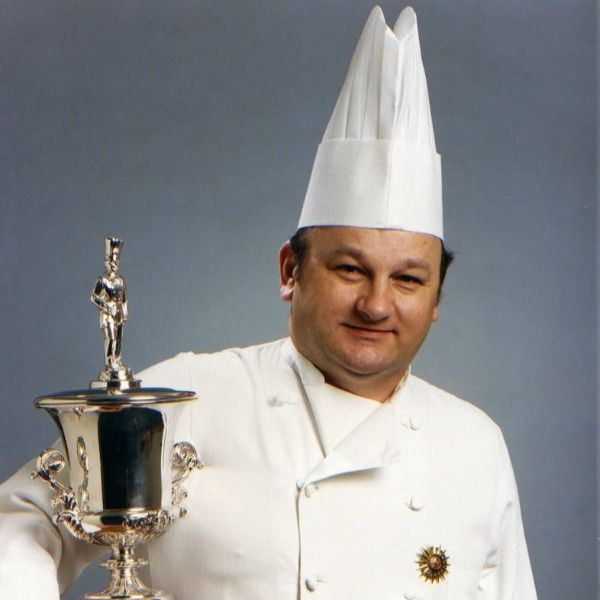
Roland Mesnier
In a career that’s been marked by a constant search for new challenges, it’s time for the next one. “Always!” he said.
His departure is not a surprise. He’s been planning it - and saying it out loud - for four years. “I decided 25 years at the White House was enough,” he said. “I had other things I wanted to do in life.” Mesnier has been White House pastry chef since Rosalynn Carter hired him in 1979. For most of that time, he has been working flat out, squeezing in days off around the needs of the first families and their diplomatic and social obligations.
A sizable, sturdy man who doesn’t let anything leave his kitchen without first tasting it, he has made sure that every sweet served in the White House is made in the White House - every single cookie, every scoop of ice cream, every piece of pastry.
He has astonished world leaders with desserts that paid tribute to their countries (sushi-filled baskets made of molded sugar for the Emperor of Japan, chocolate coaches for the queen of England). He’s been sensitive to cultural taboos, dietary quirks and food allergies. His annual gingerbread houses have grown from single structures to whole villages. Last year’s couldn’t even fit in the White House elevator.
“I would hope that everything we do is not your average dessert,” he said, knowing full well he has made sure that’s the case.
When Mesnier arrived, the White House kitchen was a different place. The revolution that transformed and energized American food in the 1980s and ‘90s was yet to come. Cooking with seasonal ingredients wasn’t de rigueur. And desserts in the best restaurants tended to be standbys --creme caramel, key lime pie, crepes suzettes. Indeed, desserts were so taken for granted that Mesnier’s work space was a cramped corner of the White House kitchen (and occasionally the hallway outside it).
Trained in Europe, where he had mastered every kind of pastry, candy, dessert and decoration, Mesnier was dismayed. His first self-imposed task was getting rid of any sweet not made at the White House. “It was a common thing to order cookies for 300 people,” he said. “I didn’t see that with a very kind eye. Besides, everyone knows guests steal things. When they took cookies, I wanted them to be cookies made at the White House.”
Gradually he introduced fine pastries, mousse cakes, frozen desserts, meringues, tarts and pies, chocolate and decorative sugar work. But with limited space, budget and staff, he didn’t come into his own, he said, until early in the Reagan administration. “I decided if I was going to be creative, I had to take control of my own destiny.”
These days Mesnier works in the separate --but far from grand-- pastry kitchen carved out for him in 1989 in an East Wing space in between floors. There, and in a separate chocolate room, Mesnier, assistant pastry chef Susie Morrison and the part-timers he hires for large occasions produce a relentless parade of desserts and pastries.
Although each creation must be made from fresh ingredients, taste good and look beautiful, in Mesnier’s kitchen there is a hierarchy of sweets, depending on the occasion. Family meals might get lemon bars, brownies, pies and cakes with ice cream and fresh fruit. Meals for new members of Congress are up a notch, say apple creme brulee with almond tuiles or caramel custard with fresh fruit. Working lunches with foreign dignitaries inspire more serious sweets, such as tea sorbet with orange-chocolate mousse and pistachio sauce; and world leaders at Camp David get a more down-home treatment, such as warm apple and mango winter pudding with ginger ice cream and vanilla sauce.
A state dinner takes particular precedence. The desserts he creates for them are unique - he has never repeated one. Working with the relevant embassy, often weeks ahead of time, Mesnier looks for images from the country for the sweet trays and themed showpieces he creates for each table - such as the blown-sugar giraffes and the coffee mills constructed of chocolate (accompanied by a sugar yellow rose of Texas) for Kenyan President Mwai Kibaki’s 2003 dinner. “And that’s only the decoration,” he said.
That respect for White House guests is only simple courtesy, he believes. “Whatever comes out of here, comes out in the name of the first lady and the president,” Mesnier said. “We’re not here to promote ourselves. We’re trying to help the guests have fun and create beautiful desserts that distract them from their daily problems.”
In the den of his Fairfax County, Va., home, looking at the thousands of photographs he has taken of his White House desserts, Mesnier said now he’ll finally have time to catalog them and work in his beloved garden too.
Then there’s the 40 pounds he says he needs to lose. “My health took a beating in his job,” he said. “The stress. So many late hours. So few days off.”
The White House, which is interviewing candidates, said that a new pastry chef will be hired some time this summer. But whatever happens, Mesnier will leave July 30. “He will be missed,” said first lady Laura Bush. “Roland’s desserts have been enjoyed by presidents, their families and guests through five administrations. The president and I are always proud when his creations are presented to heads of state and old family friends.”
Mesnier planned his departure carefully, first by deciding that its timing should coincide with the release of a book he wanted to write. So September will find him promoting Dessert University (Simon & Schuster), a course in pastry for the home chef, which he wrote with former pastry chef and author Lauren Chattman. He has another book in mind, too, and he’s planning to teach again, lecture and do private tutoring for pastry chefs. “You cannot stop, just like that,” he said.
In a career that’s been marked by a constant search for new challenges, it’s time for the next one. “Always!” he said.
His departure is not a surprise. He’s been planning it - and saying it out loud - for four years. “I decided 25 years at the White House was enough,” he said. “I had other things I wanted to do in life.” Mesnier has been White House pastry chef since Rosalynn Carter hired him in 1979. For most of that time, he has been working flat out, squeezing in days off around the needs of the first families and their diplomatic and social obligations.
A sizable, sturdy man who doesn’t let anything leave his kitchen without first tasting it, he has made sure that every sweet served in the White House is made in the White House - every single cookie, every scoop of ice cream, every piece of pastry.
He has astonished world leaders with desserts that paid tribute to their countries (sushi-filled baskets made of molded sugar for the Emperor of Japan, chocolate coaches for the queen of England). He’s been sensitive to cultural taboos, dietary quirks and food allergies. His annual gingerbread houses have grown from single structures to whole villages. Last year’s couldn’t even fit in the White House elevator.
“I would hope that everything we do is not your average dessert,” he said, knowing full well he has made sure that’s the case.
When Mesnier arrived, the White House kitchen was a different place. The revolution that transformed and energized American food in the 1980s and ‘90s was yet to come. Cooking with seasonal ingredients wasn’t de rigueur. And desserts in the best restaurants tended to be standbys --creme caramel, key lime pie, crepes suzettes. Indeed, desserts were so taken for granted that Mesnier’s work space was a cramped corner of the White House kitchen (and occasionally the hallway outside it).
Trained in Europe, where he had mastered every kind of pastry, candy, dessert and decoration, Mesnier was dismayed. His first self-imposed task was getting rid of any sweet not made at the White House. “It was a common thing to order cookies for 300 people,” he said. “I didn’t see that with a very kind eye. Besides, everyone knows guests steal things. When they took cookies, I wanted them to be cookies made at the White House.”
Gradually he introduced fine pastries, mousse cakes, frozen desserts, meringues, tarts and pies, chocolate and decorative sugar work. But with limited space, budget and staff, he didn’t come into his own, he said, until early in the Reagan administration. “I decided if I was going to be creative, I had to take control of my own destiny.”
These days Mesnier works in the separate --but far from grand-- pastry kitchen carved out for him in 1989 in an East Wing space in between floors. There, and in a separate chocolate room, Mesnier, assistant pastry chef Susie Morrison and the part-timers he hires for large occasions produce a relentless parade of desserts and pastries.
Although each creation must be made from fresh ingredients, taste good and look beautiful, in Mesnier’s kitchen there is a hierarchy of sweets, depending on the occasion. Family meals might get lemon bars, brownies, pies and cakes with ice cream and fresh fruit. Meals for new members of Congress are up a notch, say apple creme brulee with almond tuiles or caramel custard with fresh fruit. Working lunches with foreign dignitaries inspire more serious sweets, such as tea sorbet with orange-chocolate mousse and pistachio sauce; and world leaders at Camp David get a more down-home treatment, such as warm apple and mango winter pudding with ginger ice cream and vanilla sauce.
A state dinner takes particular precedence. The desserts he creates for them are unique - he has never repeated one. Working with the relevant embassy, often weeks ahead of time, Mesnier looks for images from the country for the sweet trays and themed showpieces he creates for each table - such as the blown-sugar giraffes and the coffee mills constructed of chocolate (accompanied by a sugar yellow rose of Texas) for Kenyan President Mwai Kibaki’s 2003 dinner. “And that’s only the decoration,” he said.
That respect for White House guests is only simple courtesy, he believes. “Whatever comes out of here, comes out in the name of the first lady and the president,” Mesnier said. “We’re not here to promote ourselves. We’re trying to help the guests have fun and create beautiful desserts that distract them from their daily problems.”
In the den of his Fairfax County, Va., home, looking at the thousands of photographs he has taken of his White House desserts, Mesnier said now he’ll finally have time to catalog them and work in his beloved garden too.
Then there’s the 40 pounds he says he needs to lose. “My health took a beating in his job,” he said. “The stress. So many late hours. So few days off.”
The White House, which is interviewing candidates, said that a new pastry chef will be hired some time this summer. But whatever happens, Mesnier will leave July 30. “He will be missed,” said first lady Laura Bush. “Roland’s desserts have been enjoyed by presidents, their families and guests through five administrations. The president and I are always proud when his creations are presented to heads of state and old family friends.”
Mesnier planned his departure carefully, first by deciding that its timing should coincide with the release of a book he wanted to write. So September will find him promoting Dessert University (Simon & Schuster), a course in pastry for the home chef, which he wrote with former pastry chef and author Lauren Chattman. He has another book in mind, too, and he’s planning to teach again, lecture and do private tutoring for pastry chefs. “You cannot stop, just like that,” he said.