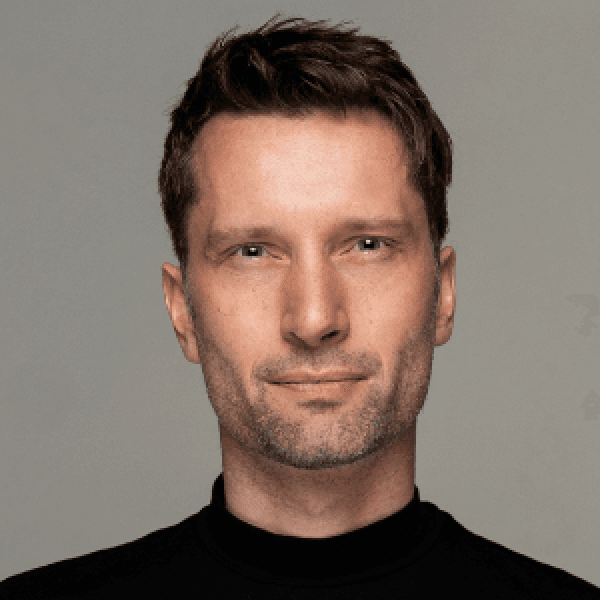
Michal Kosinski
Ph.D
CA, USUncover how AI, Big Data and psychology shape decision-making. Michal Kosinski’s insights on human behavior and digital privacy equip audiences with essential knowledge for navigating the digital age.
Michal Kosinski is an Associate Professor of Organizational Behavior at Stanford University's Graduate School of Business, where he explores the intersection of human and artificial cognition. His research focuses on psychological processes in Large Language Models and the use of Artificial Intelligence, Machine Learning, and Big Data to model and predict human behavior.
- Co-author of Handbook of Social Psychology and Modern Psychometrics, two widely used textbooks
- 100+ peer-reviewed papers published in top journals, including Nature Computational Science, Proceedings of the National Academy of Sciences, and Psychological Science
- Research cited over 24,000 times, placing him in the Top 1% of Highly Cited Researchers (Clarivate)
- Recipient of the Rising Star Award (Association of Psychological Science, 2015) and Early Achievement Award (European Association of Personality Psychology, 2023)
Michal’s research has been widely recognized, inspiring:
- A cover story in The Economist
- The 2014 theater production Privacy
- Multiple TED Talks
- A video game
- Features in thousands of press articles, books, podcasts, and documentaries
- DLD Conference 2025: His talk was selected as “Talk of the Day”
Michal played a key role in exposing the privacy risks exploited by Cambridge Analytica—years before their scandal became public. His research revealed how psychological profiling could be used for political influence and online persuasion. His contributions to uncovering their methods are discussed in:
- Facebook: The Inside Story by Steven Levy
- Weapons of Mass Persuasion by Sander van der Linden
Michal holds a Ph.D. in psychology from the University of Cambridge and master’s degrees in psychometrics and social psychology. Prior to his current role, he was:
- A postdoctoral scholar in Stanford’s Computer Science Department
- Deputy Director of the University of Cambridge Psychometrics Centre
- A researcher in Microsoft Research's Machine Learning Group
Michal donates at least 10% of his income to effective charities—and hopes to inspire others to do the same.
Michal Kosinski is an Associate Professor of Organizational Behavior at Stanford University's Graduate School of Business, where he explores the intersection of human and artificial cognition. His research focuses on psychological processes in Large Language Models and the use of Artificial Intelligence, Machine Learning, and Big Data to model and predict human behavior.
- Co-author of Handbook of Social Psychology and Modern Psychometrics, two widely used textbooks
- 100+ peer-reviewed papers published in top journals, including Nature Computational Science, Proceedings of the National Academy of Sciences, and Psychological Science
- Research cited over 24,000 times, placing him in the Top 1% of Highly Cited Researchers (Clarivate)
- Recipient of the Rising Star Award (Association of Psychological Science, 2015) and Early Achievement Award (European Association of Personality Psychology, 2023)
Michal’s research has been widely recognized, inspiring:
- A cover story in The Economist
- The 2014 theater production Privacy
- Multiple TED Talks
- A video game
- Features in thousands of press articles, books, podcasts, and documentaries
- DLD Conference 2025: His talk was selected as “Talk of the Day”
Michal played a key role in exposing the privacy risks exploited by Cambridge Analytica—years before their scandal became public. His research revealed how psychological profiling could be used for political influence and online persuasion. His contributions to uncovering their methods are discussed in:
- Facebook: The Inside Story by Steven Levy
- Weapons of Mass Persuasion by Sander van der Linden
Michal holds a Ph.D. in psychology from the University of Cambridge and master’s degrees in psychometrics and social psychology. Prior to his current role, he was:
- A postdoctoral scholar in Stanford’s Computer Science Department
- Deputy Director of the University of Cambridge Psychometrics Centre
- A researcher in Microsoft Research's Machine Learning Group
Michal donates at least 10% of his income to effective charities—and hopes to inspire others to do the same.
The End of Privacy
Format: 60-minute keynote
This program is perfect for:
- Business leaders, policymakers, and organizations navigating data privacy challenges
- Professionals in AI, technology, and digital ethics concerned about the future of personal data
The audience will leave with:
- Insights into how digital behaviors reveal psychological traits with unprecedented...
Making Sense of Modern AI
Format: 60-minute keynote
This program is perfect for:
- Business leaders, policymakers, and organizations adapting to AI-driven transformations
- Professionals seeking to understand the capabilities, risks, and ethical considerations of AI
The audience will leave with:
- A clear understanding of how AI, particularly Large Language Models (LLMs), is shaping...
Navigating the AI Revolution: Impacts on Organizations, Societies, and Individuals
Format: 60-minute keynote
This program is perfect for:
- Business leaders and executives looking to leverage AI for strategic decision-making
- Organizations and policymakers addressing the workforce, privacy, and accountability challenges of AI
The audience will leave with:
- A clear understanding of the capabilities and limitations of Large Language...
Digital Twins: Using Algorithms to Predict, Model, and Change Human Behavior
Format: 60-minute keynote
This program is perfect for:
- Business leaders and executives integrating AI into decision-making processes
- Policymakers and professionals navigating AI’s ethical and operational challenges
The audience will leave with:
- A deeper understanding of how AI works and its growing role in decision-making
- Insights...