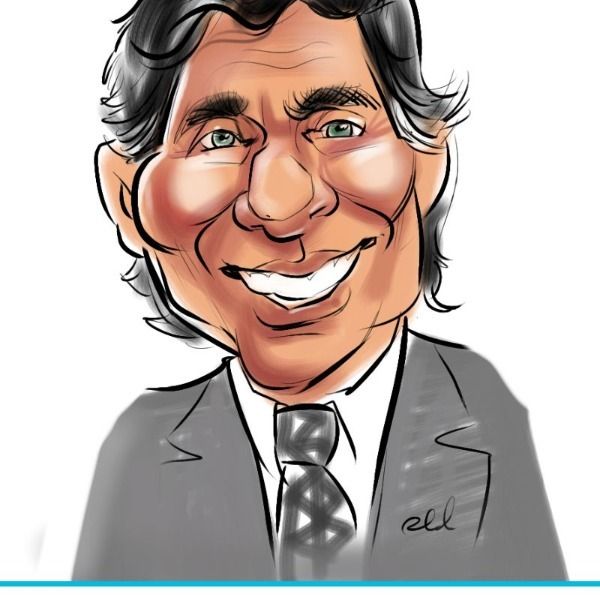
Dr. R.A. "Art" McNeil
PhD.
FL, USArt McNeil is recognized around the world as authority on aligning people to deliver on a contagious brand promise (coaching CEOs and management teams on how to take their companies to the next level). Among his many publications he authored a #1 bestseller entitled, The "I" of the Hurricane: Generating Corporate Energy that has become an international classic in eight languages.
Art differentiated Achieve with the brand promise (aka reason for being statement) "when theory is not enough." He advised potential Clients, "if you want a costly report hire a consultant—if you want behavior change (results) partner with us."
At age 49, Art earned a mid-career Master of Arts Degree in Applied Behavioral Science from Whitworth University where he studied leadership and group dynamics. When asked why he included family studies Art replied, "because what goes on around the kitchen table goes on around the boardroom table—just bigger words and more paperwork." He has been published in many management and business journals such as Executive Excellence and Family Business Magazine, and also wrote a syndicated newspaper column, entitled Life is not a Spectator Sport.
MOST REQUESTED TOPICS: Those choosing to lead successful businesses, community groups, and families will have to make a 180° shift from a mindset of knowing, to an attitude of not knowing...moderating their trust in knowledge (experience) by adopting methods for finding out and taking action faster than the competition (process)."
Art's transition metaphor:
Like expert jazz bands, successful small companies create excellent music because a limited number of players are motivated by the founder's vision. They know their team's strengths and limitations, cover for each other, become experts at shooting from the hip, changing direction on the fly and multi-tasking—in short, they are prepared and capable of doing whatever it takes to win audience approval.
But when the group starts adding or removing people, the freewheeling style that propelled them to success, starts creating performance problems. Failures are often the result of poor cash management (it takes more to supply and house an orchestra), undisciplined hiring, and a reliance on personality and personal authority rather than process discipline. Because there is seldom a comprehensive induction process for new employees, the group's vision, values and operating methods exist only in the heads of the leader and his/her original team. Jazz bands and smaller companies are capable of gaining audience approval provided they remain small. The decision to grow requires letting go of entrepreneurial (seat of the pants) management and should never be taken lightly. When a company is growing, founders who can't get out of their own way become an impediment rather than an asset.
Unlike their freewheeling jazz counterparts, musicians in large groups follow a prearranged score. Playing in an orchestra demands absolute compliance to the written music. The conductor can't allow members to blow, bow, or drum out spontaneous licks whenever the spirit moves them. High performing conductors demand that each position play exactly what has been written. In an orchestra, collaboration fosters passion and pride, even though individual assignments may not always be challenging or exciting. The composer, conductor and musicians have specific roles to play—they trust colleagues to play their assigned parts. Many talented musicians can't succeed in large groups because they are either unwilling or incapable of adhering to written music." Growth seeking CEOs, managers and employees must learn to read and write the business equivalent of a musical score—process. When a company is asked to change (in the "shift-age" the fastest—not the largest, will survive and prosper). People who read music can change tunes easily. Employees must be capable of: following process, playing their assigned parts well and also alert management when they notice non-compliance. The CEOs primary responsibility is to ensure that audiences remain delighted with what is being played and that the needs of all partners—internal, external, and funding—will be met now and in the future.
Art McNeil is recognized around the world as authority on aligning people to deliver on a contagious brand promise (coaching CEOs and management teams on how to take their companies to the next level). Among his many publications he authored a #1 bestseller entitled, The "I" of the Hurricane: Generating Corporate Energy that has become an international classic in eight languages.
Art differentiated Achieve with the brand promise (aka reason for being statement) "when theory is not enough." He advised potential Clients, "if you want a costly report hire a consultant—if you want behavior change (results) partner with us."
At age 49, Art earned a mid-career Master of Arts Degree in Applied Behavioral Science from Whitworth University where he studied leadership and group dynamics. When asked why he included family studies Art replied, "because what goes on around the kitchen table goes on around the boardroom table—just bigger words and more paperwork." He has been published in many management and business journals such as Executive Excellence and Family Business Magazine, and also wrote a syndicated newspaper column, entitled Life is not a Spectator Sport.
MOST REQUESTED TOPICS: Those choosing to lead successful businesses, community groups, and families will have to make a 180° shift from a mindset of knowing, to an attitude of not knowing...moderating their trust in knowledge (experience) by adopting methods for finding out and taking action faster than the competition (process)."
Art's transition metaphor:
Like expert jazz bands, successful small companies create excellent music because a limited number of players are motivated by the founder's vision. They know their team's strengths and limitations, cover for each other, become experts at shooting from the hip, changing direction on the fly and multi-tasking—in short, they are prepared and capable of doing whatever it takes to win audience approval.
But when the group starts adding or removing people, the freewheeling style that propelled them to success, starts creating performance problems. Failures are often the result of poor cash management (it takes more to supply and house an orchestra), undisciplined hiring, and a reliance on personality and personal authority rather than process discipline. Because there is seldom a comprehensive induction process for new employees, the group's vision, values and operating methods exist only in the heads of the leader and his/her original team. Jazz bands and smaller companies are capable of gaining audience approval provided they remain small. The decision to grow requires letting go of entrepreneurial (seat of the pants) management and should never be taken lightly. When a company is growing, founders who can't get out of their own way become an impediment rather than an asset.
Unlike their freewheeling jazz counterparts, musicians in large groups follow a prearranged score. Playing in an orchestra demands absolute compliance to the written music. The conductor can't allow members to blow, bow, or drum out spontaneous licks whenever the spirit moves them. High performing conductors demand that each position play exactly what has been written. In an orchestra, collaboration fosters passion and pride, even though individual assignments may not always be challenging or exciting. The composer, conductor and musicians have specific roles to play—they trust colleagues to play their assigned parts. Many talented musicians can't succeed in large groups because they are either unwilling or incapable of adhering to written music." Growth seeking CEOs, managers and employees must learn to read and write the business equivalent of a musical score—process. When a company is asked to change (in the "shift-age" the fastest—not the largest, will survive and prosper). People who read music can change tunes easily. Employees must be capable of: following process, playing their assigned parts well and also alert management when they notice non-compliance. The CEOs primary responsibility is to ensure that audiences remain delighted with what is being played and that the needs of all partners—internal, external, and funding—will be met now and in the future.