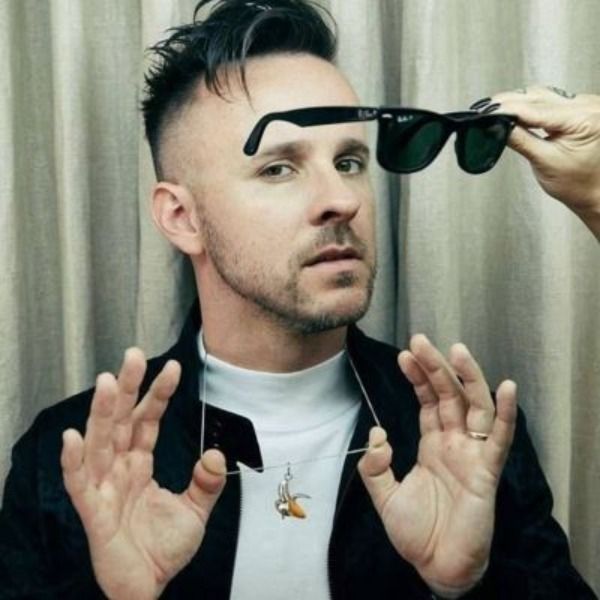
Ricky Reed
For 18 months he drove down in a rental car to LA. "A couple times I slept in the car, I was grinding, sleeping on couches, biking and busing. I showed up to sessions off my bike sweaty with people who were not sweaty, you know?"
Eventually he had enough traction to move and scored a publishing deal. LA Reid met him on a night out and signed him to Epic after a tequila-infused evening in 2012. Soon after that the "Talking Dirty" beat came and 15 years into the hustle success arrived in a way he'd never imagined. "My success comes when I don't play ball with what's expected, when I take risks, when I throw caution to the wind and do things that are more experimental and against the grain," he says. "When I don't is when I play it safe. I need to hold onto this grit, anger and outsider perspective."
From Kesha to Twenty One Pilots, Halsey to Maggie Rogers, he has been there with fellow outsiders working on unpredictable moments. "I look for perspective," he says of collaborators. "That's the one thing I can't help an artist with. I can't give an artist a compelling world view." He also looks to form friendships. When Atlantic offered him his own imprint after the success of Twenty One Pilots, he had a platform to feed the community he's been establishing through. Nice Life records began to sign acts, including rapper and body positive activist Lizzo. Last year Nice Life put out Pussy Riot's first official record, too. "This is an opportunity to amplify the voices I think need to be louder, whether they're overtly political or political in the way Lizzo is via her visibility. All the acts here make subversive pop, which ties back to my earliest roots."
For Ricky, it doesn't matter the genre or the end product, the projects need to be rooted in a close bond. "It's important to be on the same team immediately," he says. "The biggest thing is: let's talk about how you're doing. When I worked with Kesha we had to form a relationship that was trusting for someone who's had a lot of trauma. I wasworking with Phantogram at that time and the singer lost her sister to suicide. This was also just after I married my wife who suffers from depression." In other words it goes beyond songs. "There's nothing sweeter than having success with people you like."
For Ricky, the journey is just beginning but he's already been able to take in the enormity of what he's achieved. His wife will be giving birth to twin boys next spring, and he's been scared to take his foot off the gas in the studio. One of his mentors gave him a pep talk. "He goes, 'Ricky, right now you're thinking, 'If I take the time I need I'm gonna lose my grip on everything I've worked for. But you've built this community that cares about you. You're not going anywhere. You gotta fucking be brave! Clear your schedule.' It was crazy. I talked to my therapist about it and cried for 20 minutes," he says. "He reminded me that I have permission to let my guard down, to let people take care of me for once." At this point, Ricky actually sheds a tear. He was at the Latin Grammys following a nomination for Record Of The Year with Bomba Estereo. Hungover on the plane home he suddenly dropped into his emotional subconscious. "I cried," he says. "I cried because I am where I wanna be. This is the life I wanted and I don't want any other version of it."
For 18 months he drove down in a rental car to LA. "A couple times I slept in the car, I was grinding, sleeping on couches, biking and busing. I showed up to sessions off my bike sweaty with people who were not sweaty, you know?"
Eventually he had enough traction to move and scored a publishing deal. LA Reid met him on a night out and signed him to Epic after a tequila-infused evening in 2012. Soon after that the "Talking Dirty" beat came and 15 years into the hustle success arrived in a way he'd never imagined. "My success comes when I don't play ball with what's expected, when I take risks, when I throw caution to the wind and do things that are more experimental and against the grain," he says. "When I don't is when I play it safe. I need to hold onto this grit, anger and outsider perspective."
From Kesha to Twenty One Pilots, Halsey to Maggie Rogers, he has been there with fellow outsiders working on unpredictable moments. "I look for perspective," he says of collaborators. "That's the one thing I can't help an artist with. I can't give an artist a compelling world view." He also looks to form friendships. When Atlantic offered him his own imprint after the success of Twenty One Pilots, he had a platform to feed the community he's been establishing through. Nice Life records began to sign acts, including rapper and body positive activist Lizzo. Last year Nice Life put out Pussy Riot's first official record, too. "This is an opportunity to amplify the voices I think need to be louder, whether they're overtly political or political in the way Lizzo is via her visibility. All the acts here make subversive pop, which ties back to my earliest roots."
For Ricky, it doesn't matter the genre or the end product, the projects need to be rooted in a close bond. "It's important to be on the same team immediately," he says. "The biggest thing is: let's talk about how you're doing. When I worked with Kesha we had to form a relationship that was trusting for someone who's had a lot of trauma. I wasworking with Phantogram at that time and the singer lost her sister to suicide. This was also just after I married my wife who suffers from depression." In other words it goes beyond songs. "There's nothing sweeter than having success with people you like."
For Ricky, the journey is just beginning but he's already been able to take in the enormity of what he's achieved. His wife will be giving birth to twin boys next spring, and he's been scared to take his foot off the gas in the studio. One of his mentors gave him a pep talk. "He goes, 'Ricky, right now you're thinking, 'If I take the time I need I'm gonna lose my grip on everything I've worked for. But you've built this community that cares about you. You're not going anywhere. You gotta fucking be brave! Clear your schedule.' It was crazy. I talked to my therapist about it and cried for 20 minutes," he says. "He reminded me that I have permission to let my guard down, to let people take care of me for once." At this point, Ricky actually sheds a tear. He was at the Latin Grammys following a nomination for Record Of The Year with Bomba Estereo. Hungover on the plane home he suddenly dropped into his emotional subconscious. "I cried," he says. "I cried because I am where I wanna be. This is the life I wanted and I don't want any other version of it."