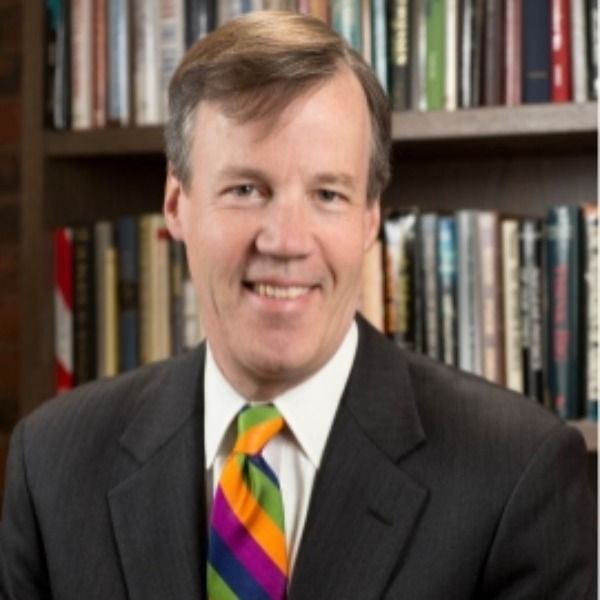
Christopher Smart
After a successful investment career, Christopher Smart led the U.S. Treasury's response to the European financial crisis and served as President Obama's senior director on trade and international economic policy. Currently an author and a senior fellow at Harvard, he shares fascinating perspectives on the dynamics of global financial markets, the political forces driving key economic debates, and a range of challenges from Brexit negotiations, to Russian sanctions, to the outlook for Asian trade.
Christopher Smart shares his rare and fascinating perspectives on global economic issues, trade policy, and the dynamics of financial markets. As Special Assistant to the President at the National Security Council, he was principal advisor on trade, investment, and a wide range of issues from the commercial implications of data regulation to the national security reviews of foreign investment. From 2009 to 2013, he was Deputy Assistant Secretary of the Treasury, where he led the U.S. response to the European financial crisis and designed U.S. engagement on financial policy across Europe, Russia, and Central Asia. Before entering government, Dr. Smart was director of international investments at Pioneer Investments, where he managed top-performing emerging markets and international portfolios. Following the collapse of the Soviet Union, he worked in Moscow, advising Russian government agencies on economic policy and financial market reform. Earlier in his career, he was a journalist in St. Petersburg, Florida, and Paris, France. He holds a doctorate in international relations from Columbia University and speaks fluent French, Russian, and German
After a successful investment career, Christopher Smart led the U.S. Treasury's response to the European financial crisis and served as President Obama's senior director on trade and international economic policy. Currently an author and a senior fellow at Harvard, he shares fascinating perspectives on the dynamics of global financial markets, the political forces driving key economic debates, and a range of challenges from Brexit negotiations, to Russian sanctions, to the outlook for Asian trade.
Christopher Smart shares his rare and fascinating perspectives on global economic issues, trade policy, and the dynamics of financial markets. As Special Assistant to the President at the National Security Council, he was principal advisor on trade, investment, and a wide range of issues from the commercial implications of data regulation to the national security reviews of foreign investment. From 2009 to 2013, he was Deputy Assistant Secretary of the Treasury, where he led the U.S. response to the European financial crisis and designed U.S. engagement on financial policy across Europe, Russia, and Central Asia. Before entering government, Dr. Smart was director of international investments at Pioneer Investments, where he managed top-performing emerging markets and international portfolios. Following the collapse of the Soviet Union, he worked in Moscow, advising Russian government agencies on economic policy and financial market reform. Earlier in his career, he was a journalist in St. Petersburg, Florida, and Paris, France. He holds a doctorate in international relations from Columbia University and speaks fluent French, Russian, and German
Data, Data, Everywhere—But Who Will Set the Rules?
The Next Global Crisis (Will Start in China)
As Chinese financial markets grow larger and more integrated, volatility will no longer be contained to the accounts of niche emerging markets investors. Rapidly expanding financial flows to and from China, even in the context of capital controls, mean that shocks from Chinese markets will increasingly reverberate globally. U.S. and European regulators still struggle to establish coordinating mechanisms to manage bank failures and market turmoil on both sides of the Atlantic, but they have...
Investment Strategy Amid the Challenges of 21st-Century Populism
Global bond markets are the ultimate arbiters of sensible economic policy. To the extent that voters push government officials toward self-defeating, protectionist policies, investors should ask for a higher return. Emerging markets like Brazil and South Africa learned the hard way that borrowing internationally requires them to maintain a certain economic orthodoxy that doesn't always win votes. During the European financial crisis, bond spreads forced political leaders to make deeply...