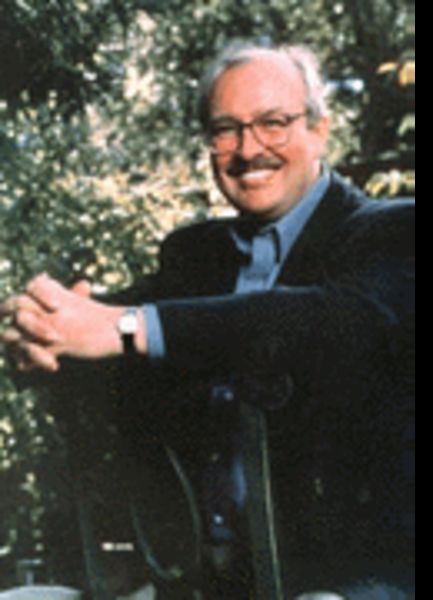
Ian Morrison
Ian is an internationally known author, consultant, and speaker specializing in long-term forecasting and planning with particular emphasis on health care and the changing business environment. He combines research and consulting skills with an incisive Scottish wit to help public and private organizations plan their longer-term future.
Ian has written, lectured, and consulted on a wide variety of forecasting, strategy, and health care topics for government, industry, and a variety of nonprofit organizations in North America, Europe, and Asia. He has spoken to a range of audiences from the boards of Fortune 100 companies to the Chinese Academy of Social Sciences in Beijing. Ian has worked with more than 100 Fortune 500 companies in health care, manufacturing, information technology, and financial services. Recent client sponsors include Volvo, Bank of America, and Kaiser Permanente. He is a frequent commentator on the future for television, radio, and the print media.
Ian is the author of Healthcare In The New Millennium: Vision, Values and Leadership (1999) and The Second Curve - Managing The Velocity of Change (Ballantine, May 1996) - a New York Times Business Bestseller and Businessweek Bestseller. Ian has co-authored several books and chapters, including Future Tense: The Business Realities of the Next Ten Years (William Morrow, 1994) and Looking Ahead at American Health Care (McGraw-Hill, 1988). He also has co-authored numerous journal articles for publications such as Chief Executive, Encyclopedia Britannica, Across the Board, The British Medical Journal, New England Journal of Medicine, and Health Affairs.
Ian is retained by Andersen Consulting as Chairman of their Health Futures Forum. Ian is also a Senior Fellow at IFTF and its former President (from 1990 to 1996), responsible for leading IFTF's growth and success over that period. Prior to becoming President, Ian led IFTF's part in Health Care Outlook, an ongoing forecasting service for clients in the health care industry, along with joint venture partners from Louis Harris & Associates and the Harvard School of Public Health's Department of Health Policy and Management.
Before coming to IFTF in 1985, Ian spent seven years in British Columbia, Canada, in a variety of research, teaching, and consulting positions. He holds an interdisciplinary Ph.D. in urban studies from the University of British Columbia; an MA in geography from the University of Edinburgh, Scotland, and a graduate degree in urban planning from the University of Newcastle-upon-Tyne, England. He is also a member of the Board of Directors of Interim Services, a leading temporary services company; Oceania, a privately held medical software company; and the Health Research and Education Trust (HRET), the research and education arm of the American Hospital Association.
Presentation Topics
THE SECOND CURVE: MANAGING THE VELOCITY OF CHANGE
The thesis of Ian Morrison's The Second Curve: Managing the Velocity of Change (Ballantine, 1996) is that most businesses in most industries are going along quite nicely on their first curve (their core business) where they make all their profit and revenue. Then along comes a second curve - a new business or completely new way of doing business - which threatens to replace the first curve. The second curve is driven by the confluence of three powerful driving forces: new technologies, such as the Internet; new consumers, who are smarter, more affluent, more skeptical, and more demanding than the previous generation; and new markets, such as China, with its 1.2 billion consumers. The challenge is to gauge how fast the second curve will take over and develop strategy accordingly. All of the current profit is on the First Curve; all of the future growth is on the Second Curve.
Organizations and individuals need to respond to the Second Curve. But there is a natural human tendency to overestimate the impact of phenomena in the short run, and underestimate it in the long run. The key is to understand and manage the velocity of change.
THE FUTURE OF THE HEALTHCARE MARKETPLACE
Globally, healthcare is in a state of flux. In the U.S. the inexorable rise of managed care is faltering somewhat as it comes under increasing scrutiny by the media, the consumer, and the regulators, and as margins in the business start to erode. Large-scale vertical integration in healthcare has not taken place; rather we have seen massive horizontal consolidation of health plans, hospital systems, and physician groups. The industry is looking for a new direction and a new vision. This presentation will focus on the political, economic, and strategic context of change in healthcare and examine how the various actors are preparing for the future. It will examine where we have been, where we are, and where we are headed. In particular, it will explore the tensions between the market and the civil society.
For more information, please call 310-459-0159.
Ian is an internationally known author, consultant, and speaker specializing in long-term forecasting and planning with particular emphasis on health care and the changing business environment. He combines research and consulting skills with an incisive Scottish wit to help public and private organizations plan their longer-term future.
Ian has written, lectured, and consulted on a wide variety of forecasting, strategy, and health care topics for government, industry, and a variety of nonprofit organizations in North America, Europe, and Asia. He has spoken to a range of audiences from the boards of Fortune 100 companies to the Chinese Academy of Social Sciences in Beijing. Ian has worked with more than 100 Fortune 500 companies in health care, manufacturing, information technology, and financial services. Recent client sponsors include Volvo, Bank of America, and Kaiser Permanente. He is a frequent commentator on the future for television, radio, and the print media.
Ian is the author of Healthcare In The New Millennium: Vision, Values and Leadership (1999) and The Second Curve - Managing The Velocity of Change (Ballantine, May 1996) - a New York Times Business Bestseller and Businessweek Bestseller. Ian has co-authored several books and chapters, including Future Tense: The Business Realities of the Next Ten Years (William Morrow, 1994) and Looking Ahead at American Health Care (McGraw-Hill, 1988). He also has co-authored numerous journal articles for publications such as Chief Executive, Encyclopedia Britannica, Across the Board, The British Medical Journal, New England Journal of Medicine, and Health Affairs.
Ian is retained by Andersen Consulting as Chairman of their Health Futures Forum. Ian is also a Senior Fellow at IFTF and its former President (from 1990 to 1996), responsible for leading IFTF's growth and success over that period. Prior to becoming President, Ian led IFTF's part in Health Care Outlook, an ongoing forecasting service for clients in the health care industry, along with joint venture partners from Louis Harris & Associates and the Harvard School of Public Health's Department of Health Policy and Management.
Before coming to IFTF in 1985, Ian spent seven years in British Columbia, Canada, in a variety of research, teaching, and consulting positions. He holds an interdisciplinary Ph.D. in urban studies from the University of British Columbia; an MA in geography from the University of Edinburgh, Scotland, and a graduate degree in urban planning from the University of Newcastle-upon-Tyne, England. He is also a member of the Board of Directors of Interim Services, a leading temporary services company; Oceania, a privately held medical software company; and the Health Research and Education Trust (HRET), the research and education arm of the American Hospital Association.
Presentation Topics
THE SECOND CURVE: MANAGING THE VELOCITY OF CHANGE
The thesis of Ian Morrison's The Second Curve: Managing the Velocity of Change (Ballantine, 1996) is that most businesses in most industries are going along quite nicely on their first curve (their core business) where they make all their profit and revenue. Then along comes a second curve - a new business or completely new way of doing business - which threatens to replace the first curve. The second curve is driven by the confluence of three powerful driving forces: new technologies, such as the Internet; new consumers, who are smarter, more affluent, more skeptical, and more demanding than the previous generation; and new markets, such as China, with its 1.2 billion consumers. The challenge is to gauge how fast the second curve will take over and develop strategy accordingly. All of the current profit is on the First Curve; all of the future growth is on the Second Curve.
Organizations and individuals need to respond to the Second Curve. But there is a natural human tendency to overestimate the impact of phenomena in the short run, and underestimate it in the long run. The key is to understand and manage the velocity of change.
THE FUTURE OF THE HEALTHCARE MARKETPLACE
Globally, healthcare is in a state of flux. In the U.S. the inexorable rise of managed care is faltering somewhat as it comes under increasing scrutiny by the media, the consumer, and the regulators, and as margins in the business start to erode. Large-scale vertical integration in healthcare has not taken place; rather we have seen massive horizontal consolidation of health plans, hospital systems, and physician groups. The industry is looking for a new direction and a new vision. This presentation will focus on the political, economic, and strategic context of change in healthcare and examine how the various actors are preparing for the future. It will examine where we have been, where we are, and where we are headed. In particular, it will explore the tensions between the market and the civil society.
For more information, please call 310-459-0159.