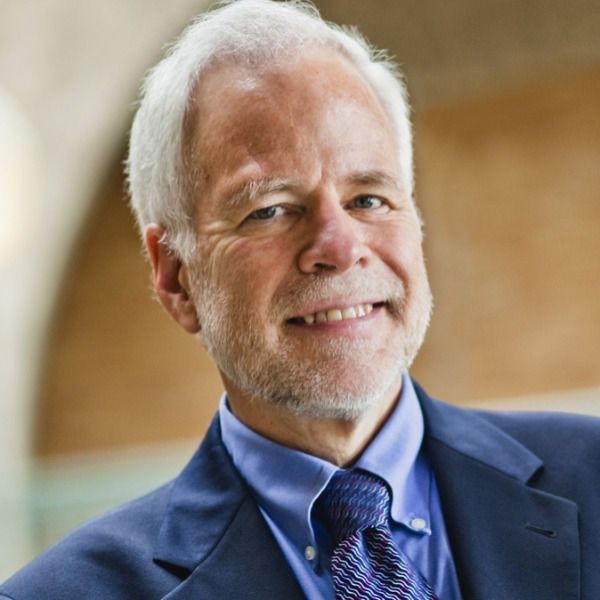
Barry Eichengreen
Barry Julian Eichengreen (born 1952) is an American economist who holds the title of George C. Pardee and Helen N. Pardee Professor of Economics and Political Science at the University of California, Berkeley, where he has taught since 1987. Eichengreen's mother is Lucille Eichengreen, a Holocaust survivor and author.
He has done research and published widely on the history and current operation of the international monetary and financial system. He received his BA from UC Santa Cruz and his Ph.D. from Yale University in 1979. He was a senior policy advisor to the International Monetary Fund in 1997 and 1998, although he has since been critical of the IMF.
His best known work is the book Golden Fetters: The Gold Standard and the Great Depression, 1919–1939, Oxford University Press, 1992. In his own book on the Great Depression.
The main evidence Eichengreen adduces in support of this view is the fact that countries that abandoned the gold standard earlier saw their economies recover more quickly.
His recent books include Global Imbalances and the Lessons of Bretton Woods, MIT Press, September 2006, The European Economy Since 1945: Co-ordinated Capitalism and Beyond, Princeton University Press 2007, and Exorbitant Privilege: The Rise and Fall of the Dollar and the Future of the International Monetary System, Oxford University Press, 2011 Web Site
His most recent book is Hall of Mirrors: The Great Depression, The Great Recession, Oxford University Press, December 2014
His most cited paper is Bayoumi and Eichengreen "Shocking Aspects of European Monetary Unification" (1993) which argued that the European Union was less suitable as a Single Currency Area than the United States. This diagnosis was confirmed in 2011 when external shocks caused the Eurozone Crisis.
He has been President of the Economic History Association (2010–2011). In addition to this, he is a non-resident Senior Fellow at the Centre for International Governance Innovation.
Barry Julian Eichengreen (born 1952) is an American economist who holds the title of George C. Pardee and Helen N. Pardee Professor of Economics and Political Science at the University of California, Berkeley, where he has taught since 1987. Eichengreen's mother is Lucille Eichengreen, a Holocaust survivor and author.
He has done research and published widely on the history and current operation of the international monetary and financial system. He received his BA from UC Santa Cruz and his Ph.D. from Yale University in 1979. He was a senior policy advisor to the International Monetary Fund in 1997 and 1998, although he has since been critical of the IMF.
His best known work is the book Golden Fetters: The Gold Standard and the Great Depression, 1919–1939, Oxford University Press, 1992. In his own book on the Great Depression.
The main evidence Eichengreen adduces in support of this view is the fact that countries that abandoned the gold standard earlier saw their economies recover more quickly.
His recent books include Global Imbalances and the Lessons of Bretton Woods, MIT Press, September 2006, The European Economy Since 1945: Co-ordinated Capitalism and Beyond, Princeton University Press 2007, and Exorbitant Privilege: The Rise and Fall of the Dollar and the Future of the International Monetary System, Oxford University Press, 2011 Web Site
His most recent book is Hall of Mirrors: The Great Depression, The Great Recession, Oxford University Press, December 2014
His most cited paper is Bayoumi and Eichengreen "Shocking Aspects of European Monetary Unification" (1993) which argued that the European Union was less suitable as a Single Currency Area than the United States. This diagnosis was confirmed in 2011 when external shocks caused the Eurozone Crisis.
He has been President of the Economic History Association (2010–2011). In addition to this, he is a non-resident Senior Fellow at the Centre for International Governance Innovation.