Bruce I. Newman
Ph.D.
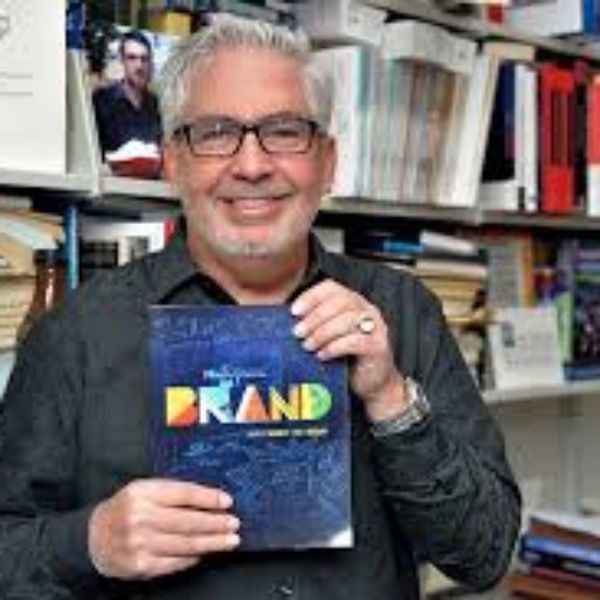
IL, USBruce I. Newman (Ph.D.) is Professor of Marketing and Wicklander Fellow in Business Ethics in the Department of Marketing, Kellstadt Graduate School of Business at DePaul University, USA. He received his B.S,, M.B.A., and Ph.D. all from the University of Illinois at Urbana-Champaign in marketing, and specializes in political marketing, consumer behavior, and customer and voter choice behavior. Dr. Newman is considered the leading scholar in the world on the subject of Political Marketing. He has held visiting scholar positions at several universities, including Stanford University, the University of California-Berkeley, and more recently at Meiji University in Tokyo, Japan. His publications have appeared in top academic journals, including the Journal of Consumer Research, Journal of Business Research, Psychology & Marketing, among others, as well as in chapters in several handbooks on the subjects of political marketing, political communication and persuasion and social marketing. Bruce has published 14 books, some of which have appeared in Chinese, Korean, Hungarian and Italian. He is the author of The Marketing of the President (Sage, 1994); editor of the Handbook of Political Marketing (Sage, 1999); and more recently, co-author of A Cross-Cultural Theory of Voter Behavior (Haworth Press, 2008) and Political Marketing: Theoretical and Strategic Foundations (M.E. Sharpe, 2011). He is the founding Editor-in-Chief of the Journal of Political Marketing, now in its fourteenth year. Dr. Newman is a recipient of the Ehrenring (Ring of Honor) from the Austrian Advertising Research Association, and advised senior aides in the Clinton White House in 1995-1996 on communication strategy. Dr. Newman is a frequent contributor to the media, appearing on both national and international talks shows including NPR and BBC, among others. His Op-Ed articles have appeared in a broad range of publications, including the Chicago Tribune, The Christian Science Monitor and on CNN.com. Dr. Newman has been invited to give Keynote Addresses in over 20 countries. Bruce is Principal of Newman & Associates LLC, a consulting firm specializing in consumer research, image management and marketing strategy.
His most recent book (published January 8, 2016 (Rotman-UTP Press) is: The Marketing Revolution in Politics: What Recent U.S. Presidential Elections Can Teach Us About Effective Marketing. Political campaigns at the presidential level in the United States have become full-blown marketing campaigns with a reliance on techniques found on the commercial side. The marketing revolution reported in this book raises the bar on the use of very standard marketing techniques, which are now part of a paradigm shift found in politics, incorporating technological advances that include Big Data, customer analytics, micro-targeting and social media. The innovative use of these techniques is so creative that it puts forward a blueprint for other organizations to follow in the profit and nonprofit sectors. The net result for all marketers is the understanding of how a "narrative" can capture the essence of a brand and can be used as the cornerstone for strategic initiatives by an organization. The book outlines 7 marketing lessons, with a chapter devoted to each one, and makes reference to The Obama Model that analyzes how marketing was used in each of his two winning campaigns. Each chapter then juxtaposes the lesson with profit and nonprofit organizations that rely on the same methods to succeed in their respective marketplaces, but point out how it differs. The book highlights detailed examples of organizations in industries ranging from corporations like Disney, Google, IBM and Proctor & Gamble, to nonprofits such as Habitat for Humanity and Amnesty International, to the use of these same methods by the U.S. government and the Pope. The book will be of great interest to marketing managers, MBA students, and the interested citizen who is trying to figure out how President Obama was able to mastermind electoral college victories in both presidential campaigns by relying on the smallest of margins in battleground states.
Bruce I. Newman (Ph.D.) is Professor of Marketing and Wicklander Fellow in Business Ethics in the Department of Marketing, Kellstadt Graduate School of Business at DePaul University, USA. He received his B.S,, M.B.A., and Ph.D. all from the University of Illinois at Urbana-Champaign in marketing, and specializes in political marketing, consumer behavior, and customer and voter choice behavior. Dr. Newman is considered the leading scholar in the world on the subject of Political Marketing. He has held visiting scholar positions at several universities, including Stanford University, the University of California-Berkeley, and more recently at Meiji University in Tokyo, Japan. His publications have appeared in top academic journals, including the Journal of Consumer Research, Journal of Business Research, Psychology & Marketing, among others, as well as in chapters in several handbooks on the subjects of political marketing, political communication and persuasion and social marketing. Bruce has published 14 books, some of which have appeared in Chinese, Korean, Hungarian and Italian. He is the author of The Marketing of the President (Sage, 1994); editor of the Handbook of Political Marketing (Sage, 1999); and more recently, co-author of A Cross-Cultural Theory of Voter Behavior (Haworth Press, 2008) and Political Marketing: Theoretical and Strategic Foundations (M.E. Sharpe, 2011). He is the founding Editor-in-Chief of the Journal of Political Marketing, now in its fourteenth year. Dr. Newman is a recipient of the Ehrenring (Ring of Honor) from the Austrian Advertising Research Association, and advised senior aides in the Clinton White House in 1995-1996 on communication strategy. Dr. Newman is a frequent contributor to the media, appearing on both national and international talks shows including NPR and BBC, among others. His Op-Ed articles have appeared in a broad range of publications, including the Chicago Tribune, The Christian Science Monitor and on CNN.com. Dr. Newman has been invited to give Keynote Addresses in over 20 countries. Bruce is Principal of Newman & Associates LLC, a consulting firm specializing in consumer research, image management and marketing strategy.
His most recent book (published January 8, 2016 (Rotman-UTP Press) is: The Marketing Revolution in Politics: What Recent U.S. Presidential Elections Can Teach Us About Effective Marketing. Political campaigns at the presidential level in the United States have become full-blown marketing campaigns with a reliance on techniques found on the commercial side. The marketing revolution reported in this book raises the bar on the use of very standard marketing techniques, which are now part of a paradigm shift found in politics, incorporating technological advances that include Big Data, customer analytics, micro-targeting and social media. The innovative use of these techniques is so creative that it puts forward a blueprint for other organizations to follow in the profit and nonprofit sectors. The net result for all marketers is the understanding of how a "narrative" can capture the essence of a brand and can be used as the cornerstone for strategic initiatives by an organization. The book outlines 7 marketing lessons, with a chapter devoted to each one, and makes reference to The Obama Model that analyzes how marketing was used in each of his two winning campaigns. Each chapter then juxtaposes the lesson with profit and nonprofit organizations that rely on the same methods to succeed in their respective marketplaces, but point out how it differs. The book highlights detailed examples of organizations in industries ranging from corporations like Disney, Google, IBM and Proctor & Gamble, to nonprofits such as Habitat for Humanity and Amnesty International, to the use of these same methods by the U.S. government and the Pope. The book will be of great interest to marketing managers, MBA students, and the interested citizen who is trying to figure out how President Obama was able to mastermind electoral college victories in both presidential campaigns by relying on the smallest of margins in battleground states.
A New Marketing Blueprint for CEO's and Marketing Managers
Donald Trump the Brand: Lessons for Business Executives
Startup Companies: A Paradigm Shift in Marketing Strategy and Tactics
Marketing Lessons for Nonprofit Organizations from the Political World