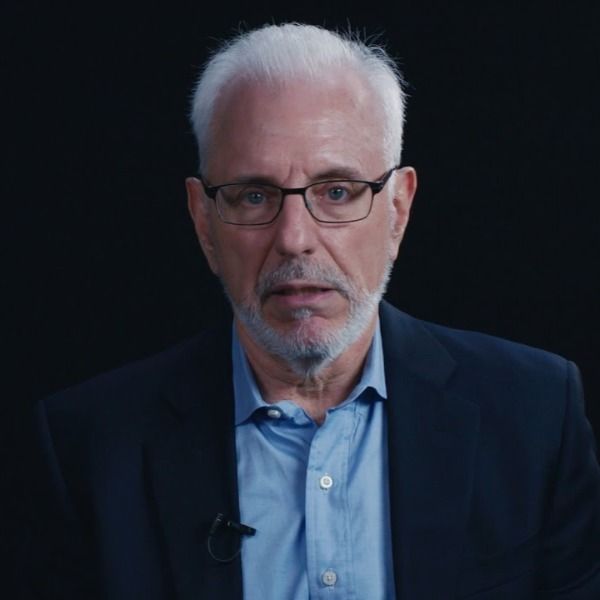
edward goldberg
Adjunct Professor, Globalization, Int'l
NY, USHaving spent his entire life moving between the worlds of international trade and trade finance as well as between US and Russian business and academia, Edward Goldberg has a unique and realistic understanding of globalization and international- political economics.
He teaches globalization, international business, and international trade at Baruch College of the City University of New York's Zicklin School of Business is and on the adjunct faculty of the New York University Center for Global Affairs where he teaches International Political Economy and Emerging Markets. This past December he was awarded a grant by New York University's Center for Global Affairs for research on his forthcoming book , "Joint Venture Rivals- When Foreign Policy Meets Globalization".
Through his consulting firm, Annisa Group, Goldberg has worked on global issues with such major companies as Goldman Sachs, Rockefeller Brothers Fund, and Raiffeisen Zentralbank.
His name appears on Tom Keene of Bloomberg Surveillance list of 193 people to watch/follow in academic & market economics, with a touch of international relations. This list includes Paul Krugman, Martin Wolf, and Lawrence Summers.
An oft-quoted essayist, Goldberg has been cited by Thomas Friedman in The New York Times and in his book Hot Flat and Crowded. His piece, "To Paraphrase Mark Twain-Rumors of America's Death are Greatly Exaggerated appeared in the New York Times Blog. He has also been cited in Roubini Global Economics, Yale Global on Line, Fiscal Times, and American Foreign Policy Interests. He is a regular contributor to the Huffington Post, the Globalist and Real Clear World. He has been interviewed by CNBC Television, Public Radio, CBS radio, Bloomberg Radio, the Associated Press Radio, Al- Jazeera America TV, NDTV of India, TV 4 Group of Sweden as well as Russian State Television.
Expertly versed in the language of globalization, global politics and economics, European-American relations, and international trade, Edward Goldberg has delivered keynotes at some of the leading business schools in the world, including Insead and ISE. Certain to provide the most pertinent discussion topics—including how the Euro crisis will impact the US and the rest of the world—Goldberg makes these complicated global issues approachable and easily comprehensible.
Goldberg lectured at CEDEP/INSEAD on the subject of questioning rather than assuming cultural and historical difference in creating success in a semi-flat world. He has also lectured on global business strategy at IESE. In addition he has lectured at the Kennan Institute, the Harriman Institute of Columbia University, the New School, LSU, and the European Union Study Center of the City University of New York, as well as the Weissman Center for International Business. He represented the United States Department of State at the International Conference on International Relations and Problems of Globalization in St. Petersburg, Russia, where he delivered the opening address.
TOPICS:
CONTAGION-The Word Applies to Economics As Well As Ebola-
Is America now facing three global epidemics - Ebola, the EU's economic flu and deflation as well as the slowing of China's economy?
Is America Again the Leader on the World Stage?
As Bill Clinton famously said, "And so far every single person that's bet against America has lost money because we always come back."
What Happened to the BRICs? What Happened to Emerging Markets?
From the time Goldman Sachs coined the term BRICs, it was assumed that Brazil, Russia, India, and China, along with other so-called emerging markets, would be the new dynamic economic force in the world. Even during the crash of 2008, emerging markets mostly only hiccupped while the leading economies stalled.
Now the reverse has appeared to set in.
What Is Actually Happening in Europe & What Does That Mean for America?
"It's the economy, stupid" - the phrase that propelled Bill Clinton's election - still resonates, but with one major caveat. Today, the phrase ought to be, "It's the Euro, stupid."
"Five years ago, during the heart of the great recession, many in the world saw the United States and its very pluralistic model of capitalism and liberal democracy as a concept that had seen better days, as a failed model.
Now it is America, with all the arguments against its plodding, gridlocked government, that is leading the world's economy out of the recession. American is leading because of a series of correct government decisions, such as the stimulus, the auto bailouts, the stress test for its banks, and the QE policy of the Fed. But America is also leading because of its investments in energy."
Edward Goldberg in the New York Times Feb 1, 2014
"China and Egypt were both great civilizations subjected to imperialism and were both dirt poor back in the 1950s, with China even poorer than Egypt, Edward Goldberg, who teaches business strategy, wrote in The Globalist. But, today, China has built the world's second-largest economy, and Egypt is still living on foreign aid. What do you think young Egyptians thought when they watched the dazzling opening ceremony of the 2008 Beijing Olympics? China's Olympics were another wake-up call - "in a way that America or the West could never be" - telling young Egyptians that something was very wrong with their country, argued Goldberg."
Thomas L Friedman- The New York Times, March 1, 2011
Having spent his entire life moving between the worlds of international trade and trade finance as well as between US and Russian business and academia, Edward Goldberg has a unique and realistic understanding of globalization and international- political economics.
He teaches globalization, international business, and international trade at Baruch College of the City University of New York's Zicklin School of Business is and on the adjunct faculty of the New York University Center for Global Affairs where he teaches International Political Economy and Emerging Markets. This past December he was awarded a grant by New York University's Center for Global Affairs for research on his forthcoming book , "Joint Venture Rivals- When Foreign Policy Meets Globalization".
Through his consulting firm, Annisa Group, Goldberg has worked on global issues with such major companies as Goldman Sachs, Rockefeller Brothers Fund, and Raiffeisen Zentralbank.
His name appears on Tom Keene of Bloomberg Surveillance list of 193 people to watch/follow in academic & market economics, with a touch of international relations. This list includes Paul Krugman, Martin Wolf, and Lawrence Summers.
An oft-quoted essayist, Goldberg has been cited by Thomas Friedman in The New York Times and in his book Hot Flat and Crowded. His piece, "To Paraphrase Mark Twain-Rumors of America's Death are Greatly Exaggerated appeared in the New York Times Blog. He has also been cited in Roubini Global Economics, Yale Global on Line, Fiscal Times, and American Foreign Policy Interests. He is a regular contributor to the Huffington Post, the Globalist and Real Clear World. He has been interviewed by CNBC Television, Public Radio, CBS radio, Bloomberg Radio, the Associated Press Radio, Al- Jazeera America TV, NDTV of India, TV 4 Group of Sweden as well as Russian State Television.
Expertly versed in the language of globalization, global politics and economics, European-American relations, and international trade, Edward Goldberg has delivered keynotes at some of the leading business schools in the world, including Insead and ISE. Certain to provide the most pertinent discussion topics—including how the Euro crisis will impact the US and the rest of the world—Goldberg makes these complicated global issues approachable and easily comprehensible.
Goldberg lectured at CEDEP/INSEAD on the subject of questioning rather than assuming cultural and historical difference in creating success in a semi-flat world. He has also lectured on global business strategy at IESE. In addition he has lectured at the Kennan Institute, the Harriman Institute of Columbia University, the New School, LSU, and the European Union Study Center of the City University of New York, as well as the Weissman Center for International Business. He represented the United States Department of State at the International Conference on International Relations and Problems of Globalization in St. Petersburg, Russia, where he delivered the opening address.
TOPICS:
CONTAGION-The Word Applies to Economics As Well As Ebola-
Is America now facing three global epidemics - Ebola, the EU's economic flu and deflation as well as the slowing of China's economy?
Is America Again the Leader on the World Stage?
As Bill Clinton famously said, "And so far every single person that's bet against America has lost money because we always come back."
What Happened to the BRICs? What Happened to Emerging Markets?
From the time Goldman Sachs coined the term BRICs, it was assumed that Brazil, Russia, India, and China, along with other so-called emerging markets, would be the new dynamic economic force in the world. Even during the crash of 2008, emerging markets mostly only hiccupped while the leading economies stalled.
Now the reverse has appeared to set in.
What Is Actually Happening in Europe & What Does That Mean for America?
"It's the economy, stupid" - the phrase that propelled Bill Clinton's election - still resonates, but with one major caveat. Today, the phrase ought to be, "It's the Euro, stupid."
"Five years ago, during the heart of the great recession, many in the world saw the United States and its very pluralistic model of capitalism and liberal democracy as a concept that had seen better days, as a failed model.
Now it is America, with all the arguments against its plodding, gridlocked government, that is leading the world's economy out of the recession. American is leading because of a series of correct government decisions, such as the stimulus, the auto bailouts, the stress test for its banks, and the QE policy of the Fed. But America is also leading because of its investments in energy."
Edward Goldberg in the New York Times Feb 1, 2014
"China and Egypt were both great civilizations subjected to imperialism and were both dirt poor back in the 1950s, with China even poorer than Egypt, Edward Goldberg, who teaches business strategy, wrote in The Globalist. But, today, China has built the world's second-largest economy, and Egypt is still living on foreign aid. What do you think young Egyptians thought when they watched the dazzling opening ceremony of the 2008 Beijing Olympics? China's Olympics were another wake-up call - "in a way that America or the West could never be" - telling young Egyptians that something was very wrong with their country, argued Goldberg."
Thomas L Friedman- The New York Times, March 1, 2011
America and the World: Expecting the Unexpected
China the US and The EU ??? GLOBAL RIVALS OR JOINT VENTURE PARTNERS
Has globalization for the first time in history forced global rivals into becoming each other's joint venture partners, economically binding one country to another?
Are we living in a geo political economic world without precedent? How tied is the fate of the U.S. economy to the economies of Europe and China?
Edward Goldberg discusses this vitally important issue that he first wrote about in the Huffington Post and then was subsequently talked about on the Charlie Rose...
What Ever Happened to the BRICS, What Ever Happened to Emerging Markets?
From the time Goldman Sachs coined the word BRICS it was assumed that Brazil, Russia, India and China along with other so called emerging markets would be the new dynamic economic force in the world. Even during the crash of 2008 Emerging Markets mostly only hiccupped while the leading economies stalled.
Now the reverse has appeared to set in. Edward Goldberg, an international recognized expert on Globalization, who teaches Emerging Markets at New York University's Center for Global...
MORNING IN AMERICA- The rebirth of America's Global leadership
"Five years ago, during the heart of the great recession, many in the world saw the United States and its very pluralistic model of capitalism and liberal democracy as a concept that had seen better days, as a failed model.
Now it is America, with all the arguments against its plodding, gridlocked government, that is leading the world's economy out of the recession. American is leading because of a series of correct government decisions, such as the stimulus, the auto bailouts, the...
Creating Success in the International Marketplace
Despite the ease with which we embrace such concepts as a flat world, in reality, doing business successfully overseas entails a much more complex set of challenges. As he did in his course in the New York Times Knowledge Network, Edward Goldberg leads his audience through the hows and whys of international business and international trade.