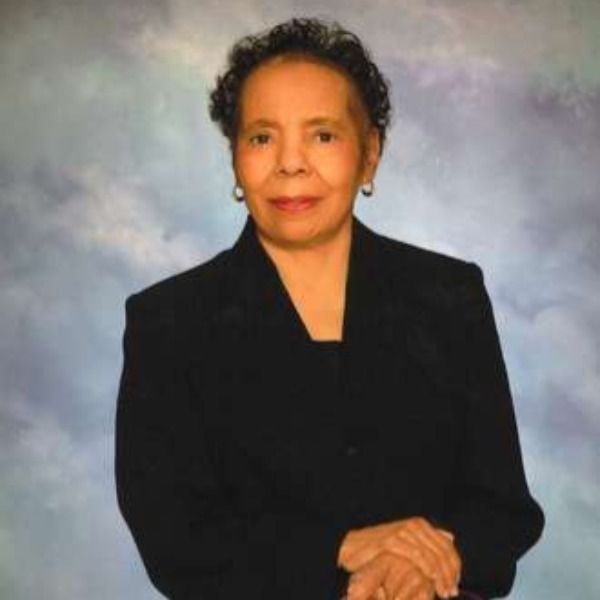
Annie Barnes
PhD
VA, US
Biography
Born and raised in south Central Alabama, Dr. Annie Shaw Barnes graduated from T. S. Cooper High School in Sunbury, North Carolina, received her college degree with a major in Sociology and minor in United States History from Shaw University, Raleigh, North Carolina, and a master's degree in Sociology from Atlanta University in Georgia, January, 1955. Barnes attended two summer school sessions at New York University in New York City to better teach United States Government to gifted and talented students at Huntington High School in Newport News, Virginia, where she taught eleven years, 1954-1965.
From 1965 to 1968, Dr. Barnes taught anthropology and sociology at Hampton Institute in Hampton, Virginia. While teaching at Hampton Institute, the author earned ten semester hours of credit in race, social, physical, and genetics anthropology in the summer National Science Foundation Institute at the University of Colorado, Boulder, 1968, to better teach her students Introduction to Anthropology.
In 1968, Dr. Barnes enrolled at the University of Virginia in Charlottesville, and earned her Ph.D., after fulfilling requirements in social anthropology fieldwork in Atlanta, Georgia. Her Ph.D. for her university work and dissertation The Black Middle Class Family in Golden Towers (middle class, and millionaire families) in social anthropology was earned from the University of Virginia in 1971, earning her some "firsts." She was the first African American woman to earn Ph.D. at University of Virginia, second African American to earn Ph.D. from that University, first African American to earn UVA's Ph.D. in anthropology. In 2008, ten graduate students in a Historic Preservation course at Georgia State University, Atlanta, studied and used for documentation her book, The Black Middle Class Family (1985) in order to make application for the geographical area, Collier Heights in the Atlanta area in which Dr. Barnes had done her research, to be placed in the Georgia Historical Department and on the National Historical Preservation Register. The furnishing inventories of this area in Collier Heights where the author conducted research are, she has been told, are most insightful about house interiors.
She humbly acknowledges that her books have long shelf-life because they are based on empirical and library information and are highly accurate and useful. All seven of Dr. Barnes's books had long shelf-life and her twenty referred articles, six chapters in colleagues books and five abstracts, are still viable. Fortunately, after the author completed all requirements including studying Collier Heights, she earned some "firsts." She was the first African American female to earn a Ph.D. in anthropology at the University of Virginia, the second African American female to each a Ph.D. at University of Virginia, and the first African American to earn a PhD. from that university's Department of Anthropology.
Then, the Author taught anthropology and sociology at Norfolk State University, Norfolk, Virginia, September l971 to July l997, where she was hired as eminent anthropology scholar in Norfolk State University Sociology Department. Dr. Barnes was selected Best Teacher at Norfolk State University twice, and her anthropology classes and elective courses were filled with students. Many students not enrolled in her courses kept up with her lecture topics on her syllabus and either requested permission to sit in crowded classrooms for lecture or when she left classroom, she saw students sitting on floor outside classroom door. When the Author asked why, the students told her that they had come to hear her lecture.
The Author was one of Virginia State Council of Higher Education's thirteen Best Teachers of the year in Virginia, 1988. The Virginia Council of Higher Education selected Dr. Barnes to speak on behalf of herself and the other twelve 1988 Best Virginia teacher colleagues at the corporate banquet honoring the recipients.
The Author has read thirteen professional papers at sessions and in symposia at the American Anthropology Association (AAA) annual meetings, and was AAA's Invited Chair for one session. In the American Anthropology Association (AAA) structure, Dr. Barnes served as the president of Association of Black Anthropologists, Chair of Blacks in Education Committee, twice, member of National Council of Anthropology and Education Board, chaired by professors George and Louise Spindler of the University of California at Los Angeles. Dr. Barnes was appointed a member of the Organizing Committee of General Anthropology Division (GAD) of AAA; therefore, she was one of GAD organizers, and she served on its first board as member at large. In addition, AAA appointed Barnes to the external and administrative advisory committees.
As a member of the Southern Anthropology Society, Dr. Barnes read several papers at professional meetings including her first anthropology paper, "Illegitimacy in Black Families," read at Virginia Polytechnic Institute in Blacksburg, Virginia, April 19, 1973. Members of the Southern Anthropology Society invited Barnes to lecture on their radio program about a paper that she would read at annual meeting and aired it on twenty-six other radio stations. All papers that Barnes presented at the Southern Anthropology Society meetings gave her professional enrichment, especially two papers, "Single Mothers in Black Colleges" and "African American Teen Pregnancy in the American South." The Southern Anthropology published them with other symposia papers in two separate volumes: Women in the South: An Anthropological Perspective, edited by Professor Holly Matthews, East Carolina University in Greenville, North Carolina; African Americans in the South, edited by Hans A. Baer, University of Arkansas, Little Rock, and Yvonne Jones, University of Kentucky, Louisville.
Dr. Barnes was elected first African American woman president of the then fifty-seven-year-old Virginia Social Science Association, served on its Board many years, and held every position in the Virginia Social Science Association. She also published an article, "Black Single Fathers: Continuity, Neutrality, and Change" which appeared in the Virginia Social Science Journal in 1990.
The Author has conducted empirical research in Osudoku Tribal Society in Osuwem, Ghana, West Africa, the American South, Fort Leavenworth Federal Military Prison, Kansas, and across America. Family studies (step and nuclear), romance, and violence are the major themes in her writings and her publications that are most related to this book are: How to Keep African American Enlistees Out of the US Military Judiciary and Prisons (the Author interviewed whites, blacks, and Hispanics at Fort Leavenworth Kansas) and Patrick Airforce Base, Florida, published it as a brochure because the Author was one of their faculty fellows that summer, 1995; Violence Prevention and Control Programs in the NAVY: A Review of Program Effectiveness, and Factors Affecting Program Success, a brochure researched and written with Hal H. Rosen, John P. Sheposh, Joyce Shettel-Dutcher Jill M. Ralston, and Steve Talley, 1997, published by Navy Personnel Research and Development in San Diego, CA; and enormous African American research on violence and family life between unwed couples and some research on violence in wed couples.
The Author has in-depth media experience: she appeared on Tony Brown National Television Journal twice; appeared in JET Magazine twice; and promoted her book, Everyday Racism, electronically, from her home 200 times with recalls. In Virginia, the author has been a regular contributor to the daily newspaper The Virginian-Pilot and the weekly newspaper The New Journal and Guide, and Hampton Roads television affiliates, ABC, CBS, and NBC, the local Public Broadcasting Networks, and numerous radio programs, including popular call-in talk shows, done in her office at home and at her local PBS.
Professor Barnes's picture was featured on the cover of Portfolio Magazine (Hampton Roads, Virginia, l988). Inside the issue, she discussed "Race and Economics: The Dilemma of the Black Middle Class." The cover picture was featured several years in a television advertisement collage to attract tourists to the resort region in which she lives-Southampton Roads, Virginia (Virginia Beach, Norfolk, Portsmouth, Chesapeake, Suffolk, Newport News, and Hampton).
Biography
Born and raised in south Central Alabama, Dr. Annie Shaw Barnes graduated from T. S. Cooper High School in Sunbury, North Carolina, received her college degree with a major in Sociology and minor in United States History from Shaw University, Raleigh, North Carolina, and a master's degree in Sociology from Atlanta University in Georgia, January, 1955. Barnes attended two summer school sessions at New York University in New York City to better teach United States Government to gifted and talented students at Huntington High School in Newport News, Virginia, where she taught eleven years, 1954-1965.
From 1965 to 1968, Dr. Barnes taught anthropology and sociology at Hampton Institute in Hampton, Virginia. While teaching at Hampton Institute, the author earned ten semester hours of credit in race, social, physical, and genetics anthropology in the summer National Science Foundation Institute at the University of Colorado, Boulder, 1968, to better teach her students Introduction to Anthropology.
In 1968, Dr. Barnes enrolled at the University of Virginia in Charlottesville, and earned her Ph.D., after fulfilling requirements in social anthropology fieldwork in Atlanta, Georgia. Her Ph.D. for her university work and dissertation The Black Middle Class Family in Golden Towers (middle class, and millionaire families) in social anthropology was earned from the University of Virginia in 1971, earning her some "firsts." She was the first African American woman to earn Ph.D. at University of Virginia, second African American to earn Ph.D. from that University, first African American to earn UVA's Ph.D. in anthropology. In 2008, ten graduate students in a Historic Preservation course at Georgia State University, Atlanta, studied and used for documentation her book, The Black Middle Class Family (1985) in order to make application for the geographical area, Collier Heights in the Atlanta area in which Dr. Barnes had done her research, to be placed in the Georgia Historical Department and on the National Historical Preservation Register. The furnishing inventories of this area in Collier Heights where the author conducted research are, she has been told, are most insightful about house interiors.
She humbly acknowledges that her books have long shelf-life because they are based on empirical and library information and are highly accurate and useful. All seven of Dr. Barnes's books had long shelf-life and her twenty referred articles, six chapters in colleagues books and five abstracts, are still viable. Fortunately, after the author completed all requirements including studying Collier Heights, she earned some "firsts." She was the first African American female to earn a Ph.D. in anthropology at the University of Virginia, the second African American female to each a Ph.D. at University of Virginia, and the first African American to earn a PhD. from that university's Department of Anthropology.
Then, the Author taught anthropology and sociology at Norfolk State University, Norfolk, Virginia, September l971 to July l997, where she was hired as eminent anthropology scholar in Norfolk State University Sociology Department. Dr. Barnes was selected Best Teacher at Norfolk State University twice, and her anthropology classes and elective courses were filled with students. Many students not enrolled in her courses kept up with her lecture topics on her syllabus and either requested permission to sit in crowded classrooms for lecture or when she left classroom, she saw students sitting on floor outside classroom door. When the Author asked why, the students told her that they had come to hear her lecture.
The Author was one of Virginia State Council of Higher Education's thirteen Best Teachers of the year in Virginia, 1988. The Virginia Council of Higher Education selected Dr. Barnes to speak on behalf of herself and the other twelve 1988 Best Virginia teacher colleagues at the corporate banquet honoring the recipients.
The Author has read thirteen professional papers at sessions and in symposia at the American Anthropology Association (AAA) annual meetings, and was AAA's Invited Chair for one session. In the American Anthropology Association (AAA) structure, Dr. Barnes served as the president of Association of Black Anthropologists, Chair of Blacks in Education Committee, twice, member of National Council of Anthropology and Education Board, chaired by professors George and Louise Spindler of the University of California at Los Angeles. Dr. Barnes was appointed a member of the Organizing Committee of General Anthropology Division (GAD) of AAA; therefore, she was one of GAD organizers, and she served on its first board as member at large. In addition, AAA appointed Barnes to the external and administrative advisory committees.
As a member of the Southern Anthropology Society, Dr. Barnes read several papers at professional meetings including her first anthropology paper, "Illegitimacy in Black Families," read at Virginia Polytechnic Institute in Blacksburg, Virginia, April 19, 1973. Members of the Southern Anthropology Society invited Barnes to lecture on their radio program about a paper that she would read at annual meeting and aired it on twenty-six other radio stations. All papers that Barnes presented at the Southern Anthropology Society meetings gave her professional enrichment, especially two papers, "Single Mothers in Black Colleges" and "African American Teen Pregnancy in the American South." The Southern Anthropology published them with other symposia papers in two separate volumes: Women in the South: An Anthropological Perspective, edited by Professor Holly Matthews, East Carolina University in Greenville, North Carolina; African Americans in the South, edited by Hans A. Baer, University of Arkansas, Little Rock, and Yvonne Jones, University of Kentucky, Louisville.
Dr. Barnes was elected first African American woman president of the then fifty-seven-year-old Virginia Social Science Association, served on its Board many years, and held every position in the Virginia Social Science Association. She also published an article, "Black Single Fathers: Continuity, Neutrality, and Change" which appeared in the Virginia Social Science Journal in 1990.
The Author has conducted empirical research in Osudoku Tribal Society in Osuwem, Ghana, West Africa, the American South, Fort Leavenworth Federal Military Prison, Kansas, and across America. Family studies (step and nuclear), romance, and violence are the major themes in her writings and her publications that are most related to this book are: How to Keep African American Enlistees Out of the US Military Judiciary and Prisons (the Author interviewed whites, blacks, and Hispanics at Fort Leavenworth Kansas) and Patrick Airforce Base, Florida, published it as a brochure because the Author was one of their faculty fellows that summer, 1995; Violence Prevention and Control Programs in the NAVY: A Review of Program Effectiveness, and Factors Affecting Program Success, a brochure researched and written with Hal H. Rosen, John P. Sheposh, Joyce Shettel-Dutcher Jill M. Ralston, and Steve Talley, 1997, published by Navy Personnel Research and Development in San Diego, CA; and enormous African American research on violence and family life between unwed couples and some research on violence in wed couples.
The Author has in-depth media experience: she appeared on Tony Brown National Television Journal twice; appeared in JET Magazine twice; and promoted her book, Everyday Racism, electronically, from her home 200 times with recalls. In Virginia, the author has been a regular contributor to the daily newspaper The Virginian-Pilot and the weekly newspaper The New Journal and Guide, and Hampton Roads television affiliates, ABC, CBS, and NBC, the local Public Broadcasting Networks, and numerous radio programs, including popular call-in talk shows, done in her office at home and at her local PBS.
Professor Barnes's picture was featured on the cover of Portfolio Magazine (Hampton Roads, Virginia, l988). Inside the issue, she discussed "Race and Economics: The Dilemma of the Black Middle Class." The cover picture was featured several years in a television advertisement collage to attract tourists to the resort region in which she lives-Southampton Roads, Virginia (Virginia Beach, Norfolk, Portsmouth, Chesapeake, Suffolk, Newport News, and Hampton).