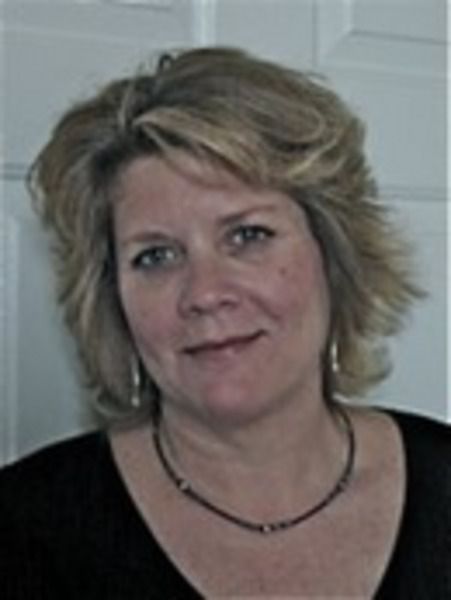
Jill Carroll
Ph.d
TX, USDr. Jill Carroll believes that peaceful coexistence between people of different religions and cultures is the central challenge of our era. Twenty-first century mass communications, mass travel, and the global economy ensure that we are interconnected and interdependent in ways never before seen in human history. This reality makes new demands on us – and presents new challenges for us - in both our personal and professional lives.
Dr. Carroll is a public scholar who believes peaceful coexistence can be achieved when people make an effort to understand each other rather than relying on stereotypes and prejudice. Understanding requires knowledge, that is, factual information presented in an unbiased fashion and rooted in the latest data and research. As a scholar in religious studies, Dr. Carroll has spent over two decades studying the world’s religions and major religious movements – their histories, principal founders, central beliefs, basic rituals, current issues, and their impact in public life and in contemporary politics.
Dr. Carroll formerly directed the Boniuk Center for Religious Tolerance at Rice University in Houston, Texas where she was also Adjunct Associate Professor in the Department of Religious Studies. She is a recognized expert on issues of religious tolerance, philosophy of religion, American religion, and religion in public life. Her areas of specialty include: the role of religion in world politics, comparative world religions, trends in American religion, and the impact of religious diversity in global business.
Dr. Carroll earned her Ph.D. in Religious Studies from Rice University in 1994. She is the author of numerous articles and four books. A recent book, A Dialogue of Civilizations: Gulen’s Islamic Ideals and Human Discourse was a Publishers Weekly bestseller in religion, having been in a “Top 10” category on Amazon in May 2007. She is a frequent guest on radio and television programs, and has been interviewed by The New York Times, PBS, and Good Morning America. She combines her scholarly knowledge with a flair for “real world” application. Through her own consulting business, and in collaboration with others, she has conducted religious diversity training for individuals, groups and corporations. Her forthcoming book is Philosophy for Life: How Ideas from the Great Minds can Rock Your World.
Dr. Carroll is a dynamic speaker with a gift for simplifying complicated matters without stripping them of their substance and nuance, thus bringing the “ivory tower” to the “town square”. Moreover, she communicates in an informational, “faith neutral” and humorous manner that sets the appropriate context for discussing sensitive issues in a public setting.
Topics
Why Do They Hate Us? The Truth about Muslims and the West
Many Westerners explain violence committed by radical Islamists with one simple statement: Muslims hate the West. Is this true? If so, what about the West do they hate? The freedoms? The equality? In this lecture, Dr. Carroll reviews the most recent and thorough surveys of Muslim opinion throughout the Muslim world in order to understand accurately Muslim views of the West from a global perspective. You will be surprised and perhaps even hopeful that the so-called “clash of civilizations” can be avoided.
Understanding Islam
Many Americans knew very little about Islam until September 11, 2001 when the World Trade Center was destroyed by terrorist attackers in the name of Allah. Sadly, after several years, many people still are confused about this growing and influential religious tradition. In this lecture, Dr. Carroll explains the basics of Islam – its founder, historical context, sacred texts, major groups, central beliefs, basic rituals – as well as controversial notions of jihad and the role of women.
Religion & Violence: What We Don't Want to Face about the World's Great Traditions
While some people are willing to acknowledge that religion has contributed to violence and war throughout history, many people argue that such instances are not truly representative of authentic religion. Authentic or “real” religion, they say, is about love and peace, and has no room for violence. In this lecture, Dr. Carroll challenges this sentimental notion of religion by examining violence not only the involvements of religion in history and politics, but also the inner workings of religion in ritual and worship. Listeners will leave with a more nuanced and complex understanding of their own faith, if they have one, and of the workings of religion in human life.
The Challenges of Religious Diversity: The Demographic Facts & What They Demand of Us
“Diversity” is a dirty word for some people because they think of it as an agenda or ideology being forced on them by people who view them as bigots. Dr. Carroll rejects this definition of diversity; instead, she speaks of diversity in the sense of pure demographics – who lives here in the U.S.? What does the data tell us? The demographic fact of diversity is a reality that challenges all of us, regardless of religious affiliation, to develop new social and inner capacities. Dr. Carroll discusses these capacities required at three basic levels of our lives: the national, the local community, and with family & friends. You will be inspired to an expansive notion of what it means to be an “American” and a citizen of the world.
Red, White and Blue "Spirituality": Trends in American Religion
America is a nation full of religious people who practice their faiths with energy and abandon. Many people, however, have detected seismic shifts in the spiritual and religious appetites of the American public – and not a few are concerned about it. Using the latest research, Dr. Carroll explains five major trends in American religion that get to the heart of the current American religious experience. You will come away with a greater understanding and appreciation for the longstanding spiritual traditions in this country and the political structures that keep them alive.
The Fundamentals of Fundamentalism
The ascendancy of the Ayatollah Khomeini during the Iranian Revolution of 1979 took the Western foreign and international policy community by utter surprise. No one expected that a sophisticated, economically developed and educated country like Iran would ever give political power to religious fundamentalism. But this is exactly what happened, and the last thirty years has seen the rise of many varieties of religious fundamentalisms in nearly all the world’s major religious traditions. What explains this rise? And what are the defining characteristics of fundamentalist movements? Dr. Carroll gives answers to these questions and more using the ever-growing body of research available on global fundamentalism.
Separation of Church and State in a Global Perspective
The concept of “separation of church and state” is fundamental to American political discourse, and its application in society is a distinct dimension of the type of secularism prominent in the United States. However, the American version of secularism – and the attendant notion of separation of church and state – is not the only operative understanding of these concepts. Dr. Carroll discusses these intertwined ideas as they are expressed in the U.S., France and Turkey – explaining the distinctions and differences between them – and places the concept of separation of church and state into a larger historical context. She ends with open-ended questions about the possibility of a secular, but religious democracy.
What is "Tolerance" and Why Practice It?
People on both sides of the isle hate the word “tolerance”. Some say it asks too much; others say it asks too little. Dr. Carroll examines the use of the word from both sides, and offers a definition of the concept that answers the criticisms. More importantly, she makes a case for the practice of tolerance in a religiously plural society like the United States, especially in this era of globalization.
Buddhist Truths: The Heart & Appeal of the Third Largest Religion on Earth
Buddhism has grown tremendously in the United States in the last several decades. Moreover, some people call themselves “Zen Christians” or “Jew Boos” to indicate the adaption of Buddhist concepts into their own personal faith traditions. What is so attractive about Buddhism? Why do many people find it so appealing? Dr. Carroll offers answers to these questions as she reviews the basic history of Buddhism and leads you on an exploration of the heart of Buddhist philosophy: The Four Noble Truths.
The Megachurch Phenomenon
Best-selling author and pastor Joel Osteen leads Lakewood Church in Houston, Texas, which is the largest Christian church in North America with over 40,000 people in attendance per weekend. Lakewood is only one of over 1000 such churches in the United States. The growth of these “megachurches” is nothing short of astounding and, until recently, was considered by many scholars to be a fad that would lose the interest of the American religious public. Nothing could be further from the truth, at least as far as new research and data suggest. Dr. Carroll explains the chief characteristics of the megachurch, exploding common misperceptions about the churches themselves, their appeal, and the people who attend them.
Dr. Jill Carroll believes that peaceful coexistence between people of different religions and cultures is the central challenge of our era. Twenty-first century mass communications, mass travel, and the global economy ensure that we are interconnected and interdependent in ways never before seen in human history. This reality makes new demands on us – and presents new challenges for us - in both our personal and professional lives.
Dr. Carroll is a public scholar who believes peaceful coexistence can be achieved when people make an effort to understand each other rather than relying on stereotypes and prejudice. Understanding requires knowledge, that is, factual information presented in an unbiased fashion and rooted in the latest data and research. As a scholar in religious studies, Dr. Carroll has spent over two decades studying the world’s religions and major religious movements – their histories, principal founders, central beliefs, basic rituals, current issues, and their impact in public life and in contemporary politics.
Dr. Carroll formerly directed the Boniuk Center for Religious Tolerance at Rice University in Houston, Texas where she was also Adjunct Associate Professor in the Department of Religious Studies. She is a recognized expert on issues of religious tolerance, philosophy of religion, American religion, and religion in public life. Her areas of specialty include: the role of religion in world politics, comparative world religions, trends in American religion, and the impact of religious diversity in global business.
Dr. Carroll earned her Ph.D. in Religious Studies from Rice University in 1994. She is the author of numerous articles and four books. A recent book, A Dialogue of Civilizations: Gulen’s Islamic Ideals and Human Discourse was a Publishers Weekly bestseller in religion, having been in a “Top 10” category on Amazon in May 2007. She is a frequent guest on radio and television programs, and has been interviewed by The New York Times, PBS, and Good Morning America. She combines her scholarly knowledge with a flair for “real world” application. Through her own consulting business, and in collaboration with others, she has conducted religious diversity training for individuals, groups and corporations. Her forthcoming book is Philosophy for Life: How Ideas from the Great Minds can Rock Your World.
Dr. Carroll is a dynamic speaker with a gift for simplifying complicated matters without stripping them of their substance and nuance, thus bringing the “ivory tower” to the “town square”. Moreover, she communicates in an informational, “faith neutral” and humorous manner that sets the appropriate context for discussing sensitive issues in a public setting.
Topics
Why Do They Hate Us? The Truth about Muslims and the West
Many Westerners explain violence committed by radical Islamists with one simple statement: Muslims hate the West. Is this true? If so, what about the West do they hate? The freedoms? The equality? In this lecture, Dr. Carroll reviews the most recent and thorough surveys of Muslim opinion throughout the Muslim world in order to understand accurately Muslim views of the West from a global perspective. You will be surprised and perhaps even hopeful that the so-called “clash of civilizations” can be avoided.
Understanding Islam
Many Americans knew very little about Islam until September 11, 2001 when the World Trade Center was destroyed by terrorist attackers in the name of Allah. Sadly, after several years, many people still are confused about this growing and influential religious tradition. In this lecture, Dr. Carroll explains the basics of Islam – its founder, historical context, sacred texts, major groups, central beliefs, basic rituals – as well as controversial notions of jihad and the role of women.
Religion & Violence: What We Don't Want to Face about the World's Great Traditions
While some people are willing to acknowledge that religion has contributed to violence and war throughout history, many people argue that such instances are not truly representative of authentic religion. Authentic or “real” religion, they say, is about love and peace, and has no room for violence. In this lecture, Dr. Carroll challenges this sentimental notion of religion by examining violence not only the involvements of religion in history and politics, but also the inner workings of religion in ritual and worship. Listeners will leave with a more nuanced and complex understanding of their own faith, if they have one, and of the workings of religion in human life.
The Challenges of Religious Diversity: The Demographic Facts & What They Demand of Us
“Diversity” is a dirty word for some people because they think of it as an agenda or ideology being forced on them by people who view them as bigots. Dr. Carroll rejects this definition of diversity; instead, she speaks of diversity in the sense of pure demographics – who lives here in the U.S.? What does the data tell us? The demographic fact of diversity is a reality that challenges all of us, regardless of religious affiliation, to develop new social and inner capacities. Dr. Carroll discusses these capacities required at three basic levels of our lives: the national, the local community, and with family & friends. You will be inspired to an expansive notion of what it means to be an “American” and a citizen of the world.
Red, White and Blue "Spirituality": Trends in American Religion
America is a nation full of religious people who practice their faiths with energy and abandon. Many people, however, have detected seismic shifts in the spiritual and religious appetites of the American public – and not a few are concerned about it. Using the latest research, Dr. Carroll explains five major trends in American religion that get to the heart of the current American religious experience. You will come away with a greater understanding and appreciation for the longstanding spiritual traditions in this country and the political structures that keep them alive.
The Fundamentals of Fundamentalism
The ascendancy of the Ayatollah Khomeini during the Iranian Revolution of 1979 took the Western foreign and international policy community by utter surprise. No one expected that a sophisticated, economically developed and educated country like Iran would ever give political power to religious fundamentalism. But this is exactly what happened, and the last thirty years has seen the rise of many varieties of religious fundamentalisms in nearly all the world’s major religious traditions. What explains this rise? And what are the defining characteristics of fundamentalist movements? Dr. Carroll gives answers to these questions and more using the ever-growing body of research available on global fundamentalism.
Separation of Church and State in a Global Perspective
The concept of “separation of church and state” is fundamental to American political discourse, and its application in society is a distinct dimension of the type of secularism prominent in the United States. However, the American version of secularism – and the attendant notion of separation of church and state – is not the only operative understanding of these concepts. Dr. Carroll discusses these intertwined ideas as they are expressed in the U.S., France and Turkey – explaining the distinctions and differences between them – and places the concept of separation of church and state into a larger historical context. She ends with open-ended questions about the possibility of a secular, but religious democracy.
What is "Tolerance" and Why Practice It?
People on both sides of the isle hate the word “tolerance”. Some say it asks too much; others say it asks too little. Dr. Carroll examines the use of the word from both sides, and offers a definition of the concept that answers the criticisms. More importantly, she makes a case for the practice of tolerance in a religiously plural society like the United States, especially in this era of globalization.
Buddhist Truths: The Heart & Appeal of the Third Largest Religion on Earth
Buddhism has grown tremendously in the United States in the last several decades. Moreover, some people call themselves “Zen Christians” or “Jew Boos” to indicate the adaption of Buddhist concepts into their own personal faith traditions. What is so attractive about Buddhism? Why do many people find it so appealing? Dr. Carroll offers answers to these questions as she reviews the basic history of Buddhism and leads you on an exploration of the heart of Buddhist philosophy: The Four Noble Truths.
The Megachurch Phenomenon
Best-selling author and pastor Joel Osteen leads Lakewood Church in Houston, Texas, which is the largest Christian church in North America with over 40,000 people in attendance per weekend. Lakewood is only one of over 1000 such churches in the United States. The growth of these “megachurches” is nothing short of astounding and, until recently, was considered by many scholars to be a fad that would lose the interest of the American religious public. Nothing could be further from the truth, at least as far as new research and data suggest. Dr. Carroll explains the chief characteristics of the megachurch, exploding common misperceptions about the churches themselves, their appeal, and the people who attend them.