Amory Lovins
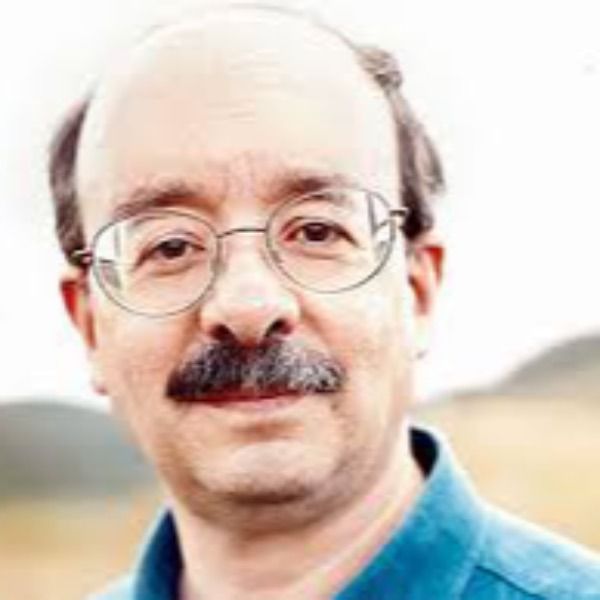
Amory Lovins is the cofounder and CEO of Rocky Mountain Institute. A consultant experimental physicist educated at Harvard and Oxford, he has advised the energy and other industries for over 30 years, as well as the U.S. Departments of Energy and Defense. Published in 28 previous books and hundreds of papers, his work in more than 50 countries has been recognized by the "Alternative Nobel," Onassis, Nissan, Shingo, and Mitchell Prizes, a MacArthur Fellowship, the Happold Medal, nine honorary doctorates, and the Heinz, Lindbergh, Hero for the Planet, and World Technology Awards.
He advises industries and governments worldwide, including major oil companies, and has briefed 18 heads of state. Since 1990, he has led the development of quintupled-efficiency, uncompromised, competitive automobiles and a profitable hydrogen transition strategy. Much of his work is synthesized in Natural Capitalism (www.natcap.org) and Small Is Profitable: The Hidden Economic Benefits of Making Electrical Resources the Right Size (www.smallisprofitable.org), one of the Economist's top three business and economics books of 2002. He is a member of the Society of Automotive Engineers, American Physical Society, and International Association for Energy Economics, and is a Fellow of the American Association for the Advancement of Science, World Academy of Arts and Sciences, and World Business Academy. Automobile magazine has called him the 22nd most powerful person in the global car industry; the Wall Street Journal, one of 39 people in the world most likely to change the course of business in the 1990s; Newsweek, "one of the Western world's most influential energy thinkers."
Mr. Lovins's security background includes devising the first logically consistent approach to nuclear nonproliferation (technical papers and two books); performing for DoD the definitive unclassified study of domestic energy vulnerability and resilience; co-developing a "new security triad" of conflict prevention, conflict resolution, and nonprovocative defense; lecturing at the National Defense University, Naval War College, and Naval Postgraduate School on least-cost security and on how new technologies will transform missions and force structures; keynoting the Chief of Naval Operations' 2003 Naval-Industry R&D Partnership Conference; leading for Admiral Lopez the overhaul of the Naval Facilities Engineering Command's design process (later extended to other Services); leading a 2000–01 Office of Naval Research analysis for the Secretary of the Navy of how to save ~$1 million/y of hotel-load electricity aboard a typical surface combatant (USS Princeton CG-59); and serving on a 1999–2001 Defense Science Board panel, chaired by Vice Admiral (Ret.) Richard Truly, whose report More Capable Warfighting Through Reduced Fuel Burden identified multi-billion-dollar-a-year DoD fuel-saving potential.
Amory Lovins is the cofounder and CEO of Rocky Mountain Institute. A consultant experimental physicist educated at Harvard and Oxford, he has advised the energy and other industries for over 30 years, as well as the U.S. Departments of Energy and Defense. Published in 28 previous books and hundreds of papers, his work in more than 50 countries has been recognized by the "Alternative Nobel," Onassis, Nissan, Shingo, and Mitchell Prizes, a MacArthur Fellowship, the Happold Medal, nine honorary doctorates, and the Heinz, Lindbergh, Hero for the Planet, and World Technology Awards.
He advises industries and governments worldwide, including major oil companies, and has briefed 18 heads of state. Since 1990, he has led the development of quintupled-efficiency, uncompromised, competitive automobiles and a profitable hydrogen transition strategy. Much of his work is synthesized in Natural Capitalism (www.natcap.org) and Small Is Profitable: The Hidden Economic Benefits of Making Electrical Resources the Right Size (www.smallisprofitable.org), one of the Economist's top three business and economics books of 2002. He is a member of the Society of Automotive Engineers, American Physical Society, and International Association for Energy Economics, and is a Fellow of the American Association for the Advancement of Science, World Academy of Arts and Sciences, and World Business Academy. Automobile magazine has called him the 22nd most powerful person in the global car industry; the Wall Street Journal, one of 39 people in the world most likely to change the course of business in the 1990s; Newsweek, "one of the Western world's most influential energy thinkers."
Mr. Lovins's security background includes devising the first logically consistent approach to nuclear nonproliferation (technical papers and two books); performing for DoD the definitive unclassified study of domestic energy vulnerability and resilience; co-developing a "new security triad" of conflict prevention, conflict resolution, and nonprovocative defense; lecturing at the National Defense University, Naval War College, and Naval Postgraduate School on least-cost security and on how new technologies will transform missions and force structures; keynoting the Chief of Naval Operations' 2003 Naval-Industry R&D Partnership Conference; leading for Admiral Lopez the overhaul of the Naval Facilities Engineering Command's design process (later extended to other Services); leading a 2000–01 Office of Naval Research analysis for the Secretary of the Navy of how to save ~$1 million/y of hotel-load electricity aboard a typical surface combatant (USS Princeton CG-59); and serving on a 1999–2001 Defense Science Board panel, chaired by Vice Admiral (Ret.) Richard Truly, whose report More Capable Warfighting Through Reduced Fuel Burden identified multi-billion-dollar-a-year DoD fuel-saving potential.