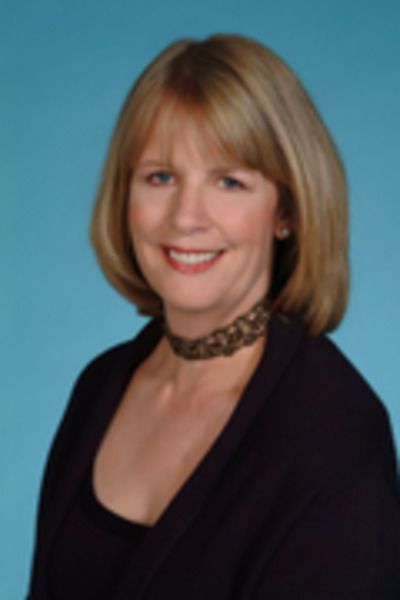
Liz Weston
Liz Pulliam Weston is the most-read personal finance columnist on the Internet, according to Nielsen//NetRatings. She's also an award-winning, nationally-syndicated personal finance columnist who can make the most complex money topics understandable to the average reader.
Her first book, Your Credit Score: How to Fix, Improve and Protect the 3-Digit Number That Shapes Your Financial Future, is the best-selling book on credit scoring and was recently published in a second edition. Her second book, Deal with Your Debt: The Right Way to Manage Your Bills and Pay Off What You Owe, was published by Pearson Prentice Hall and she was a contributor to The Experts’ Guide to the Baby Years.
Weston's columns run twice a week on MSN Money, which reaches more than 12 million readers each month. Millions more read her question-and-answer column Money Talk, which appears in newspapers throughout the country, including the Los Angeles Times, Cleveland Plain Dealer, Palm Beach Post, Portland Oregonian, NewarkStar-Ledger, Stars & Stripes and many others.
Weston appears regularly on numerous television and radio programs, including NPR's Talk of the Nation and All Things Considered, American Public Media's Marketplace Money, and NBC's Today Show. For several years, she was a weekly commentator on CNBC's Power Lunch.
Weston started her career at the Seattle Times and then moved on to the Anchorage Daily News, where she was part of the writing team that won a Pulitzer Prize for Meritorious Public Service in 1989 for coverage of the alcoholism epidemic among native Alaskans. Her article on fetal alcohol syndrome led the coverage on Day 3 of the 10-day series. Later, while at the Orange County Register, she was part of athree-member writing team that won a prestigious Gerald Loeb Award for coverage of the Comparator Systems penny stock scandal in 1997.
In 1998, Weston joined the business staff of the Los Angeles Times and began authoring Money Talk. Four years later, she left the Times to write for MSN. Her MSN columns have won four Certificates of Merit from the Society of American Business Editors and Writers. Judges called her Bankruptcy boom series "an in-depth explanation of the pluses and minuses of bankruptcy and its uses" that "foretold the legislation now under consideration." Meanwhile, judges called her columns on credit "a thorough examination of all the little things thatcan make or break your credit" and dubbed the stories "important reading for consumers."
Weston is a graduate of the certified financial planner training program at University of California, Irvine. She lives in Los Angeles with her husband and daughter.
MOST REQUESTED TOPICS:
Your Credit Score
In the past five years, a simple three-digit number has become critical to your financial life. This number, known as a credit score, is designed to predict the possibility that you won’t pay your bills. If your number is high enough, you’ll qualify for a lender’s best rates and terms. If your score’s low or nonexistent, however, you enter a no-man’s-land where mainstream credit is all but impossible to come by. If you find someone to lend you money, you’ll pay high rates and fat fees for the privilege. A bad or even mediocre credit score easily can cost you tens of thousands, even hundreds of thousands of dollars in your lifetime.
That would be scary enough if we were just talking about loans. But your credit score affects far more than that. Insurance companies, landlords and even employers use credit to evaluate applicants. A good score can win you cheaper premiums, better apartments and improved job prospects; a bad score can cost you all three.
Yet too many people know far too little about credit scores and how they work. Here’s what you need to know to fix, improve and protect the 3-digit number that shapes your financial future.
Deal with Your DebtDebt isn’t the root of all evil, but you might not know that from reading most books on the subject. Advice on debt tends to focus on how to pay it off, and ignores when debt might actually be beneficial to your overall financial life.
In reality, debt can be an enormously helpful financial tool, allowing us to buy homes, get educations and build businesses. Instead of sucking us dry, it can help give us the cash flow we need to grow our long-term wealth. But we need to know how to get it, when to get it, how much to get and when it's time to pay it off.
Make Your Money EasyFeeling overwhelmed by your finances? You’re not alone. People today have to make a lot more financial decisions, and keep track of far more details, than they did even a generation ago. Instead of one health care plan, they may have to choose from a dozen--or they may have no insurance at all. Instead of a traditional pension plan provided by an employer, most people have to save for retirement on their own--and figure out how much to contribute, where to invest the contributions and eventually how to take their money out. Instead of a credit card or two, you have access to literally thousands of options, all with different rates, terms and due dates. Even mortgages, which used to come in one basic flavor--fixed rate, for 30 years--have multiplied into a bewildering array of alternatives. Even if you did have time to research and understand all your options, you probably feel like you don't have time to properly manage every aspect of your finances the way you'd like while still holding down a job, caring for a family and enjoying a minute or two of leisure time every once in awhile.
The good news is that there is hope. You can winnow down your choices, streamline your financial systems and take control of your money. I’ll take you through 10 steps that will put you on track for your goals, alleviate your anxiety about the details and help you wrest control of your financial life.
You Can Retire!Social Security's in trouble. Pensions are biting the dust. America's savings rate is abominable. And every time you turn around, some pundit is warning that if you haven't already put aside some vast sum -- the number changes, but it's always immense -- then you have no hope of ever retiring.
Feel like giving up? Don't. There are plenty of things you need to be doing, right now, to better your chances of a comfortable retirement. And many of them have nothing to do with money.
What Women Need to Know About MoneyAt some point, almost every woman will have to manage her money on her own. Then why are so many of us convinced that we can’t? The reality is that money isn’t rocket science, and the sooner we take charge, the better off we—and our families—will be.
Liz Pulliam Weston is the most-read personal finance columnist on the Internet, according to Nielsen//NetRatings. She's also an award-winning, nationally-syndicated personal finance columnist who can make the most complex money topics understandable to the average reader.
Her first book, Your Credit Score: How to Fix, Improve and Protect the 3-Digit Number That Shapes Your Financial Future, is the best-selling book on credit scoring and was recently published in a second edition. Her second book, Deal with Your Debt: The Right Way to Manage Your Bills and Pay Off What You Owe, was published by Pearson Prentice Hall and she was a contributor to The Experts’ Guide to the Baby Years.
Weston's columns run twice a week on MSN Money, which reaches more than 12 million readers each month. Millions more read her question-and-answer column Money Talk, which appears in newspapers throughout the country, including the Los Angeles Times, Cleveland Plain Dealer, Palm Beach Post, Portland Oregonian, NewarkStar-Ledger, Stars & Stripes and many others.
Weston appears regularly on numerous television and radio programs, including NPR's Talk of the Nation and All Things Considered, American Public Media's Marketplace Money, and NBC's Today Show. For several years, she was a weekly commentator on CNBC's Power Lunch.
Weston started her career at the Seattle Times and then moved on to the Anchorage Daily News, where she was part of the writing team that won a Pulitzer Prize for Meritorious Public Service in 1989 for coverage of the alcoholism epidemic among native Alaskans. Her article on fetal alcohol syndrome led the coverage on Day 3 of the 10-day series. Later, while at the Orange County Register, she was part of athree-member writing team that won a prestigious Gerald Loeb Award for coverage of the Comparator Systems penny stock scandal in 1997.
In 1998, Weston joined the business staff of the Los Angeles Times and began authoring Money Talk. Four years later, she left the Times to write for MSN. Her MSN columns have won four Certificates of Merit from the Society of American Business Editors and Writers. Judges called her Bankruptcy boom series "an in-depth explanation of the pluses and minuses of bankruptcy and its uses" that "foretold the legislation now under consideration." Meanwhile, judges called her columns on credit "a thorough examination of all the little things thatcan make or break your credit" and dubbed the stories "important reading for consumers."
Weston is a graduate of the certified financial planner training program at University of California, Irvine. She lives in Los Angeles with her husband and daughter.
MOST REQUESTED TOPICS:
Your Credit Score
In the past five years, a simple three-digit number has become critical to your financial life. This number, known as a credit score, is designed to predict the possibility that you won’t pay your bills. If your number is high enough, you’ll qualify for a lender’s best rates and terms. If your score’s low or nonexistent, however, you enter a no-man’s-land where mainstream credit is all but impossible to come by. If you find someone to lend you money, you’ll pay high rates and fat fees for the privilege. A bad or even mediocre credit score easily can cost you tens of thousands, even hundreds of thousands of dollars in your lifetime.
That would be scary enough if we were just talking about loans. But your credit score affects far more than that. Insurance companies, landlords and even employers use credit to evaluate applicants. A good score can win you cheaper premiums, better apartments and improved job prospects; a bad score can cost you all three.
Yet too many people know far too little about credit scores and how they work. Here’s what you need to know to fix, improve and protect the 3-digit number that shapes your financial future.
Deal with Your DebtDebt isn’t the root of all evil, but you might not know that from reading most books on the subject. Advice on debt tends to focus on how to pay it off, and ignores when debt might actually be beneficial to your overall financial life.
In reality, debt can be an enormously helpful financial tool, allowing us to buy homes, get educations and build businesses. Instead of sucking us dry, it can help give us the cash flow we need to grow our long-term wealth. But we need to know how to get it, when to get it, how much to get and when it's time to pay it off.
Make Your Money EasyFeeling overwhelmed by your finances? You’re not alone. People today have to make a lot more financial decisions, and keep track of far more details, than they did even a generation ago. Instead of one health care plan, they may have to choose from a dozen--or they may have no insurance at all. Instead of a traditional pension plan provided by an employer, most people have to save for retirement on their own--and figure out how much to contribute, where to invest the contributions and eventually how to take their money out. Instead of a credit card or two, you have access to literally thousands of options, all with different rates, terms and due dates. Even mortgages, which used to come in one basic flavor--fixed rate, for 30 years--have multiplied into a bewildering array of alternatives. Even if you did have time to research and understand all your options, you probably feel like you don't have time to properly manage every aspect of your finances the way you'd like while still holding down a job, caring for a family and enjoying a minute or two of leisure time every once in awhile.
The good news is that there is hope. You can winnow down your choices, streamline your financial systems and take control of your money. I’ll take you through 10 steps that will put you on track for your goals, alleviate your anxiety about the details and help you wrest control of your financial life.
You Can Retire!Social Security's in trouble. Pensions are biting the dust. America's savings rate is abominable. And every time you turn around, some pundit is warning that if you haven't already put aside some vast sum -- the number changes, but it's always immense -- then you have no hope of ever retiring.
Feel like giving up? Don't. There are plenty of things you need to be doing, right now, to better your chances of a comfortable retirement. And many of them have nothing to do with money.
What Women Need to Know About MoneyAt some point, almost every woman will have to manage her money on her own. Then why are so many of us convinced that we can’t? The reality is that money isn’t rocket science, and the sooner we take charge, the better off we—and our families—will be.