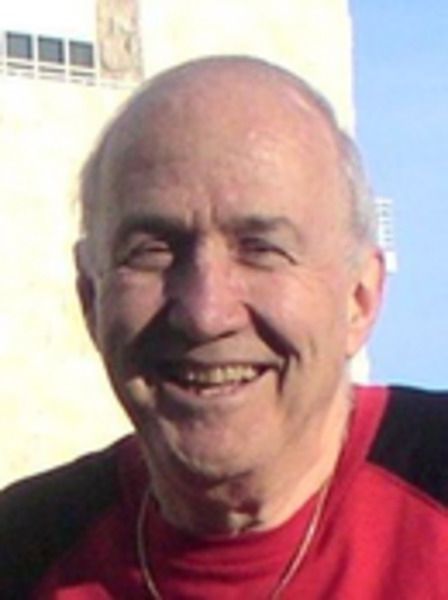
Bob Stone
Bob Stone is an internationally known author and speaker on ethical leadership, on leading change, and on reinventing government. He’s hard at work on a new book, The Ethics Challenge: Strengthening Your Integrity in a Greedy World. Recent clients have included the Cognos Corporation, the United Kingdom Cabinet Office, the Defense Acquisition University, the Iowa Department of Management, and Ventura, California.
He served for six years at the White House leading Vice President Al Gore’s effort to reinvent government, which made radical improvements in the way the federal government operates while reducing staffing by over 400,000.
Gore recruited Bob from his position as Deputy Assistant Secretary of Defense for Installations, where, from 1981 to 1993 he forged partnerships with top military leaders to streamline and invigorate management of 700 military installations world-wide, and to improve quality of life for American servicemen and women. He started the model installation program, which revolutionized operation of military bases by substituting local authority and enthusiasm for bureaucracy and regulation.
Also in that position he created, in collaboration with Congress, the strategy for closing military bases by commission, leading to savings of $5 billion/year, managed a $30 billion annual budget, and testified at dozens of congressional hearings.
He has given speeches and conducted seminars on ethics and on leading change for the clients mentioned above and for executives of Boeing, the construction industry, the military, the World Bank, the governments of the UK, Turkey, Oman, and Italy, as well as universities around the world. He was formerly affiliated with the Public Strategies Group of Saint Paul.
His first book, Confessions of a Civil Servant: Lessons in Changing America's Government and Military, is being used as a textbook in graduate schools of public administration around the US. It has been praised by senior aides to Presidents G.H.W.Bush and Clinton, chiefs of the Army, Air Force, and Navy, and by the chairmen of Motorola, Harley Davidson, and TRW. Tom Peters wrote the Foreword, in which he calls it “maybe the best text ever on large scale organizational change. Anywhere.”
Bob serves on the Governing Council of the Ukleja Center for Ethical Leadership at California State University, Long Beach. He received B.S. and M.S. degrees from the Massachusetts Institute of Technology.
MOST REQUESTED TOPICS:
The Ethics Challenge
Strengthening Your Integrity in a Greedy World
How to apply the ethical principles that we all know to the work of your organization and to your life: Bob first explores what ethical behavior means and how it differs from merely behaving legally or in compliance with the rules. Next he goes into what special ethical demands are made of bosses and subordinates. Third, he discusses examples of ethical dilemmas that managers face, and finally how to develop an agenda for continually applying the lessons of the workshop.
Change: What Works, What Doesn't, and Why
This builds on Bob's personal experience in leading successful and unsuccessful change efforts at the Pentagon and White House. He describes the efforts with vivid stories, then explores with the participants the lessons from the experiences. He finishes by drawing some generalizations about why some transformation efforts succeed and some fail.
Personal Leadership and Change
Bob believes that organizational leaders can make HUGE changes through their behavior -- how they spend their time, how they trust and empower people, how they focus on their vision, how they "walk the walk." And he loves to help leaders transform their organizations through their personal behavior. Only a very few come by this personal leadership naturally; the rest of us are shy, uncertain, and modest but we can learn it. Bob did.
This program is built around his book, Confessions of a Civil Servant: Lessons in Changing America's Government and Military, especially Chapter 15, "Ten Lessons in Leadership." Bob has conducted it many times for audiences of federal and local leaders, and for senior executives of the British and Scottish governments. It never fails to grab the audience and send them away determined to make specific changes in their behavior.
Organizing for the Mission
How some organizations stifle the human spirit, some liberate it, and how to make sure yours is liberating.
Bob starts with colorful and entertaining stories of misguided efforts (including his) to eliminate excess and create excellence, starting with consolidations of procurement, personnel, and other functions. Bob describes in detail the most excellent organization he has found, and how it flipped his thinking and approach to leadership.
He explains the differences between centralized and excellent organizations, and gives the participants a handy, very simple way to tell whether they're on the path to excellence. Participants will be inspired to strive for excellence, undeterred by the forces in large organizations, public or private, that make the effort often difficult or painful.
Team Player or Team Leader
Exploring the relationship between organizational norms and change, and the conflict between needing to follow the norms to be a team player, and needing to violate them to lead change. Participants discuss how to manage the conflicts, and which norms they would need to violate in order to lead change.
This is a valuable tool for leaders. It touches a chord with lots of leaders because they face the same conflict as they try to lead change.
Bob Stone is an internationally known author and speaker on ethical leadership, on leading change, and on reinventing government. He’s hard at work on a new book, The Ethics Challenge: Strengthening Your Integrity in a Greedy World. Recent clients have included the Cognos Corporation, the United Kingdom Cabinet Office, the Defense Acquisition University, the Iowa Department of Management, and Ventura, California.
He served for six years at the White House leading Vice President Al Gore’s effort to reinvent government, which made radical improvements in the way the federal government operates while reducing staffing by over 400,000.
Gore recruited Bob from his position as Deputy Assistant Secretary of Defense for Installations, where, from 1981 to 1993 he forged partnerships with top military leaders to streamline and invigorate management of 700 military installations world-wide, and to improve quality of life for American servicemen and women. He started the model installation program, which revolutionized operation of military bases by substituting local authority and enthusiasm for bureaucracy and regulation.
Also in that position he created, in collaboration with Congress, the strategy for closing military bases by commission, leading to savings of $5 billion/year, managed a $30 billion annual budget, and testified at dozens of congressional hearings.
He has given speeches and conducted seminars on ethics and on leading change for the clients mentioned above and for executives of Boeing, the construction industry, the military, the World Bank, the governments of the UK, Turkey, Oman, and Italy, as well as universities around the world. He was formerly affiliated with the Public Strategies Group of Saint Paul.
His first book, Confessions of a Civil Servant: Lessons in Changing America's Government and Military, is being used as a textbook in graduate schools of public administration around the US. It has been praised by senior aides to Presidents G.H.W.Bush and Clinton, chiefs of the Army, Air Force, and Navy, and by the chairmen of Motorola, Harley Davidson, and TRW. Tom Peters wrote the Foreword, in which he calls it “maybe the best text ever on large scale organizational change. Anywhere.”
Bob serves on the Governing Council of the Ukleja Center for Ethical Leadership at California State University, Long Beach. He received B.S. and M.S. degrees from the Massachusetts Institute of Technology.
MOST REQUESTED TOPICS:
The Ethics Challenge
Strengthening Your Integrity in a Greedy World
How to apply the ethical principles that we all know to the work of your organization and to your life: Bob first explores what ethical behavior means and how it differs from merely behaving legally or in compliance with the rules. Next he goes into what special ethical demands are made of bosses and subordinates. Third, he discusses examples of ethical dilemmas that managers face, and finally how to develop an agenda for continually applying the lessons of the workshop.
Change: What Works, What Doesn't, and Why
This builds on Bob's personal experience in leading successful and unsuccessful change efforts at the Pentagon and White House. He describes the efforts with vivid stories, then explores with the participants the lessons from the experiences. He finishes by drawing some generalizations about why some transformation efforts succeed and some fail.
Personal Leadership and Change
Bob believes that organizational leaders can make HUGE changes through their behavior -- how they spend their time, how they trust and empower people, how they focus on their vision, how they "walk the walk." And he loves to help leaders transform their organizations through their personal behavior. Only a very few come by this personal leadership naturally; the rest of us are shy, uncertain, and modest but we can learn it. Bob did.
This program is built around his book, Confessions of a Civil Servant: Lessons in Changing America's Government and Military, especially Chapter 15, "Ten Lessons in Leadership." Bob has conducted it many times for audiences of federal and local leaders, and for senior executives of the British and Scottish governments. It never fails to grab the audience and send them away determined to make specific changes in their behavior.
Organizing for the Mission
How some organizations stifle the human spirit, some liberate it, and how to make sure yours is liberating.
Bob starts with colorful and entertaining stories of misguided efforts (including his) to eliminate excess and create excellence, starting with consolidations of procurement, personnel, and other functions. Bob describes in detail the most excellent organization he has found, and how it flipped his thinking and approach to leadership.
He explains the differences between centralized and excellent organizations, and gives the participants a handy, very simple way to tell whether they're on the path to excellence. Participants will be inspired to strive for excellence, undeterred by the forces in large organizations, public or private, that make the effort often difficult or painful.
Team Player or Team Leader
Exploring the relationship between organizational norms and change, and the conflict between needing to follow the norms to be a team player, and needing to violate them to lead change. Participants discuss how to manage the conflicts, and which norms they would need to violate in order to lead change.
This is a valuable tool for leaders. It touches a chord with lots of leaders because they face the same conflict as they try to lead change.