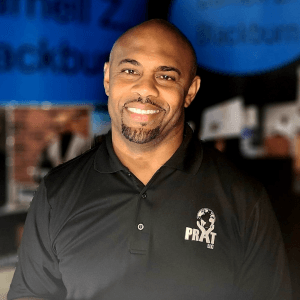
Darnell Blackburn
BA, MBA
MI, USCentered around empowering people by enhancing their communication skills to adequately handle a vast array of situations. Learning how to effectively communicate is key to ensuring positive outcomes.
Darnell has been actively involved in law enforcement for over 27 years. He started his professional law enforcement career as a Michigan State University Police Officer serving a diverse student body population. He later worked as a patrol officer for the Auburn Hills Police Department. He has hands-on experience working as a community police officer, undercover narcotics detective, and investigator.
He received his Bachelor of Arts Degree from Michigan State University in Psychology. He later continued his education at the University of Phoenix where he received a Master of Arts Degree in Business administration.
For the last 16 years, he has worked for the Michigan Commission on Law Enforcement Standards (MCOLES), which is nationally recognized as a leader in the development of training and ethical standards for law enforcement officers. MCOLES sets standards in a variety of areas affecting the law enforcement community throughout the State of Michigan. He is an Adjunct Professor at Macomb Community College. He has experience teaching courses ranging from Criminal Investigations to Business Marketing. He is the founder/creator of “Be The Change” initiative an effort to help encourage more diversity within the law enforcement community.
Darnell has been actively involved in law enforcement for over 27 years. He started his professional law enforcement career as a Michigan State University Police Officer serving a diverse student body population. He later worked as a patrol officer for the Auburn Hills Police Department. He has hands-on experience working as a community police officer, undercover narcotics detective, and investigator.
He received his Bachelor of Arts Degree from Michigan State University in Psychology. He later continued his education at the University of Phoenix where he received a Master of Arts Degree in Business administration.
For the last 16 years, he has worked for the Michigan Commission on Law Enforcement Standards (MCOLES), which is nationally recognized as a leader in the development of training and ethical standards for law enforcement officers. MCOLES sets standards in a variety of areas affecting the law enforcement community throughout the State of Michigan. He is an Adjunct Professor at Macomb Community College. He has experience teaching courses ranging from Criminal Investigations to Business Marketing. He is the founder/creator of “Be The Change” initiative an effort to help encourage more diversity within the law enforcement community.
Recognizing Symptoms of Mental Illness
Format: 2-4 hour class
This program is perfect for:
- all types of employees
The audience will leave with:
- designed to help individuals recognize the signs and symptoms of mental illness and refer them to the appropriate person for help.
SMILE (Symptoms of Mental Illness In Law Enforcement)
Format: 2-4 hour training
This program is perfect for:
- First responders (police officers, firefighters, 911 dispatchers, correction officers)
- Administration within police agencies
The audience will leave with:
- recognizing signs and symptoms in law enforcement officers in order to de-stigmatize the negative connotation associated with law enforcement...
Emotional Resiliency
Format: 2-4 hour training
This program is perfect for:
- everyone!
The audience will leave with:
- examines the underlying stresses of life and work and how to first recognize those stressors and manage them effectively using my own personal life challenges. I encourage a healthy way of coping with stress.
Understanding Implicit and Unconscious Bias
Format: 2-4 hour training
This program is perfect for:
- everyone
The audience will leave with:
- helping individuals to understand how their biases affect the way people are treated based on perceptions. The training also makes people aware of the differences and the similarities racism and bias.
Certificaciones y premios