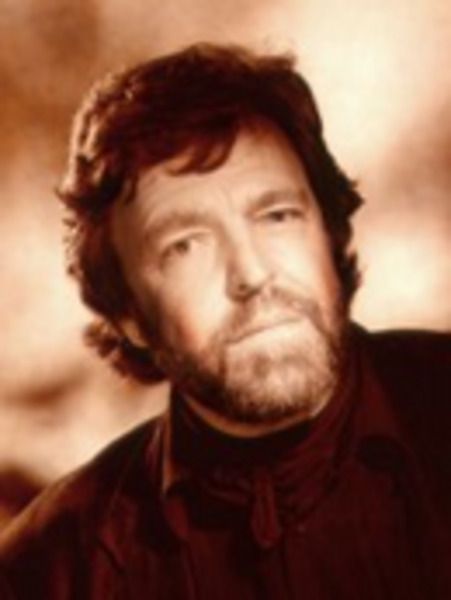
John Perry Barlow
John Perry Barlow is a retired Wyoming cattle rancher, a former lyricist for the Grateful Dead, and co-founder of the Electronic Frontier Foundation. Since May of 1998, he has been a Fellow at Harvard Law School's Berkman Center for Internet and Society, following a term as a Fellow with the Institute of Politics at Harvard's John F. Kennedy School of Government.
Born in Sublette County, Wyoming, in 1947, Barlow was educated there in a one room schoolhouse, and graduated from Wesleyan University in Middletown, Connecticut, with an honors degree in comparative religion in 1969. In 1971, he began operating the Bar Cross Land and Livestock Company, a large cow-calf operation in Cora, Wyoming, where he grew up. He continued to do so until he sold it in 1988.
He co-wrote songs with the Grateful Dead from 1971 until their demise in 1995.
In 1990 Barlow and Mitchell Kapor founded the Electronic Frontier Foundation, an organization which promotes freedom of expression in digital media. He currently serves as its Vice Chairman. In 1990, he first applied William Gibson's science fiction term Cyberspace to the already-existing global electronic social space now generally referred to by that name. Until his naming it, it had not been considered any sort of place.
He speaks, consults, and writes for a living. He has written for a wild diversity of publications, ranging from "Communications of the ACM" to "The New York Times" to "Nerve." He has been on the masthead of "Wired" since it was founded. His piece for "Wired" on the future of copyright, "The Economy of Ideas," is now taught in many law schools. His manifesto, "A Declaration of the Independence of Cyberspace," has been widely distributed on the internet and can be found on more than 20,000 sites. Partly as a consequence of that, he was called "the Thomas Jefferson of Cyberspace" by "Yahoo Internet Life Magazine."
Barlow is a recognized commentator on information economics, digitized intellectual goods, cyber liberties, virtual community, electronic cash, cryptography policy, privacy, and the social, cultural, and legal conditions forming in Cyberspace. He also works as a consultant on such matters with the Vanguard Group, the Global Business Network, and Diamond Technology Partners. He is a member of the External Advisory Council of the National Computational Science Alliance.
In recent years, Barlow has devoted much of his time and energy helping to "wire" the Southern Hemisphere to the North and has traveled extensively in Africa. His "Wired" piece, "Africa Rising," describes the first of these journeys. In early 2000, he helped start (with Teresa Peters, Esther Dyson, and Stewart Baker, among others) Bridges.Org, a Washington-based organization dedicated to bridging the "digital divide." He also serves as an advisor to a number of young "New Economy" companies, including NetZapper, Neotony, Oakington, and TheSauce.Com, and in June 1999, "FutureBanker" magazine (an ABA Publication) named him "One of the 25 Most Influential People in Financial Services," even though he isn't in financial services.
Finally, Barlow recognizes that there is a difference between information and experience, and he vastly prefers the latter. He lives in Pinedale, Wyoming (the only county seat in America without a stoplight), New York's Chinatown, San Francisco, On The Road, and in Cyberspace.
John Perry Barlow is a retired Wyoming cattle rancher, a former lyricist for the Grateful Dead, and co-founder of the Electronic Frontier Foundation. Since May of 1998, he has been a Fellow at Harvard Law School's Berkman Center for Internet and Society, following a term as a Fellow with the Institute of Politics at Harvard's John F. Kennedy School of Government.
Born in Sublette County, Wyoming, in 1947, Barlow was educated there in a one room schoolhouse, and graduated from Wesleyan University in Middletown, Connecticut, with an honors degree in comparative religion in 1969. In 1971, he began operating the Bar Cross Land and Livestock Company, a large cow-calf operation in Cora, Wyoming, where he grew up. He continued to do so until he sold it in 1988.
He co-wrote songs with the Grateful Dead from 1971 until their demise in 1995.
In 1990 Barlow and Mitchell Kapor founded the Electronic Frontier Foundation, an organization which promotes freedom of expression in digital media. He currently serves as its Vice Chairman. In 1990, he first applied William Gibson's science fiction term Cyberspace to the already-existing global electronic social space now generally referred to by that name. Until his naming it, it had not been considered any sort of place.
He speaks, consults, and writes for a living. He has written for a wild diversity of publications, ranging from "Communications of the ACM" to "The New York Times" to "Nerve." He has been on the masthead of "Wired" since it was founded. His piece for "Wired" on the future of copyright, "The Economy of Ideas," is now taught in many law schools. His manifesto, "A Declaration of the Independence of Cyberspace," has been widely distributed on the internet and can be found on more than 20,000 sites. Partly as a consequence of that, he was called "the Thomas Jefferson of Cyberspace" by "Yahoo Internet Life Magazine."
Barlow is a recognized commentator on information economics, digitized intellectual goods, cyber liberties, virtual community, electronic cash, cryptography policy, privacy, and the social, cultural, and legal conditions forming in Cyberspace. He also works as a consultant on such matters with the Vanguard Group, the Global Business Network, and Diamond Technology Partners. He is a member of the External Advisory Council of the National Computational Science Alliance.
In recent years, Barlow has devoted much of his time and energy helping to "wire" the Southern Hemisphere to the North and has traveled extensively in Africa. His "Wired" piece, "Africa Rising," describes the first of these journeys. In early 2000, he helped start (with Teresa Peters, Esther Dyson, and Stewart Baker, among others) Bridges.Org, a Washington-based organization dedicated to bridging the "digital divide." He also serves as an advisor to a number of young "New Economy" companies, including NetZapper, Neotony, Oakington, and TheSauce.Com, and in June 1999, "FutureBanker" magazine (an ABA Publication) named him "One of the 25 Most Influential People in Financial Services," even though he isn't in financial services.
Finally, Barlow recognizes that there is a difference between information and experience, and he vastly prefers the latter. He lives in Pinedale, Wyoming (the only county seat in America without a stoplight), New York's Chinatown, San Francisco, On The Road, and in Cyberspace.