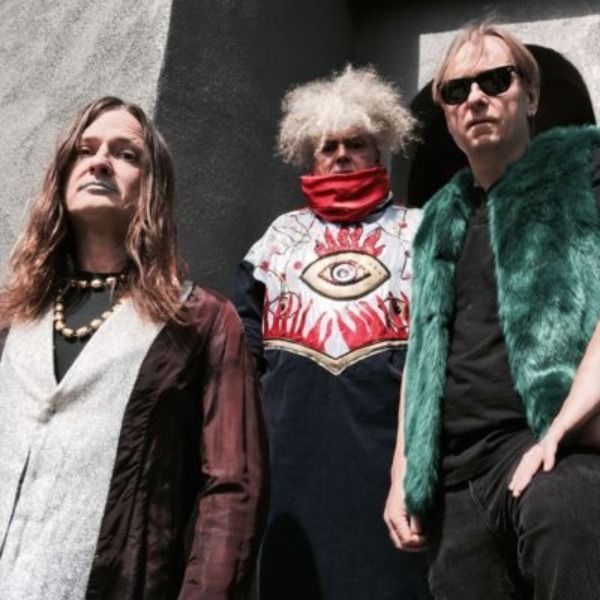
The Melvins
The Melvins weren't the first band to acknowledge the heavy metal influences that most left-of-center bands had been trying to shake off since punk rock broke in 1977 (that honor would go to Black Flag on their polarizing 1984 album, My War). But no other band to emerge from the punk/alternative underground would mine Black Sabbath's slow, monolithic roar with greater effect than the Melvins, and they would prove to be wildly influential despite barely breaking out of cult status. The drop-D tunings and brontosaurus stomp of grunge icons such as Tad, Mudhoney, and Soundgarden would be unthinkable without the trails the Melvins blazed, and Kurt Cobain often sang their praises, helping them land their first major-label recording deal in 1993. They became a bridge between the edges of the punk and metal communities, who would find greater common ground from the '90s onward. (Their debut EP, 1986's 6 Songs, found them wavering between speedier punk-oriented numbers and full-on heaviness, but by 1991's Bullhead, the Melvins' trademark gargantuan sound was firmly in place.) And while the Melvins were as recognizable as any band of their day, they also proved to be more creatively flexible than nearly all their peers, willing to experiment with different styles (the massive suite on 1992's Melvins [aka Lysol], the ambitious studio experimentation of 1996's Stag, the noisy soundscapes in 2017's A Walk with Love and Death) and a variety of musical configurations (bringing in multiple guest vocalists on 2000's The Crybaby, using two drummers on 2006's A Senile Animal, working with a rotating team of bassists on 2016's Basses Loaded, recording with two bassists at once on 2018's Pinkus Abortion Technician), all of which helped the band remain productive and prolific more than three decades after it launched.
The band formed in Aberdeen, Washington, the same town that produced Nirvana's Cobain and Krist Novoselic. For Nirvana and many other Seattle-area bands, the Melvins' sludge was inspirational; the younger bands took the Sabbath-styled heaviness of the Melvins, while adding an equally important pop song structure, which the group tended to lack. While all of their disciples became famous after Nirvana broke big in 1991 (including Mudhoney, which featured former Melvins bassist Matt Lukin), the Melvins only expanded their cult slightly. They did earn a major-label contract with Atlantic, but after releasing three records for the label, they were dropped in late 1996 and the group returned to indie status, landing with Amphetamine Reptile for 1998's Alive at the F*cker Club. The late '90s and early 2000s century saw a flurry of releases by the band: The Maggot, The Bootlicker, The Crybaby, Electroretard, The Colossus of Destiny, Hostile Ambient Takeover, Pigs of the Roman Empire, and Houdini Live 2005: A Live History of Gluttony and Lust, all of which (except for the fourth one) were issued on Mike Patton's Ipecac label.
The Melvins weren't the first band to acknowledge the heavy metal influences that most left-of-center bands had been trying to shake off since punk rock broke in 1977 (that honor would go to Black Flag on their polarizing 1984 album, My War). But no other band to emerge from the punk/alternative underground would mine Black Sabbath's slow, monolithic roar with greater effect than the Melvins, and they would prove to be wildly influential despite barely breaking out of cult status. The drop-D tunings and brontosaurus stomp of grunge icons such as Tad, Mudhoney, and Soundgarden would be unthinkable without the trails the Melvins blazed, and Kurt Cobain often sang their praises, helping them land their first major-label recording deal in 1993. They became a bridge between the edges of the punk and metal communities, who would find greater common ground from the '90s onward. (Their debut EP, 1986's 6 Songs, found them wavering between speedier punk-oriented numbers and full-on heaviness, but by 1991's Bullhead, the Melvins' trademark gargantuan sound was firmly in place.) And while the Melvins were as recognizable as any band of their day, they also proved to be more creatively flexible than nearly all their peers, willing to experiment with different styles (the massive suite on 1992's Melvins [aka Lysol], the ambitious studio experimentation of 1996's Stag, the noisy soundscapes in 2017's A Walk with Love and Death) and a variety of musical configurations (bringing in multiple guest vocalists on 2000's The Crybaby, using two drummers on 2006's A Senile Animal, working with a rotating team of bassists on 2016's Basses Loaded, recording with two bassists at once on 2018's Pinkus Abortion Technician), all of which helped the band remain productive and prolific more than three decades after it launched.
The band formed in Aberdeen, Washington, the same town that produced Nirvana's Cobain and Krist Novoselic. For Nirvana and many other Seattle-area bands, the Melvins' sludge was inspirational; the younger bands took the Sabbath-styled heaviness of the Melvins, while adding an equally important pop song structure, which the group tended to lack. While all of their disciples became famous after Nirvana broke big in 1991 (including Mudhoney, which featured former Melvins bassist Matt Lukin), the Melvins only expanded their cult slightly. They did earn a major-label contract with Atlantic, but after releasing three records for the label, they were dropped in late 1996 and the group returned to indie status, landing with Amphetamine Reptile for 1998's Alive at the F*cker Club. The late '90s and early 2000s century saw a flurry of releases by the band: The Maggot, The Bootlicker, The Crybaby, Electroretard, The Colossus of Destiny, Hostile Ambient Takeover, Pigs of the Roman Empire, and Houdini Live 2005: A Live History of Gluttony and Lust, all of which (except for the fourth one) were issued on Mike Patton's Ipecac label.