Roy Choi
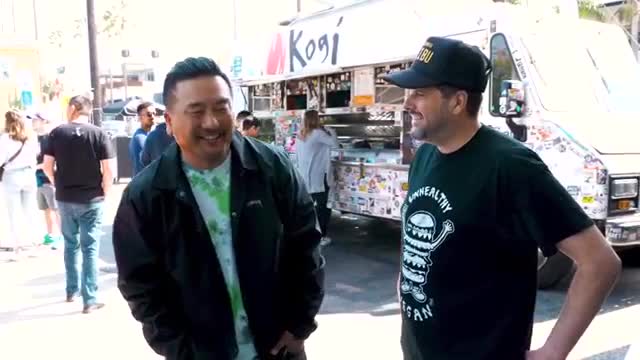
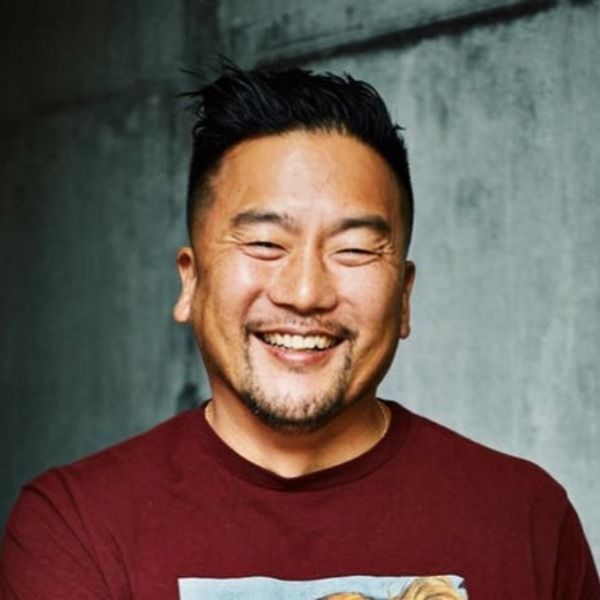
Roy Choi is a Korean American chef who gained prominence as the creator of the gourmet Korean-Mexican taco truck Kogi. He is a chef who is celebrated for "food that isn't fancy" and is known as one of the founders of the gourmet food truck movement.
Choi gained experience as a journeyman hotel chef since the mid-1990s. In 2001, he started working for Hilton Hotels. After being promoted within the company, in 2007, Choi became chef de cuisine at the Beverly Hilton. It was there that Choi met his future business partner, Mark Manguera.
Choi also worked at the Embassy Suites in Sacramento and the Rock Sugar Pan Asian Kitchen in Los Angeles.
After this classical training and years of background in four and five-star cooking, Choi said that the shift to the food trucks, initially based on Abbot Kinney Boulevard in Venice was great. Choi's company, Kogi, was founded in 2008 with partners Mark Manguera and his wife, Caroline Shin-Manguera.
He was named one of the top ten "Best New Chefs" of 2010 by Food and Wine magazine and is the first food truck operator to win that distinction. He currently runs several Los Angeles-area restaurants: Chego! which features rice bowls, Sunny Spot which is Caribbean-inspired, A-Frame which conveys the Hawaiian idea of aloha and is built in a former IHOP, and Pot at the Line Hotel in Koreatown. He also opened a restaurant named Best Friend in Vegas. His cooking style fuses Mexican and Korean flavors and dishes.
In June 2013, Choi along with fellow chefs Wolfgang Puck and David Chang, convened at the Hotel Bel-Air to fuse different styles such as ggaejjang style and kochujang onto the Hotel Bel-Airmenu.
In November 2013, Choi released his autobiography that is part memoir part cookbook called L.A. Son: My Life, My City, My Food.
Choi said he didn't start out to write a book, but that he kept getting asked the same questions about his food, its flavors, and how it is prepared. While Choi doesn't see the book as social commentary, he felt it was important to show the "real deal" of the duality he felt growing up as an immigrant in the 1970s; the foods served in the restaurant were quite different from what the family ate at home. The book also talks about the culture of Los Angeles and how it has changed since the 1970s.
Roy Choi is a Korean American chef who gained prominence as the creator of the gourmet Korean-Mexican taco truck Kogi. He is a chef who is celebrated for "food that isn't fancy" and is known as one of the founders of the gourmet food truck movement.
Choi gained experience as a journeyman hotel chef since the mid-1990s. In 2001, he started working for Hilton Hotels. After being promoted within the company, in 2007, Choi became chef de cuisine at the Beverly Hilton. It was there that Choi met his future business partner, Mark Manguera.
Choi also worked at the Embassy Suites in Sacramento and the Rock Sugar Pan Asian Kitchen in Los Angeles.
After this classical training and years of background in four and five-star cooking, Choi said that the shift to the food trucks, initially based on Abbot Kinney Boulevard in Venice was great. Choi's company, Kogi, was founded in 2008 with partners Mark Manguera and his wife, Caroline Shin-Manguera.
He was named one of the top ten "Best New Chefs" of 2010 by Food and Wine magazine and is the first food truck operator to win that distinction. He currently runs several Los Angeles-area restaurants: Chego! which features rice bowls, Sunny Spot which is Caribbean-inspired, A-Frame which conveys the Hawaiian idea of aloha and is built in a former IHOP, and Pot at the Line Hotel in Koreatown. He also opened a restaurant named Best Friend in Vegas. His cooking style fuses Mexican and Korean flavors and dishes.
In June 2013, Choi along with fellow chefs Wolfgang Puck and David Chang, convened at the Hotel Bel-Air to fuse different styles such as ggaejjang style and kochujang onto the Hotel Bel-Airmenu.
In November 2013, Choi released his autobiography that is part memoir part cookbook called L.A. Son: My Life, My City, My Food.
Choi said he didn't start out to write a book, but that he kept getting asked the same questions about his food, its flavors, and how it is prepared. While Choi doesn't see the book as social commentary, he felt it was important to show the "real deal" of the duality he felt growing up as an immigrant in the 1970s; the foods served in the restaurant were quite different from what the family ate at home. The book also talks about the culture of Los Angeles and how it has changed since the 1970s.