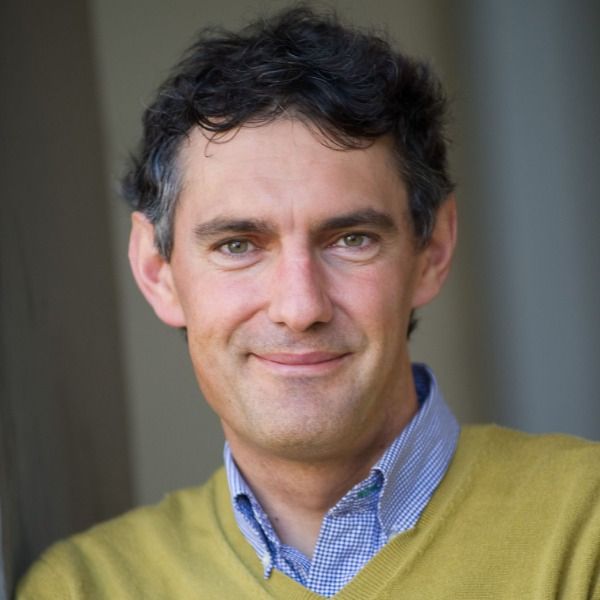
Emmanuel Saez
Emmanuel Saez (born November 26, 1972) is a French and American economist who is Professor of Economics at the University of California, Berkeley. His work, done with Thomas Piketty, includes tracking the incomes of the poor, middle class and rich around the world. Their work shows that top earners in the United States have taken an increasingly larger share of overall income over the last three decades, with almost as much inequality as before the Great Depression. He recommends much higher (marginal) taxes on the rich, up to 70% or 90%. He received the John Bates Clark Medal in 2009 and was named a MacArthur Fellow in 2010.
Emmanuel Saez graduated from the École Normale Supérieure in 1996 where he studied mathematics and economics. He then received his Ph.D. in economics from the Massachusetts Institute of Technology (MIT) in 1999.
Saez has written extensively on the theory of optimal taxation and transfer, addressing topics such as wealth and income inequality, capital income taxation, and retirement. In addition to his theoretical work, he has authored a number of empirical papers, many of them applying the results from his theoretical work to US household data. His focus on the top 0.1% of the income and wealth distribution has led to his political theories about the "great compression" and the "great divergence" and led to significant research on the consensus about the ideal wealth distribution.
Saez's research on wealth and income inequality has largely focused on households at the top of the wealth and income distributions, which make up a significant portion of the US tax base.
Conservative critics, such as James Pethokoukis of the American Enterprise Institute, say that Saez and Piketty measure "market income," the total income before tax excluding income from government. Saez describes it as gross income reported on tax returns before any deductions. This excludes unemployment insurance, welfare payments, food stamps, Medicare, Medicaid, Social Security and employer-provided health insurance. Saez says that these are the best data available, as measured consistently since 1913. Critics say that they exaggerate inequality.
In 2011, Saez and Peter Diamond argued in public media a widely discussed paper that the proper marginal tax rate for North Atlantic societies and especially the United States to impose is 73% (substantially higher than the current 42.5% top US marginal tax rate).
Together with Raj Chetty and others he researched social mobility in the US. They found substantial geographic differences across the country that were correlated with five factors: segregation, income inequality, local school quality, social capital, and family structure.
Saez has been described as an "easygoing" person who loves surfing. He has reportedly resisted overtures from the economics departments at the University of Chicago, Harvard University, and his alma mater MIT.
He was paid more than $400,000 in 2016[13], and was in 2014 amongst the top 1% earners at Berkeley, a university whose Gini coefficient is extremely high. A writer for the California Policy Center described this situation as "unusual".
Emmanuel Saez (born November 26, 1972) is a French and American economist who is Professor of Economics at the University of California, Berkeley. His work, done with Thomas Piketty, includes tracking the incomes of the poor, middle class and rich around the world. Their work shows that top earners in the United States have taken an increasingly larger share of overall income over the last three decades, with almost as much inequality as before the Great Depression. He recommends much higher (marginal) taxes on the rich, up to 70% or 90%. He received the John Bates Clark Medal in 2009 and was named a MacArthur Fellow in 2010.
Emmanuel Saez graduated from the École Normale Supérieure in 1996 where he studied mathematics and economics. He then received his Ph.D. in economics from the Massachusetts Institute of Technology (MIT) in 1999.
Saez has written extensively on the theory of optimal taxation and transfer, addressing topics such as wealth and income inequality, capital income taxation, and retirement. In addition to his theoretical work, he has authored a number of empirical papers, many of them applying the results from his theoretical work to US household data. His focus on the top 0.1% of the income and wealth distribution has led to his political theories about the "great compression" and the "great divergence" and led to significant research on the consensus about the ideal wealth distribution.
Saez's research on wealth and income inequality has largely focused on households at the top of the wealth and income distributions, which make up a significant portion of the US tax base.
Conservative critics, such as James Pethokoukis of the American Enterprise Institute, say that Saez and Piketty measure "market income," the total income before tax excluding income from government. Saez describes it as gross income reported on tax returns before any deductions. This excludes unemployment insurance, welfare payments, food stamps, Medicare, Medicaid, Social Security and employer-provided health insurance. Saez says that these are the best data available, as measured consistently since 1913. Critics say that they exaggerate inequality.
In 2011, Saez and Peter Diamond argued in public media a widely discussed paper that the proper marginal tax rate for North Atlantic societies and especially the United States to impose is 73% (substantially higher than the current 42.5% top US marginal tax rate).
Together with Raj Chetty and others he researched social mobility in the US. They found substantial geographic differences across the country that were correlated with five factors: segregation, income inequality, local school quality, social capital, and family structure.
Saez has been described as an "easygoing" person who loves surfing. He has reportedly resisted overtures from the economics departments at the University of Chicago, Harvard University, and his alma mater MIT.
He was paid more than $400,000 in 2016[13], and was in 2014 amongst the top 1% earners at Berkeley, a university whose Gini coefficient is extremely high. A writer for the California Policy Center described this situation as "unusual".