Sue Blyth Hall
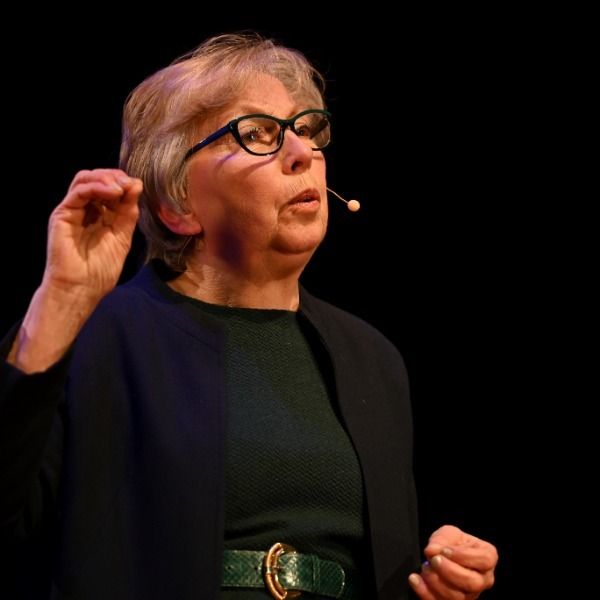
Sue is dyslexic and has been working with dyslexics for 28 years. She is the author of Fish Don't Climb Trees, TEDx speaker March 2021, producer of internationally award winning documentary WHO KNEW Dyslexia is a Way of Thinking. She connects with her audience from many experiential perspectives.
Sue's professional training began experientiallly at school,and at the age of 18 she promised herself she would never read another book as long as she lived. It was a solemn heartfelt promise that lasted many years. She worked as a secretary before changing direction to train as an integrative health therapist.
Her son's learning challlenges were obvious by the age of 8, but she didn't discover her own dyslexia until she trained as a Davis Method Facilitator. She emigrated to Canada in 1998 and is one of 400+ Facilitators worldwide. Since then she has had the privilege of working with dyslexic children and adults, sharing their 'aha' moments and watching them overcome their challenges.
She has delivered numerous information sessions, given Professional Development Day presentations, and appeared on TV and Radio. In March 2021 she delivered a TEDx Talk www.bearcreekpark.ca She is the author of Fish Don't Climb Trees (2014 and 2020) which relates her story and many of her clients' stories together with an explanation of why the struggles arise and the solutions. In 2025 she produced a short documentary, WHO KNEW Dyslexia is a Way of Thinking, which has been honoured with many international film festival awards.
Sue is inspired by the realisation that our children are here to restore balance and create a new paradigm in education. Her goal is to ensure this message reaches as many people as possible: one third of the population can be likened to little 'apple mac's entering a school system that is designed for little 'pc' computers. All individuals are learning able, some just don't learn the way they are taught and there is a very simple, easy way to ensure a cognitive opportunity for all.
Recently she has been involved in the creation of NeuroInclusivity for Early Years which enables Early Childhood Educators to provide much needed self-regulation tools to their 3-5 year olds alongside early literacy strategies.
Sue is relentless in her goal to educate the educators, parents, teachers and dyslexics because society cannot continue to squander all the amazing talents that arise from the dyslexic way of thinking. Her favourite quote is "When we design only for one kind of mind, we lose the gifts of all the others”
Sue's professional training began experientiallly at school,and at the age of 18 she promised herself she would never read another book as long as she lived. It was a solemn heartfelt promise that lasted many years. She worked as a secretary before changing direction to train as an integrative health therapist.
Her son's learning challlenges were obvious by the age of 8, but she didn't discover her own dyslexia until she trained as a Davis Method Facilitator. She emigrated to Canada in 1998 and is one of 400+ Facilitators worldwide. Since then she has had the privilege of working with dyslexic children and adults, sharing their 'aha' moments and watching them overcome their challenges.
She has delivered numerous information sessions, given Professional Development Day presentations, and appeared on TV and Radio. In March 2021 she delivered a TEDx Talk www.bearcreekpark.ca She is the author of Fish Don't Climb Trees (2014 and 2020) which relates her story and many of her clients' stories together with an explanation of why the struggles arise and the solutions. In 2025 she produced a short documentary, WHO KNEW Dyslexia is a Way of Thinking, which has been honoured with many international film festival awards.
Sue is inspired by the realisation that our children are here to restore balance and create a new paradigm in education. Her goal is to ensure this message reaches as many people as possible: one third of the population can be likened to little 'apple mac's entering a school system that is designed for little 'pc' computers. All individuals are learning able, some just don't learn the way they are taught and there is a very simple, easy way to ensure a cognitive opportunity for all.
Recently she has been involved in the creation of NeuroInclusivity for Early Years which enables Early Childhood Educators to provide much needed self-regulation tools to their 3-5 year olds alongside early literacy strategies.
Sue is relentless in her goal to educate the educators, parents, teachers and dyslexics because society cannot continue to squander all the amazing talents that arise from the dyslexic way of thinking. Her favourite quote is "When we design only for one kind of mind, we lose the gifts of all the others”
Dyslexia: Enable the Different Learner
This presentation is based on my TEDx talk of March 2021 which can be viewed on YouTube. It explains why learning challenges such as dyslexia, dyscalculia, dysgraphia, ADD exist and how they affect both individuals and society as a whole. It includes three stories of individuals who learned the truth, that they were in fact learning able. It outlines the cause of the challenges, and the solution. Typically the talk is an hour, but can be...
NeuroInclusivity for Early Years
This talk can be a Keynote, or a breakout. It covers the reason for what are seen as learning disabilities and the solutions. Sue provides experiential knowledge that learning challenges can be avoided by reaching all children from day one with an introduction to self-regulation tools and early literacy skills that work for everyone, no matter their learning style. Currently one-third of the population are marginalised because they learn...