Paul Barchitta
I am interested in speaking at your next conference. I have just published my second book:
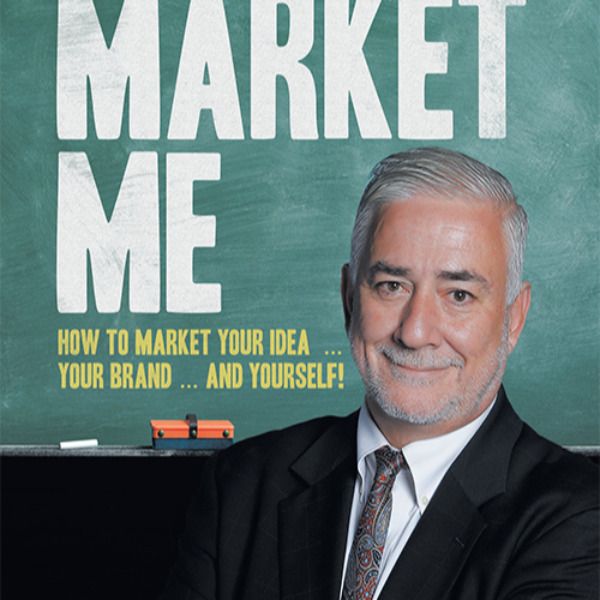
Market Me: How To Market Your Idea...Your Brand... & Yourself!
I have also published:
A Salesman Walks Into A Classroom...The Art of Sales Meets The Science of Selling
www.asalesmanwalksintoaclassroom.com
I have attached the About the Author section and Introduction of the book.
Regards,
Paul Barchitta
Professor
United States Merchant Marine Academy
(917) 842-1961 Cell
About the Author
Paul Barchitta is a Professor in the Maritime Transportation/Business Department at the United States Merchant Marine Academy, located in Kings Point, NY. The U.S. Merchant Marine Academy is one of five Federal Service Academies including, West Point (Army), Annapolis (Navy), Air Force, Coast Guard, and Merchant Marine.
Prior to accepting this appointment, he was as a tenured faculty member for The City University of New York (CUNY) at Queensborough Community College. He has been a Professor at the following institutions in their respective Marketing/Business Administration Departments; SUNY College@ Old Westbury, Nassau Community College, Stockton College, Brooklyn College, LaGuardia Community College, Parsons School of Design, Wagner College, and St. John's University. He has also traveled to Taiwan on behalf of the American Education and Cultural Foundation to teach Marketing and Management.
He has a Post-Graduate, Advanced Certificate (30 Credits above an MBA) from a Doctoral program at NYU, in Corporate Training & Development. He has an M.B.A. in Marketing, and a B.S. in Finance from St. John's University.
He has thirty years of sales experience in the Medical Device and Healthcare/Hospital industry. He has been a President's Club Winner for sales quota achievement for three major, global, medical device manufacturer's including Johnson and Johnson's Surgical Instrument Division, Smith's Medical's Infusion Equipment Division, and Beiersdorf-Jobst's Vascular Division.
INTRODUCTION
Some people are born salespeople and others are not. I grew up in New York City and the furthest thing on my mind was a career in sales. It was not even close to being on the radar. As a youngster I had shown the academic ability to possibly attend medical school, but as they say, life gets in the way, and that career track went by the wayside. When I graduated from college I was not sure what I wanted to do. I had an athletic background, my father was a high school football coach, and we had connections everywhere. I went into the sporting goods business opening up a retail sporting goods store that catered to the institutional customer such as leagues, schools, and teams, specifically team uniforms, and other related sporting goods. I thought this was a natural fit for me, a sports store for a sports family.
This novelty ended quickly, what I did not realize was that it was more work than fun. I tried to do everything, and I mean everything, myself, to make the business successful. Every responsibility fell at my feet from being my own accountant, to being my own salesperson, and every other business function in between. Although it was a great experience because of the exposure that I had from every aspect of the business spectrum, I was frustrated with the accounting, finance, manufacturing, and production side of the business. I started to become more interested in the sales and marketing side of the business. I became passionate about hunting and finding the customer, and walking the customer through the entire process of closing the deal. Over time I wanted to shed myself of the non-sales related activities associated with the business so I sold the business and went into sales on a full-time basis.
I remember walking into my parent's home, during dinner, and telling them that I wanted to get into sales. I will never forget the look on my father's face, it was a look filled with disappointment, where he said to me, "You want to be a SALESMAN! Why did I send you to college?" Now, he has changed his tune and tone over time, but it is the negative connotation associated with a career in sales that drove me into university teaching, and the fundamental foundation behind the writing of this book. To change the negative perceptions associated with sales and salespeople. I am on a crusade to change this negative perception, does it still exist today? Of course it does. Do salespeople take advantage of customers and push them into purchasing products that they do not need? All day every day. My point is that you do not have to do that today. There is a more professional approach towards selling, and that is a purpose of this book, to expose salespeople to other methods of selling that can debunk the myth that all salespeople are evil and only interested in the commission that they are going to make on the sale.
After a few years of full-time selling I became interested in the sales training function of the organization. This led me to think about teaching sales at the university level. I walked into a lecture hall at a university filled with young doctors. Many companies practice the notion of orientating doctors when they are young because they can become users and prescribers of their products. It was a sales presentation to the doctors, but more of a lecture on what medical disorders my products could help cure. This was the day that the light went off in my head that I wanted to change my career path from selling to teaching and I have been on this crusade now for twenty years.
The book is designed to be used as a guidebook, handbook, and a reference point for all salespeople. The target audience for this book encompasses a wide range of sales professionals from entry level, to intermediate level, and even senior salespeople. Entry level salespeople who are new to selling as a profession need a handbook that they can reference as they begin their sales career. They need a blueprint that they can follow. Intermediate level salespeople who are possibly struggling to become successful might just need the confirmation that they are on the right track and need to build confidence in their approach to selling. Senior salespeople, who may have been trained as transaction salespeople, can benefit as well because old dogs can be taught new tricks in the game of sales. This book can act as a refresher course for even the most successful and seasoned sales professional.
The book commences with an overview of what the life of a salesperson is all about from finding your passion, to the freedom and independence that a career in sales can offer. Specific details and recommendations about time management, how to prioritize sales calls, where a career in sales can lead you, and how to prepare yourself to get the sales job that you want are all documented. Compensation and commission plans are addressed as well as the value of sales training, sales development, and the significance of ethical behavior among salespeople. The evolution from short-term transaction selling to long-term relationship selling is discussed as well as the magnitude of understanding who the customer is. A model of the steps in the selling process is outlined in addition to the importance of how to shorten the sales cycle. The book concludes with theories of sales motivation that can assist the salesperson develop a comprehension of the science of personal selling.
A career in sales can offer a salesperson more opportunity to advance within a company than people realize. Starting with a company in the sales department can provide a solid foundation that may present you with several different upward mobility career paths that can lead you all the way up the corporate ladder to CEO. The role of the salesperson is crucial to the overall success of an organization. Generating sales revenue and sustaining sales revenue were traditional roles. Current competitive trends in the industrial marketplace have rendered these roles increasingly less effective in establishing loyalty among buyers. There has been an underlying transfer in the theory and practice of corporate marketing. The role that the salesperson plays in establishing long-term loyalty among buyers needs to be redefined.
There are two basic questions that need to be answered in sales, who is my customer and why are they buying my product? It has become apparent that having a better understanding of the buying process and the behavior of customers can help the salesperson be more successful. Getting inside the head of the customer and thinking like the customer can enhance the ability of a salesperson, especially their ability to analyze the selling situation that they are in the middle of. To be successful is sales you have to be persistent, dedicated, and hard working. You need to be scientific in your approach, meaning you have to have a plan. You have to be robotic with your activity, every day you need to have a routine, you need to identify and follow steps that can lead you to success. You need to move your business forward every day, you need to accomplish something today that gets you closer to surpassing your quota.
The sales process can be defined as the steps that you need to follow from starting from scratch, or locating your potential customer, to approaching the customer, making a presentation to the customer, answering any questions or objections that they have, closing the sale, and following-up with the customer after the sale. If you follow these steps, and adhere to this model, you can be successful at selling. You need to know where you are going every day, you need to know where, and what stage of the sales process your customers are in. Every customer is at a different stage of the process, you need to be able to juggle this, know when to move to the next stage, and when to start the process over again with your next customer.
On the first day of every class, I ask the students what are their perceptions of salespeople? When you think of people who sell stuff to make a living, do you think of them in a positive or negative way? It is an overwhelming negative response. I ask them to open their mind and give me a chance to change that perception. I am on a crusade to change the negative perceptions associated with the life of a salesperson. This is what I am asking you to do as you read this book, place your previous preconceptions about sales and salespeople to the side, and look at selling from a different perspective. Today's professional selling approach emphasizes the development of a long-term relationship, compared to a short-term transaction. The pushy salesperson has been replaced by the problem solving salesperson. I believe in the problem solving approach to sales that is detailed in this book. Over the course of my career, I have developed a blueprint, or road map for sales success, that is detailed in the following pages and chapters. It can assist you in your quest to surpass your quota and achieve the financial goals that you seek in a career in sales. This method has worked for me, and I am not saying that it will work for everyone, but the story is worth reading about.
I am interested in speaking at your next conference. I have just published my second book:
Market Me: How To Market Your Idea...Your Brand... & Yourself!
I have also published:
A Salesman Walks Into A Classroom...The Art of Sales Meets The Science of Selling
www.asalesmanwalksintoaclassroom.com
I have attached the About the Author section and Introduction of the book.
Regards,
Paul Barchitta
Professor
United States Merchant Marine Academy
(917) 842-1961 Cell
About the Author
Paul Barchitta is a Professor in the Maritime Transportation/Business Department at the United States Merchant Marine Academy, located in Kings Point, NY. The U.S. Merchant Marine Academy is one of five Federal Service Academies including, West Point (Army), Annapolis (Navy), Air Force, Coast Guard, and Merchant Marine.
Prior to accepting this appointment, he was as a tenured faculty member for The City University of New York (CUNY) at Queensborough Community College. He has been a Professor at the following institutions in their respective Marketing/Business Administration Departments; SUNY College@ Old Westbury, Nassau Community College, Stockton College, Brooklyn College, LaGuardia Community College, Parsons School of Design, Wagner College, and St. John's University. He has also traveled to Taiwan on behalf of the American Education and Cultural Foundation to teach Marketing and Management.
He has a Post-Graduate, Advanced Certificate (30 Credits above an MBA) from a Doctoral program at NYU, in Corporate Training & Development. He has an M.B.A. in Marketing, and a B.S. in Finance from St. John's University.
He has thirty years of sales experience in the Medical Device and Healthcare/Hospital industry. He has been a President's Club Winner for sales quota achievement for three major, global, medical device manufacturer's including Johnson and Johnson's Surgical Instrument Division, Smith's Medical's Infusion Equipment Division, and Beiersdorf-Jobst's Vascular Division.
INTRODUCTION
Some people are born salespeople and others are not. I grew up in New York City and the furthest thing on my mind was a career in sales. It was not even close to being on the radar. As a youngster I had shown the academic ability to possibly attend medical school, but as they say, life gets in the way, and that career track went by the wayside. When I graduated from college I was not sure what I wanted to do. I had an athletic background, my father was a high school football coach, and we had connections everywhere. I went into the sporting goods business opening up a retail sporting goods store that catered to the institutional customer such as leagues, schools, and teams, specifically team uniforms, and other related sporting goods. I thought this was a natural fit for me, a sports store for a sports family.
This novelty ended quickly, what I did not realize was that it was more work than fun. I tried to do everything, and I mean everything, myself, to make the business successful. Every responsibility fell at my feet from being my own accountant, to being my own salesperson, and every other business function in between. Although it was a great experience because of the exposure that I had from every aspect of the business spectrum, I was frustrated with the accounting, finance, manufacturing, and production side of the business. I started to become more interested in the sales and marketing side of the business. I became passionate about hunting and finding the customer, and walking the customer through the entire process of closing the deal. Over time I wanted to shed myself of the non-sales related activities associated with the business so I sold the business and went into sales on a full-time basis.
I remember walking into my parent's home, during dinner, and telling them that I wanted to get into sales. I will never forget the look on my father's face, it was a look filled with disappointment, where he said to me, "You want to be a SALESMAN! Why did I send you to college?" Now, he has changed his tune and tone over time, but it is the negative connotation associated with a career in sales that drove me into university teaching, and the fundamental foundation behind the writing of this book. To change the negative perceptions associated with sales and salespeople. I am on a crusade to change this negative perception, does it still exist today? Of course it does. Do salespeople take advantage of customers and push them into purchasing products that they do not need? All day every day. My point is that you do not have to do that today. There is a more professional approach towards selling, and that is a purpose of this book, to expose salespeople to other methods of selling that can debunk the myth that all salespeople are evil and only interested in the commission that they are going to make on the sale.
After a few years of full-time selling I became interested in the sales training function of the organization. This led me to think about teaching sales at the university level. I walked into a lecture hall at a university filled with young doctors. Many companies practice the notion of orientating doctors when they are young because they can become users and prescribers of their products. It was a sales presentation to the doctors, but more of a lecture on what medical disorders my products could help cure. This was the day that the light went off in my head that I wanted to change my career path from selling to teaching and I have been on this crusade now for twenty years.
The book is designed to be used as a guidebook, handbook, and a reference point for all salespeople. The target audience for this book encompasses a wide range of sales professionals from entry level, to intermediate level, and even senior salespeople. Entry level salespeople who are new to selling as a profession need a handbook that they can reference as they begin their sales career. They need a blueprint that they can follow. Intermediate level salespeople who are possibly struggling to become successful might just need the confirmation that they are on the right track and need to build confidence in their approach to selling. Senior salespeople, who may have been trained as transaction salespeople, can benefit as well because old dogs can be taught new tricks in the game of sales. This book can act as a refresher course for even the most successful and seasoned sales professional.
The book commences with an overview of what the life of a salesperson is all about from finding your passion, to the freedom and independence that a career in sales can offer. Specific details and recommendations about time management, how to prioritize sales calls, where a career in sales can lead you, and how to prepare yourself to get the sales job that you want are all documented. Compensation and commission plans are addressed as well as the value of sales training, sales development, and the significance of ethical behavior among salespeople. The evolution from short-term transaction selling to long-term relationship selling is discussed as well as the magnitude of understanding who the customer is. A model of the steps in the selling process is outlined in addition to the importance of how to shorten the sales cycle. The book concludes with theories of sales motivation that can assist the salesperson develop a comprehension of the science of personal selling.
A career in sales can offer a salesperson more opportunity to advance within a company than people realize. Starting with a company in the sales department can provide a solid foundation that may present you with several different upward mobility career paths that can lead you all the way up the corporate ladder to CEO. The role of the salesperson is crucial to the overall success of an organization. Generating sales revenue and sustaining sales revenue were traditional roles. Current competitive trends in the industrial marketplace have rendered these roles increasingly less effective in establishing loyalty among buyers. There has been an underlying transfer in the theory and practice of corporate marketing. The role that the salesperson plays in establishing long-term loyalty among buyers needs to be redefined.
There are two basic questions that need to be answered in sales, who is my customer and why are they buying my product? It has become apparent that having a better understanding of the buying process and the behavior of customers can help the salesperson be more successful. Getting inside the head of the customer and thinking like the customer can enhance the ability of a salesperson, especially their ability to analyze the selling situation that they are in the middle of. To be successful is sales you have to be persistent, dedicated, and hard working. You need to be scientific in your approach, meaning you have to have a plan. You have to be robotic with your activity, every day you need to have a routine, you need to identify and follow steps that can lead you to success. You need to move your business forward every day, you need to accomplish something today that gets you closer to surpassing your quota.
The sales process can be defined as the steps that you need to follow from starting from scratch, or locating your potential customer, to approaching the customer, making a presentation to the customer, answering any questions or objections that they have, closing the sale, and following-up with the customer after the sale. If you follow these steps, and adhere to this model, you can be successful at selling. You need to know where you are going every day, you need to know where, and what stage of the sales process your customers are in. Every customer is at a different stage of the process, you need to be able to juggle this, know when to move to the next stage, and when to start the process over again with your next customer.
On the first day of every class, I ask the students what are their perceptions of salespeople? When you think of people who sell stuff to make a living, do you think of them in a positive or negative way? It is an overwhelming negative response. I ask them to open their mind and give me a chance to change that perception. I am on a crusade to change the negative perceptions associated with the life of a salesperson. This is what I am asking you to do as you read this book, place your previous preconceptions about sales and salespeople to the side, and look at selling from a different perspective. Today's professional selling approach emphasizes the development of a long-term relationship, compared to a short-term transaction. The pushy salesperson has been replaced by the problem solving salesperson. I believe in the problem solving approach to sales that is detailed in this book. Over the course of my career, I have developed a blueprint, or road map for sales success, that is detailed in the following pages and chapters. It can assist you in your quest to surpass your quota and achieve the financial goals that you seek in a career in sales. This method has worked for me, and I am not saying that it will work for everyone, but the story is worth reading about.
Relationship Selling vs. Transaction Selling
Relationship Selling vs. Transaction Selling: Stop Worrying About the Transaction and Start Focusing on the Relationship
Steps in the Selling Process: The Importance of Moving Your Business Forward Everyday
Steps in the Selling Process: The Importance of Moving Your Business Forward Everyday
How To Develop Accurate Sales Forecasts...Salespeople Are Not Psychics Or Meteorologists
How To Develop Accurate Sales Forecasts...Salespeople Are Not Psychics or Meteorologists
Is Selling In Your DNA? Why You Need to be Passionate About Selling!
Is Selling in Your DNA? You Need to be Passionate About Selling!
How To Go From Knocking on Doors to Becoming the CEO...The Importance of Having a Career Path
How To Go From Knocking On Doors To Becoming The CEO...The Importance Of Having A Career Path.
There Ain't No Can't...You Would Be Amazed at What You Can Accomplish!
There Ain't No Can't...You Would Be Amazed at What You CAn Accomplish!