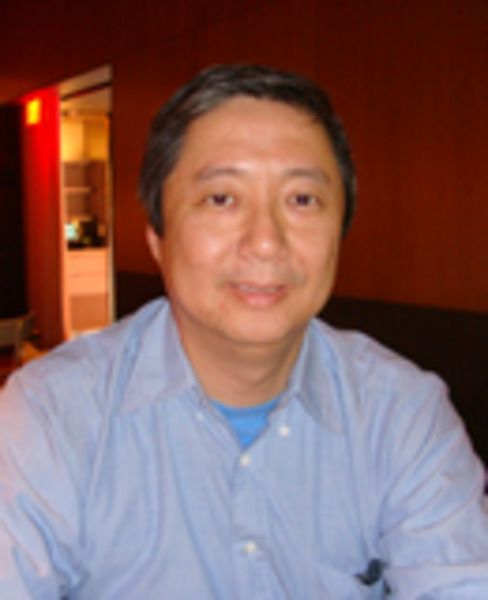
Joseph Lee
In a career that has now spanned over 25 years, Mr. Lee has always been a consultant at heart.
After graduating from the University of Chicago's Graduate School of Business with concentrations in Finance and Accounting in 1981, he joined the firm of Peat Marwick Mitchell, the predecessor to the current firm of KPMG. He did the usual 2 years as an auditor to obtain his California CPA, and then entered into the world of consulting.
His firm's services ranged from M&A assistance, golf course management, residential real estate development, to IT package implementations. In 1992, with the real estate bubble bursting, drying up his funding sources, Mr. Lee returned to KPMG to spearhead a new consulting practice-targeting US subsidiaries of Japanese global firms.
He built a practice covering IT, Compensation, Corporate Finance, Real Estate, and Troubled Asset Work-outs, and in 1996, opened KPMG's consulting outfit in Japan, KPMG Global Solution KK, where he was the President. He built an organization around PeopleSoft implementations, securing launch clients such as DirecTV, NTT Commware, and Toyota, and grew the staff from zero to 120 and revenues to $23 million in two and a half years.
In 1999, after KPMG spun off its IT consulting outfit which later became BearingPoint, Mr. Lee returned to the US and assumed the role of re-building a new advisory practice around non-IT services. He capitalized on the Sarbanes-Oxley Act of 2002, launching services targeting Japanese SEC registrants and their corporate governance challenges. His primary clients included Toyota Motors, Honda Motors, Hitachi, Ricoh, Makita, Mitsubishi Electric, NMB, and Bandai.
Mr. Lee left KPMG in 2005 to pursue other interests. He's written a novel which was translated into Japanese and released in January, 2007. He is married with two children, his daughter teaching elementary school music, and his son an actor-in-training.
Mr. Lee's focus is on the Lost Art of Storytelling. His life was changed permanently on 9.11.2001 when he was on board United Flight 83 from Newark to LAX. A few unlucky choices, and he would have been on UA93. Since then, with the motto of "Every Day is a Gift," he's decided that a life as a big shot consulting partner wasn't "it" for him.
He is passionate about making positive influences on the life of other business professionals, hurling insults such as "people really don't give a *** about what you do or what you know; they only care about what can you do for them." In Japan, he's changing attitudes by telling his trainees, "I don't change attitudes, but only behavior. I don't deal with what I can't measure.. but only what I can see." And without exception, attitudes change when they have that "aha!" moment.
"People don't remember all those powerpoint bullet points. They tire of talking points and happy talk. They want what's real and what comes from the heart. Smartness is all about yourself... helping others become smarter, and more important be successful--now we're talking."
When he ran a Presentations Training Class at one of the MBA programs where he teaches, a student evaluation read, "I wish all our professors take Mr. Lee's training." Now, that's a comment I can take to the bank.
In a career that has now spanned over 25 years, Mr. Lee has always been a consultant at heart.
After graduating from the University of Chicago's Graduate School of Business with concentrations in Finance and Accounting in 1981, he joined the firm of Peat Marwick Mitchell, the predecessor to the current firm of KPMG. He did the usual 2 years as an auditor to obtain his California CPA, and then entered into the world of consulting.
His firm's services ranged from M&A assistance, golf course management, residential real estate development, to IT package implementations. In 1992, with the real estate bubble bursting, drying up his funding sources, Mr. Lee returned to KPMG to spearhead a new consulting practice-targeting US subsidiaries of Japanese global firms.
He built a practice covering IT, Compensation, Corporate Finance, Real Estate, and Troubled Asset Work-outs, and in 1996, opened KPMG's consulting outfit in Japan, KPMG Global Solution KK, where he was the President. He built an organization around PeopleSoft implementations, securing launch clients such as DirecTV, NTT Commware, and Toyota, and grew the staff from zero to 120 and revenues to $23 million in two and a half years.
In 1999, after KPMG spun off its IT consulting outfit which later became BearingPoint, Mr. Lee returned to the US and assumed the role of re-building a new advisory practice around non-IT services. He capitalized on the Sarbanes-Oxley Act of 2002, launching services targeting Japanese SEC registrants and their corporate governance challenges. His primary clients included Toyota Motors, Honda Motors, Hitachi, Ricoh, Makita, Mitsubishi Electric, NMB, and Bandai.
Mr. Lee left KPMG in 2005 to pursue other interests. He's written a novel which was translated into Japanese and released in January, 2007. He is married with two children, his daughter teaching elementary school music, and his son an actor-in-training.
Mr. Lee's focus is on the Lost Art of Storytelling. His life was changed permanently on 9.11.2001 when he was on board United Flight 83 from Newark to LAX. A few unlucky choices, and he would have been on UA93. Since then, with the motto of "Every Day is a Gift," he's decided that a life as a big shot consulting partner wasn't "it" for him.
He is passionate about making positive influences on the life of other business professionals, hurling insults such as "people really don't give a *** about what you do or what you know; they only care about what can you do for them." In Japan, he's changing attitudes by telling his trainees, "I don't change attitudes, but only behavior. I don't deal with what I can't measure.. but only what I can see." And without exception, attitudes change when they have that "aha!" moment.
"People don't remember all those powerpoint bullet points. They tire of talking points and happy talk. They want what's real and what comes from the heart. Smartness is all about yourself... helping others become smarter, and more important be successful--now we're talking."
When he ran a Presentations Training Class at one of the MBA programs where he teaches, a student evaluation read, "I wish all our professors take Mr. Lee's training." Now, that's a comment I can take to the bank.