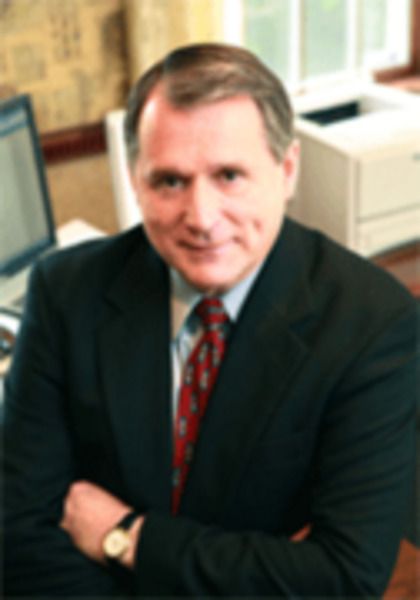
Dr. Willard Daggett
Willard R. Daggett, Ed.D., President of the International Center for Leadership in Education, is recognized worldwide for his proven ability to move education systems towards more rigorous and relevant skills and knowledge for all students. He has assisted a number of states and hundreds of school districts with their school improvement initiatives, many in response to No Child Left Behind and its demanding adequate yearly progress (AYP) provisions. Dr. Daggett has also collaborated with education ministries in several countries and with the Council of Chief State School Officers, the Bill & Melinda Gates Foundation, the National Governors Association, the U.S. Chamber of Commerce, and many other national organizations.
Before founding the International Center for Leadership in Education in 1991, Dr. Daggett was a teacher and administrator at the secondary and postsecondary levels and a director with the New York State Education Department, where he spearheaded restructuring initiatives to focus the state's education system on the skills and knowledge students need in a technological, information-based society.
Dr. Daggett is the creator of the Application Model and Rigor/Relevance Framework, a practical planning and instructional tool for determining the relevance of curriculum and assessment to real-world situations. Dr. Daggett’s Rigor/Relevance Framework has become a cornerstone of many school reform efforts throughout the United States.
Dr. Daggett is the author of six books about learning and education, 12 textbooks and numerous research studies, reports, and journal articles. He also serves on a number of advisory boards, including the USA Today Education Advisory Panel.
Dr. Daggett has spoken to hundreds of thousands of educators and education stakeholders in all 50 states. His enlightening, entertaining, and motivating messages have helped his listeners to look at education differently by challenging their assumptions about the purposes, benefits, and effectiveness of American schools. Dr. Daggett inspires his audiences both to embrace what is best about our education system and to make the changes necessary to meet the needs of all students in the 21st century.
Dr. Daggett has a special commitment to individuals with disabilities. He and his wife, Bonnie, volunteer their time and lend their support to Wildwood Programs in upstate New York. Wildwood serves the needs of people of all ages who, like their daughter Audrey, have neurological impairments/learning disabilities or autism, by enabling them to become the best that they can be.
Presentation Topics Include:
- Preparing Students for the 21st Century
The skills, knowledge, and attitudes 21st century learners bring to our schools and the skills, knowledge, and attitudes they will need to be successful in the technological, globally driven world in which they will live and work have changed dramatically. Dr. Daggett will describe what schools must do to meet these challenges in order to prepare students well for the future rather than the past.
- The Nation’s Most Successful Schools — Lessons Learned
The International Center for Leadership in Education continues to study both the nation’s most successful schools and the most rapidly improving schools. While there is no one formula for improving schools, the International Center has identified eight Components of School Excellence that schools typically address to achieve rigor, relevance, and relationships for all students. Dr. Daggett will give an overview of these components and explain how other schools can make substantial improvement by addressing the components. He will also provide a directory of Conference sessions that will address each of the components.
- Bringing Focus and Effective Practices to Our Classrooms
Curriculum has expanded to the point of being unwieldy in terms of scope and breadth. To gain control, district and school leaders must have access to reliable data in order to decide what students need to learn to be successful in the 21st century. Educators also need effective instructional practices to ensure that all students are given learning experiences that are challenging, stimulate reflective thought, and involve real-world applications of skills and knowledge. Dr. Daggett will offer specific examples of how highly successful schools have addressed the challenges of what and how to teach today’s students.
- Components and Characteristics of Successful Schools
Highly successful schools use rigorous curricula that also incorporate real-world relevance. While there is a strong commitment to basic academics as measured by state tests, this commitment is the beginning line – not the finish line – for their students. These schools understand that rigor, while essential, is not adequate to lead all students to high levels of achievement. Moreover, these schools have an unwavering commitment to literacy in all grades and all disciplines. This presentation will provide an in-depth look at the components found in some of America’s highest performing and most rapidly improving schools.
Rigor and Relevance for ALL Students
Highly successful schools have academically rigorous curricula that also incorporate real-world relevance. These schools understand that rigor, while essential, is not adequate to lead all students to high levels of achievement. This presentation will provide an in-depth look at the Rigor/Relevance Framework, created by the International Center for Leadership in Education, which has become a cornerstone of curriculum and instruction for schools throughout the country and abroad. Two additional R’s, which are also critical to maximizing student success will be described: the importance of the relationships between student and teacher, student and student, and teacher and teacher and the need to provide opportunities for reflective thought on what is being taught and learned.
- Developing 21st Century Literacy in Students
Literacy is the most critical skill needed in the 21st century. As society is challenged by constantly changing technology, individuals need to read and write at higher levels than in the past. Our literacy efforts in schools must include more than the traditional emphasis on prose, however. Quantitative, technological, and document literacy are becoming increasingly important. This session will describe the need to intensify our literacy requirements in all three areas and share the most successful practices in moving all students to higher literacy levels.
- Making Academics and CTE a Seamless System
For both academic education and career and technical education, the next few years will be “the best of times” or “the worst of times.” The last decade has presented great challenges for all educators, brought about principally by No Child Left Behind, coupled with dramatic changes in the workplace. Dr. Daggett will describe how outstanding programs have responded to the challenges by preparing students very well for academic and workplace success. They have done this by making CTE and academic education a seamless system.
- Leadership for the Components of School Excellence
For schools to be successful, their leaders must be successful. Building on the eight Components of School Excellence, this presentation will lay out the role of school leadership teams in providing the structure, support, and guidance for each component. Dr. Daggett will also share the nation’s most successful practices in school leadership.
Willard R. Daggett, Ed.D., President of the International Center for Leadership in Education, is recognized worldwide for his proven ability to move education systems towards more rigorous and relevant skills and knowledge for all students. He has assisted a number of states and hundreds of school districts with their school improvement initiatives, many in response to No Child Left Behind and its demanding adequate yearly progress (AYP) provisions. Dr. Daggett has also collaborated with education ministries in several countries and with the Council of Chief State School Officers, the Bill & Melinda Gates Foundation, the National Governors Association, the U.S. Chamber of Commerce, and many other national organizations.
Before founding the International Center for Leadership in Education in 1991, Dr. Daggett was a teacher and administrator at the secondary and postsecondary levels and a director with the New York State Education Department, where he spearheaded restructuring initiatives to focus the state's education system on the skills and knowledge students need in a technological, information-based society.
Dr. Daggett is the creator of the Application Model and Rigor/Relevance Framework, a practical planning and instructional tool for determining the relevance of curriculum and assessment to real-world situations. Dr. Daggett’s Rigor/Relevance Framework has become a cornerstone of many school reform efforts throughout the United States.
Dr. Daggett is the author of six books about learning and education, 12 textbooks and numerous research studies, reports, and journal articles. He also serves on a number of advisory boards, including the USA Today Education Advisory Panel.
Dr. Daggett has spoken to hundreds of thousands of educators and education stakeholders in all 50 states. His enlightening, entertaining, and motivating messages have helped his listeners to look at education differently by challenging their assumptions about the purposes, benefits, and effectiveness of American schools. Dr. Daggett inspires his audiences both to embrace what is best about our education system and to make the changes necessary to meet the needs of all students in the 21st century.
Dr. Daggett has a special commitment to individuals with disabilities. He and his wife, Bonnie, volunteer their time and lend their support to Wildwood Programs in upstate New York. Wildwood serves the needs of people of all ages who, like their daughter Audrey, have neurological impairments/learning disabilities or autism, by enabling them to become the best that they can be.
Presentation Topics Include:
- Preparing Students for the 21st Century
The skills, knowledge, and attitudes 21st century learners bring to our schools and the skills, knowledge, and attitudes they will need to be successful in the technological, globally driven world in which they will live and work have changed dramatically. Dr. Daggett will describe what schools must do to meet these challenges in order to prepare students well for the future rather than the past.
- The Nation’s Most Successful Schools — Lessons Learned
The International Center for Leadership in Education continues to study both the nation’s most successful schools and the most rapidly improving schools. While there is no one formula for improving schools, the International Center has identified eight Components of School Excellence that schools typically address to achieve rigor, relevance, and relationships for all students. Dr. Daggett will give an overview of these components and explain how other schools can make substantial improvement by addressing the components. He will also provide a directory of Conference sessions that will address each of the components.
- Bringing Focus and Effective Practices to Our Classrooms
Curriculum has expanded to the point of being unwieldy in terms of scope and breadth. To gain control, district and school leaders must have access to reliable data in order to decide what students need to learn to be successful in the 21st century. Educators also need effective instructional practices to ensure that all students are given learning experiences that are challenging, stimulate reflective thought, and involve real-world applications of skills and knowledge. Dr. Daggett will offer specific examples of how highly successful schools have addressed the challenges of what and how to teach today’s students.
- Components and Characteristics of Successful Schools
Highly successful schools use rigorous curricula that also incorporate real-world relevance. While there is a strong commitment to basic academics as measured by state tests, this commitment is the beginning line – not the finish line – for their students. These schools understand that rigor, while essential, is not adequate to lead all students to high levels of achievement. Moreover, these schools have an unwavering commitment to literacy in all grades and all disciplines. This presentation will provide an in-depth look at the components found in some of America’s highest performing and most rapidly improving schools.
Rigor and Relevance for ALL Students
Highly successful schools have academically rigorous curricula that also incorporate real-world relevance. These schools understand that rigor, while essential, is not adequate to lead all students to high levels of achievement. This presentation will provide an in-depth look at the Rigor/Relevance Framework, created by the International Center for Leadership in Education, which has become a cornerstone of curriculum and instruction for schools throughout the country and abroad. Two additional R’s, which are also critical to maximizing student success will be described: the importance of the relationships between student and teacher, student and student, and teacher and teacher and the need to provide opportunities for reflective thought on what is being taught and learned.
- Developing 21st Century Literacy in Students
Literacy is the most critical skill needed in the 21st century. As society is challenged by constantly changing technology, individuals need to read and write at higher levels than in the past. Our literacy efforts in schools must include more than the traditional emphasis on prose, however. Quantitative, technological, and document literacy are becoming increasingly important. This session will describe the need to intensify our literacy requirements in all three areas and share the most successful practices in moving all students to higher literacy levels.
- Making Academics and CTE a Seamless System
For both academic education and career and technical education, the next few years will be “the best of times” or “the worst of times.” The last decade has presented great challenges for all educators, brought about principally by No Child Left Behind, coupled with dramatic changes in the workplace. Dr. Daggett will describe how outstanding programs have responded to the challenges by preparing students very well for academic and workplace success. They have done this by making CTE and academic education a seamless system.
- Leadership for the Components of School Excellence
For schools to be successful, their leaders must be successful. Building on the eight Components of School Excellence, this presentation will lay out the role of school leadership teams in providing the structure, support, and guidance for each component. Dr. Daggett will also share the nation’s most successful practices in school leadership.