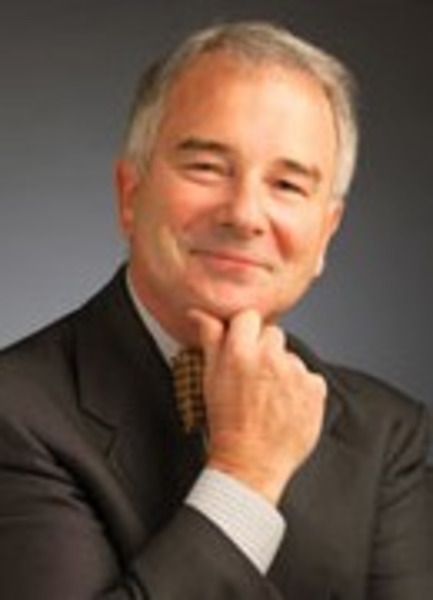
Randall Wright
A full time business speaker and facilitator since 1991, Randall has presented over 1000 seminars, executive retreats, keynotes, and/or workshops. He is the author of several business and scientific articles, a past editor of the NCAA's List of Banned Substances, past columnist for the Kansas City Star, radio personality, business speaker, and keynoter.
Randall uses his teaching skills and business experiences to guide others to develop their people, decision-making, leadership and motivation skills; and, how to respond to the hazards and thrills of getting up in the morning and heading out the door to work.
Randall's presentation style is a good mix of content, application, accelerated learning activities, fun and passion. (He really enjoys what he does and it shows).
He is a graduate of the University of Kansas and the Center for Accelerated Learning. And, a very fortunate and proud Uncle.
MOST REQUESTED TOPICS:
Building a Stable and Motivated Workforce
The Purpose of Why We Work
Definitions describe. Purpose clarifies. In business, understanding purpose determines the caliber of leadership, management and staff. Those responsible for staff performance that know purpose of work have a better ability to motivate, lead & manage. They understand better what drives, inspires, and encourages. When time is taken to identify the purpose of work such knowledge becomes a communication tool that the smart manager can use to help define strategies for building commitment, reduce turnover and increase output. When time is taken to identify the purpose of work, staff can find meaning in their labor, acceptance of change and the energy to do their tasks and the power (INITATIVE) to make their work self-fulfilling.
Managing Towards a Higher Level of Performance
Individual and team performance cannot be taken for granted. It requires attention. This attention takes many forms and the ability to be proficient in these ways defines not only the capable manager but also the capable leader. TOWARDS A HIGHER LEVEL OF PERFORMANCE instructs the participant in practical methods to coach their staff, overcome resistance (fear), barriers, and communication and to bring staff to a higher level of decision making, awareness, self-sufficiency and responsibility.
Leadership
To clarify how leadership succeeds and how leadership fails what leadership is, qualities of a leader, acts of leadership, how leadership is measured and personal leadership. This is on leadership, not management. There is an elegant distinction between the two and we will focus on this distinction.
Staying Successful by Continuing to Change
To understand the reaction to change, to define effective change, how to explain change, how to implement change and keep it sustained.
Phenomenal Customer Service by Phenomenal People
To increase the performance of those who deal directly with customers and for those who manage the performance of customer service teams.
Thinking Outside (and Inside) the Box
Where do new thoughts, ideas, customers, solutions, and opportunities come from? They can come from anywhere and everywhere. They will not come from the same old way of thinking. Learn how to stretch you and your team's thinking skills to develop different solutions to problems and goal achievement.
Persuasion, Influence, Negotiation
PIN-the Art of Selling Your Ideas
A modern day definition of a miracle is when two people clearly communicate. Working and communicating clearly in an effective, complex and matrixed organization requires specific skills in communication and collaboration. Whether you are working within your team, with upper management, in cross-functional team or especially with customers the challenges of face-to -face telephone, email, or videoconferencing communications are complex.
What Smart People Know About...
20 of the best lessons from Randall Wright (These have been developed from 1200 retreats, keynotes and workshops given during the last 15 years). Topics include: Job, Attitude, Change, Conflict, Anger, Purpose of work, Language, Persuasion, Negotiation, Communication, Stress, Sales, Motivation, the three hardest things to do, What makes a successful person, The Five most important things in life.
Retreat Facilitator
Recall the lesson of finding a needle in a haystack. The good facilitator knows that after the attendees find a needle, they need to look for a second and then a third. This discovery is stimulation. A good facilitator knows this is his role and is a master at such group stimulation. No surprise then, that a good retreat is exciting.
More Successful Selling
Selling is a learned skill. It is knowledge of customer and product, of needs, position, persuasion, questions, listening, being creative, negotiation, and emotions - to highlight a few. And never forgetting that selling is still a numbers game.
12 Actions For People Slightly Out of Touch with Reality
A Program About Attitude
A dozen guidelines and some 120 lessons to show how response to a challenge is full of choices. How these choices come from attitude and how attitude can be influenced. To show that attitude influences behavior.
A full time business speaker and facilitator since 1991, Randall has presented over 1000 seminars, executive retreats, keynotes, and/or workshops. He is the author of several business and scientific articles, a past editor of the NCAA's List of Banned Substances, past columnist for the Kansas City Star, radio personality, business speaker, and keynoter.
Randall uses his teaching skills and business experiences to guide others to develop their people, decision-making, leadership and motivation skills; and, how to respond to the hazards and thrills of getting up in the morning and heading out the door to work.
Randall's presentation style is a good mix of content, application, accelerated learning activities, fun and passion. (He really enjoys what he does and it shows).
He is a graduate of the University of Kansas and the Center for Accelerated Learning. And, a very fortunate and proud Uncle.
MOST REQUESTED TOPICS:
Building a Stable and Motivated Workforce
The Purpose of Why We Work
Definitions describe. Purpose clarifies. In business, understanding purpose determines the caliber of leadership, management and staff. Those responsible for staff performance that know purpose of work have a better ability to motivate, lead & manage. They understand better what drives, inspires, and encourages. When time is taken to identify the purpose of work such knowledge becomes a communication tool that the smart manager can use to help define strategies for building commitment, reduce turnover and increase output. When time is taken to identify the purpose of work, staff can find meaning in their labor, acceptance of change and the energy to do their tasks and the power (INITATIVE) to make their work self-fulfilling.
Managing Towards a Higher Level of Performance
Individual and team performance cannot be taken for granted. It requires attention. This attention takes many forms and the ability to be proficient in these ways defines not only the capable manager but also the capable leader. TOWARDS A HIGHER LEVEL OF PERFORMANCE instructs the participant in practical methods to coach their staff, overcome resistance (fear), barriers, and communication and to bring staff to a higher level of decision making, awareness, self-sufficiency and responsibility.
Leadership
To clarify how leadership succeeds and how leadership fails what leadership is, qualities of a leader, acts of leadership, how leadership is measured and personal leadership. This is on leadership, not management. There is an elegant distinction between the two and we will focus on this distinction.
Staying Successful by Continuing to Change
To understand the reaction to change, to define effective change, how to explain change, how to implement change and keep it sustained.
Phenomenal Customer Service by Phenomenal People
To increase the performance of those who deal directly with customers and for those who manage the performance of customer service teams.
Thinking Outside (and Inside) the Box
Where do new thoughts, ideas, customers, solutions, and opportunities come from? They can come from anywhere and everywhere. They will not come from the same old way of thinking. Learn how to stretch you and your team's thinking skills to develop different solutions to problems and goal achievement.
Persuasion, Influence, Negotiation
PIN-the Art of Selling Your Ideas
A modern day definition of a miracle is when two people clearly communicate. Working and communicating clearly in an effective, complex and matrixed organization requires specific skills in communication and collaboration. Whether you are working within your team, with upper management, in cross-functional team or especially with customers the challenges of face-to -face telephone, email, or videoconferencing communications are complex.
What Smart People Know About...
20 of the best lessons from Randall Wright (These have been developed from 1200 retreats, keynotes and workshops given during the last 15 years). Topics include: Job, Attitude, Change, Conflict, Anger, Purpose of work, Language, Persuasion, Negotiation, Communication, Stress, Sales, Motivation, the three hardest things to do, What makes a successful person, The Five most important things in life.
Retreat Facilitator
Recall the lesson of finding a needle in a haystack. The good facilitator knows that after the attendees find a needle, they need to look for a second and then a third. This discovery is stimulation. A good facilitator knows this is his role and is a master at such group stimulation. No surprise then, that a good retreat is exciting.
More Successful Selling
Selling is a learned skill. It is knowledge of customer and product, of needs, position, persuasion, questions, listening, being creative, negotiation, and emotions - to highlight a few. And never forgetting that selling is still a numbers game.
12 Actions For People Slightly Out of Touch with Reality
A Program About Attitude
A dozen guidelines and some 120 lessons to show how response to a challenge is full of choices. How these choices come from attitude and how attitude can be influenced. To show that attitude influences behavior.